Originally published on X on 4 May 2024.
I’m not in Prague today, but if you are, and have cleaning tools and a ladder, here’s an idea for a fun day out.

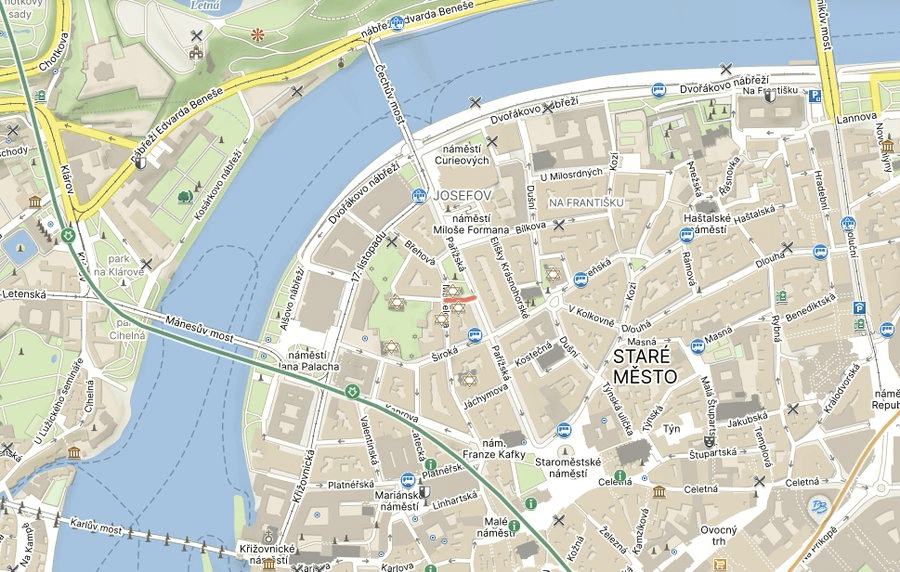
‘Červená’ means ‘red’. Jewish butchers had their shops round here, and these were painted red.
Originally, the street was called Řeznická (a ‘řezník’ is a butcher), though, for a time in the late 18th / early 19th centuries, it was called Nová Poštovská due to the post office being moved here from nearby Břehová (coming on day 220).
The current street name came into use at the start of the 20th century, after the asanace / rehabilitation of the district.
In the late 1200s, a synagogue was built here, originally called Nová škola due to there already being a Stará (old) škola on Dušní (which will be day 227).
At Easter 1389, the Jews of Prague were accused of ‘vandalising the eucharistic wafer’, and a pogrom (Bloody Easter) occurred. Jews trying to enter the synagogue were murdered; it’s said that there were 3,000 victims. Many Jews fled to Hungary and Poland.
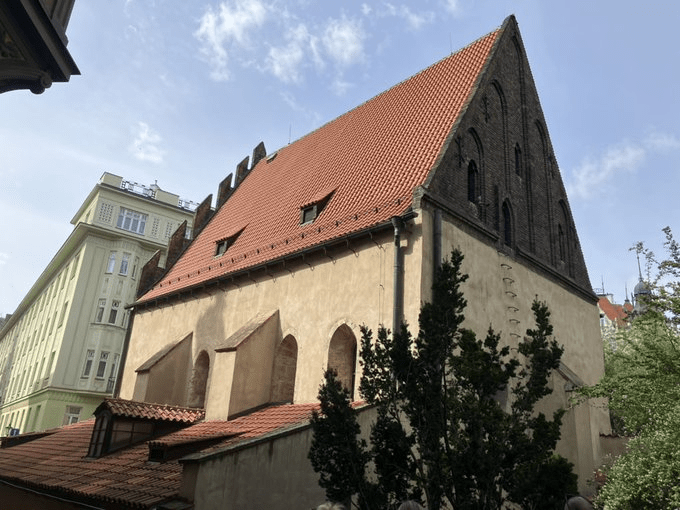
It’s said that the synagogue bore traces of their blood until 1618. During the 16th century, when other synagogues started to appear in the district, it became known as the Old New Synagogue / Staronová synagoga.
The synagogue was repaired in 1618, then restored in both 1716 and 1883. It was one of the buildings that wasn’t damaged during the great fire of 1689.
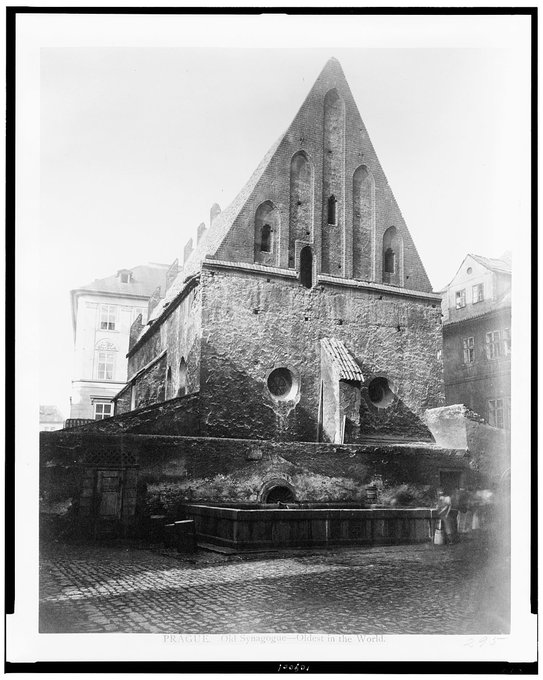
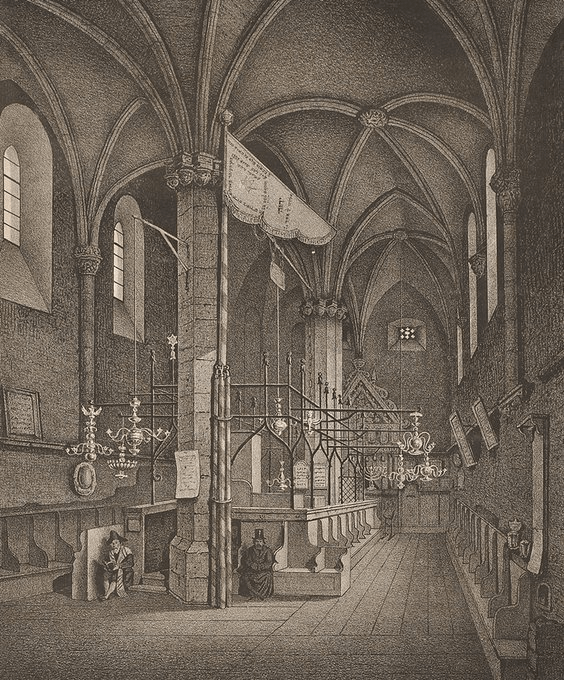
It’s also been reconstructed several times since, for example in 1996-7, 1998 and 2006-7. It remains the oldest functioning synagogue in Europe.


 What's in a Prague street name
Leave a comment