Originally published on X on 5 May 2024.
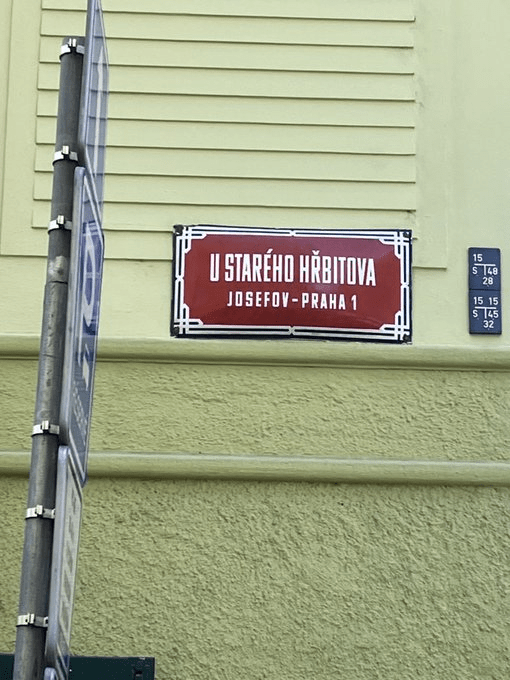

This might be the Old (Jewish) Cemetery, but it’s not the oldest in Prague – we know that there was another one in the present-day New Town, dating back to at least 1254: https://whatsinapraguestreetname.com/2024/09/14/prague-1-day-107-charvatova/.
King Vladislav II had that one closed down in 1478. However, this cemetery wasn’t opened as a reaction to the closure of the other one – one of its graves dates back to 1439.
On the other hand, it’s believed that the cemetery didn’t exist at the time of the 1389 pogrom (https://whatsinapraguestreetname.com/2024/10/26/prague-1-day-218-cervena/).
Demand for space for graves meant that the cemetery was frequently expanding; many of the purchases of additional land were financed by Mordecai Meisel (https://whatsinapraguestreetname.com/2024/10/24/prague-1-day-215-maiselova/).
However, when land couldn’t be purchased, there was a problem: Halacha (the collective body of Jewish religious laws) dictates that individual graves can’t be disturbed, and that the tombstones of the deceased must be preserved.
Therefore, graves would be arranged in layers – as many as twelve, in some cases.
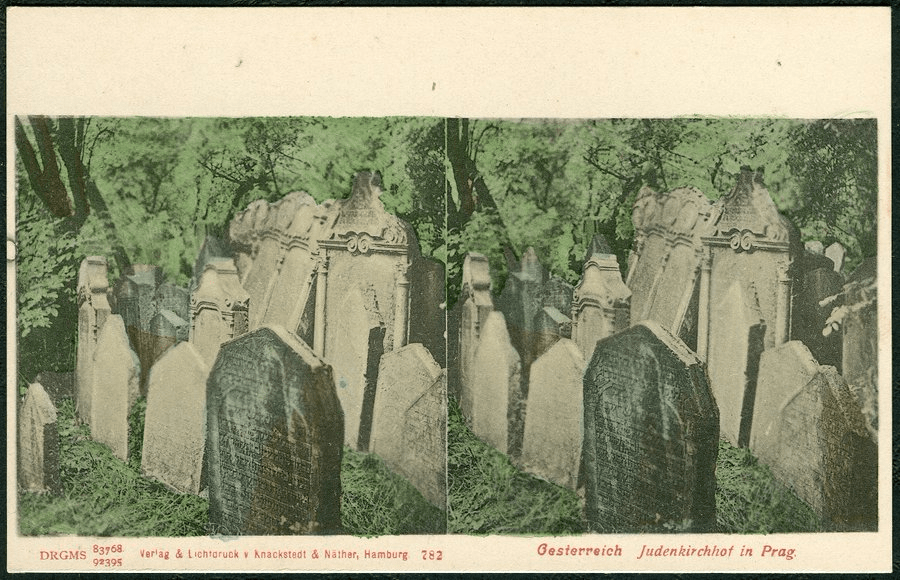
In 1784, Joseph II decreed that burials in city centres had to be banned for reasons of hygiene; however, the final gravestone dates from 1787.

A cemetery which had been opened to bury plague victims became the city’s new Jewish cemetery. It’s located where the Žižkov TV tower is now.
Despite Halacha, the rehabilitation of the Old Town did result in the old Jewish cemetery being reduced in size in 1903, and part of its former land ended up being taken up by the Museum of Arts and Crafts. Protective walls were added a few years later.


Notable people whose graves are here include the chronicler David Gans, Mordecai Maisel, and the rabbis David Oppenheim, Judah Loew ben Bezalel and Joseph Solomon Delmedigo.


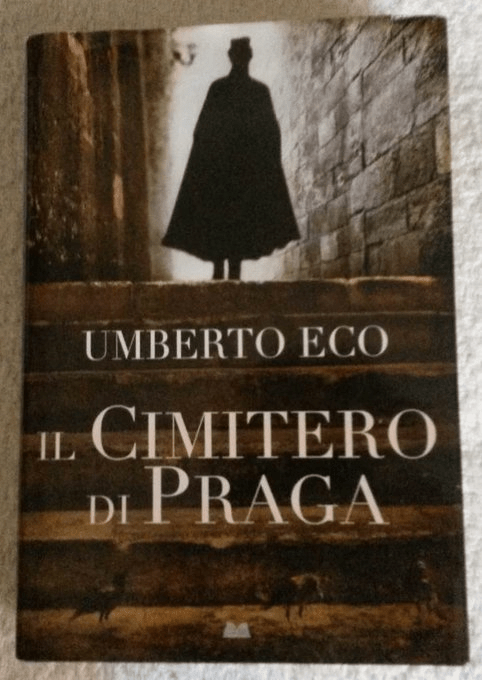
There’s a chance that you’ve read a novel that is named after this cemetery.

The street also includes the Klausen Synagogue, the largest in the old Jewish town, and the only Baroque one.
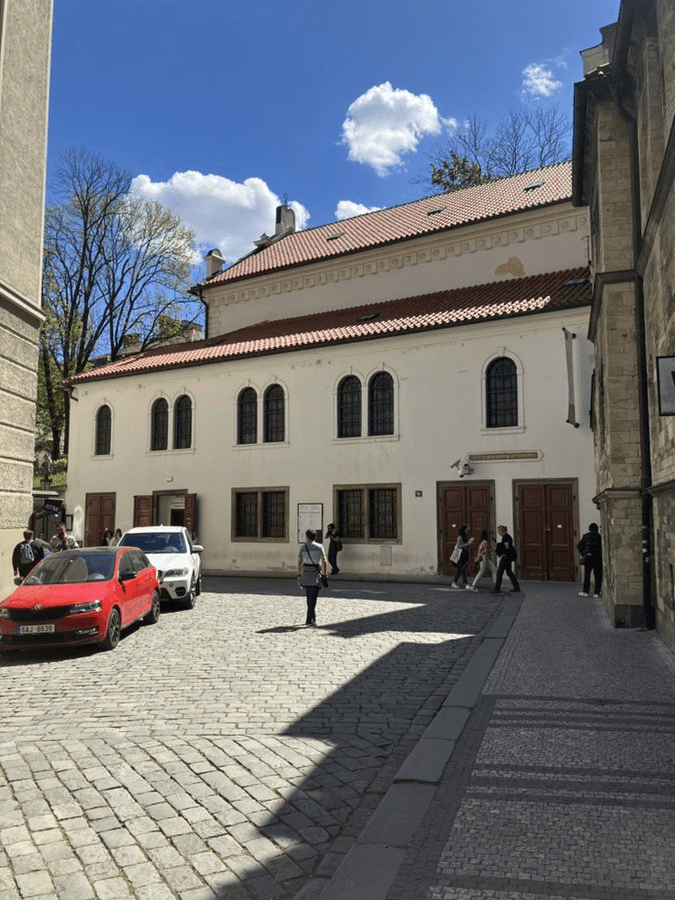
Next to that is the cemetery’s New Ceremonial Hall, built between 1906 and 1908 in Neo-Romanesque style. It was originally the place of last service for the deceased, but hasn’t served that purpose since WW1.
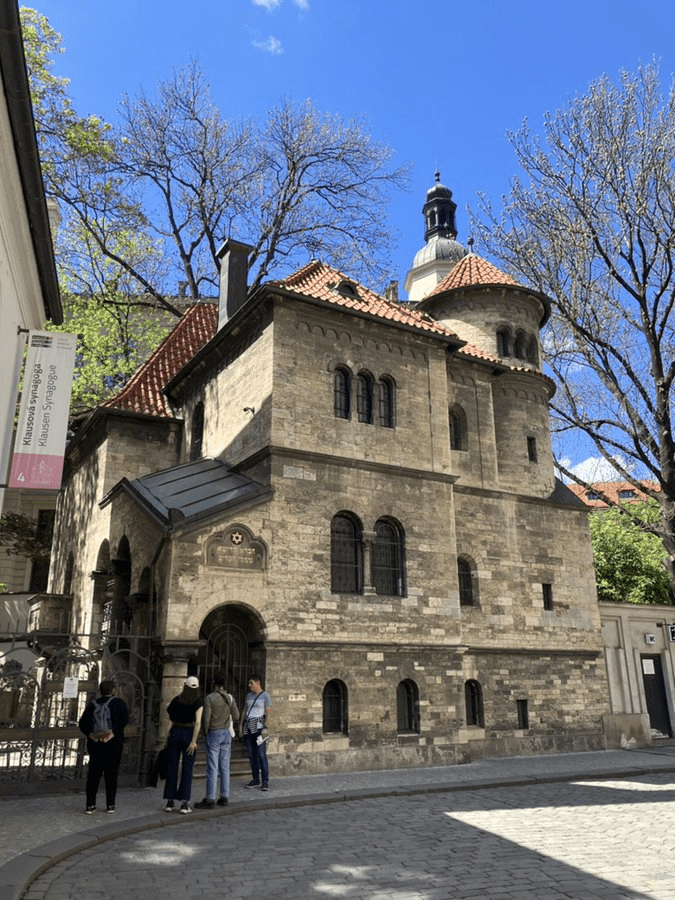
It – like much everything in this thread – is now administered by the Jewish Museum.


 What's in a Prague street name
Leave a comment