Originally published on X on 10 May 2024.
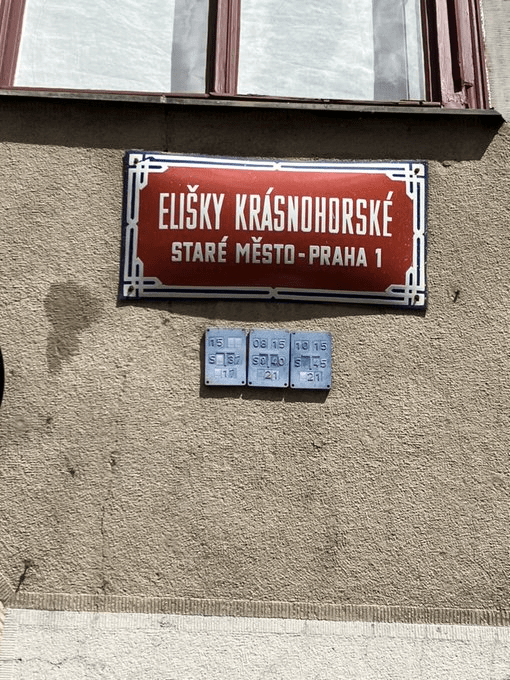

Alžběta Dorota Pechová was born in Prague’s Old Town in 1847, the seventh of her father’s eight children (he was married twice).
Her father believed that his family was from Krásná Hora, near Příbram – apparently, this wasn’t actually true, but it did result in the pseudonym which Alžběta later adopted.
Eliška attended a German-language grammar school in Prague, and later became a member of the Ruchovci (a group of Czech writers who aimed to promote Czech literature and avoid foreign literary influences).
Her work to promote Czech literature over its German counterpart included a series of novels aimed at teenage girls.

In 1871, Krásnohorská co-founded the Czech Women’s Production Association with Věnceslava Lužická and Karolina Světla (https://whatsinapraguestreetname.com/2024/09/28/prague-1-day-153-karoliny-svetle/).
Two years later, she would found a women’s magazine, Ženské listy.
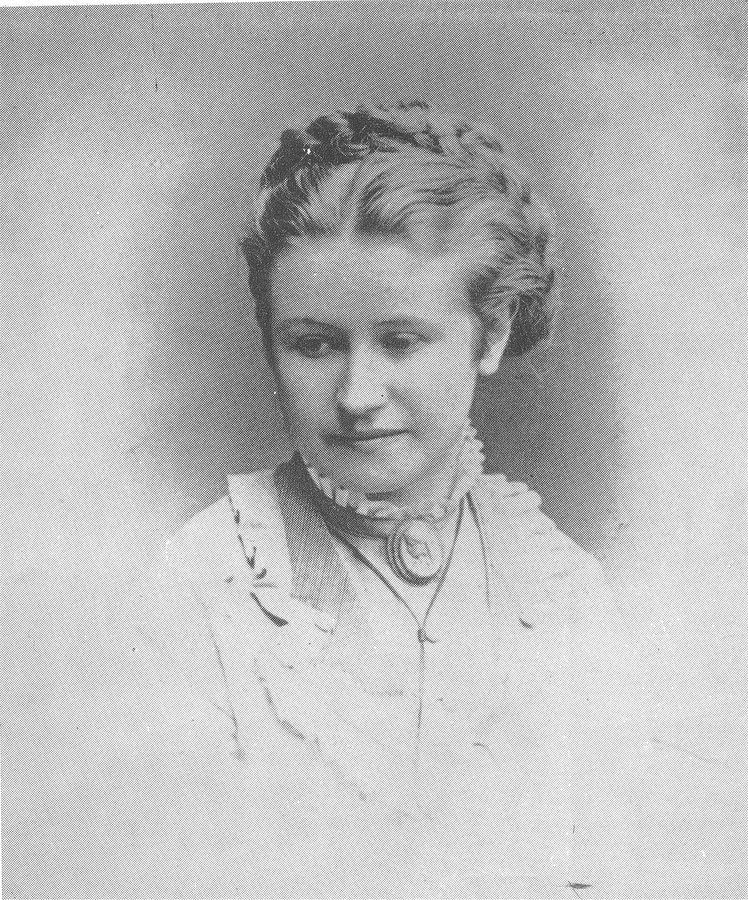
At this time, Prague lacked a Czech-language state grammar school for girls, so Krásnohorská started a petition for one, gaining almost 5,000 signatures. Because many people’s heads were still in the Dark Ages, this didn’t work out.
Therefore, in 1890, Krásnohorská decided she would open a private girls’ school instead. Minerva opened on Pštrossova (https://whatsinapraguestreetname.com/2024/09/13/prague-1-day-97-pstrossova/) in September, the first private school of its kind in Central Europe.
Krásnohorská was active in literary criticism, and was also one of those who defended the authenticity of these manuscripts (possibly still my favourite post to date?): https://whatsinapraguestreetname.com/2024/08/22/prague-2-day-91-lumirova/.
She wrote quite harshly about T. G. Masaryk – who rightly thought they were a fake – though that didn’t stop him from later making her the first female member of the Czechoslovak Academy of Sciences and Arts.

She also wrote libretti for operas – four for Karel Bendl, four for Bedřich Smetana, and one for Zdeněk Fibich, and translated works including Lord Byron’s Childe Harold’s Pilgrimage.
Suffering from joint pain since her youth, and never having children, Krásnohorská became increasingly dependent on her friends in old age. She died on Černá (https://whatsinapraguestreetname.com/2024/09/14/prague-1-day-101-cerna/) in 1926.

The most distinctive buildings in the street that’s named after her are probably the Cubist ‘Teachers’ Houses’ designed by Otakar Novotný and built between 1919 and 1921.
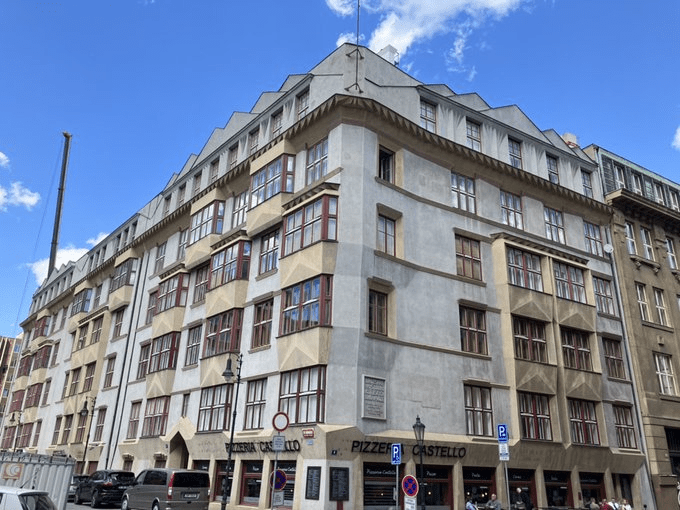
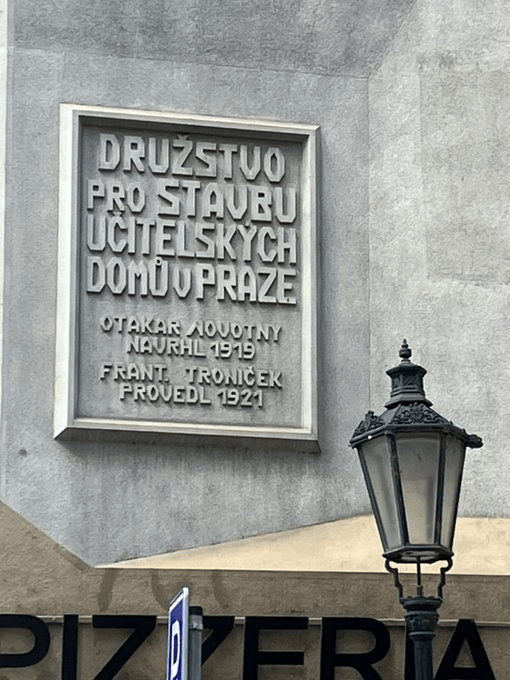
Goodness, I love Cubist buildings. If you’re ever planning on writing an article on why Cubism is problematic and we shouldn’t be a fan of it, you may well have your reasons for doing so, but please block me in advance.


 What's in a Prague street name
Leave a comment