Originally published on X on 11 May 2024.


Miloš Forman was born as Jan Tomáš Forman in Čáslav (https://whatsinapraguestreetname.com/2023/07/02/prague-3-day-178-caslavska/) in 1932.
His mother, Anna, was arrested by the Nazis for lying about her involvement in the distribution of anti-Nazi leaflets, and died of typhus at Auschwitz-Birkenau in 1943.
His father, Rudolf (actually not his biological father, as he later found out), was also arrested for being part of a resistance group, and died at the Mittelbau-Dora concentration camp in 1944.
An orphan by the age of 12, Forman grew up with relatives in Náchod and Poděbrady; he went to a grammar school in the latter which was also attended by Václav Havel (https://whatsinapraguestreetname.com/2024/09/14/prague-1-day-104-namesti-vaclava-havla/).
Forman then studied at the Film and Television Faculty of the Academy of Performing Arts in Prague (FAMU), and worked as an assistant to Alfréd Radok, creator of the Laterna Magika.
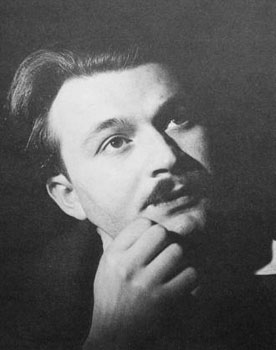
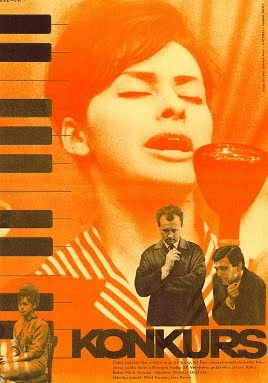
Forman and cameraman Miroslav Ondříček first attracted attention with Konkurs (Talent Competition), a medium-length film released to theatres in February 1964.
In the same year, his Černý Petr (Black Peter) – about a Czech teenager working in a grocery store – won the Golden Leopard prize at the Locarno Film Festival.

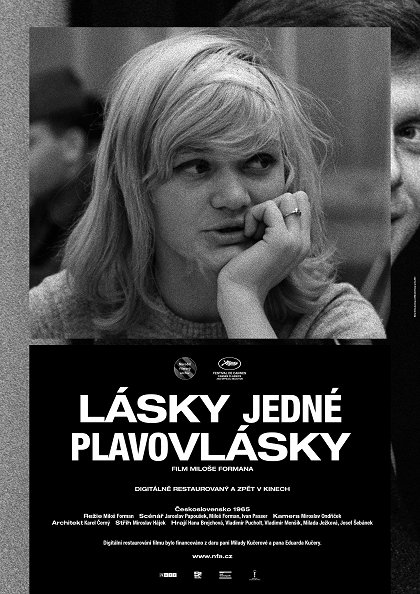
Then, in 1965, Lásky jedné plavovlásky (Loves of a Blonde) – about a young woman working in a shoe factory – was nominated for Best Foreign Language Film at both the Oscars and the Golden Globes.
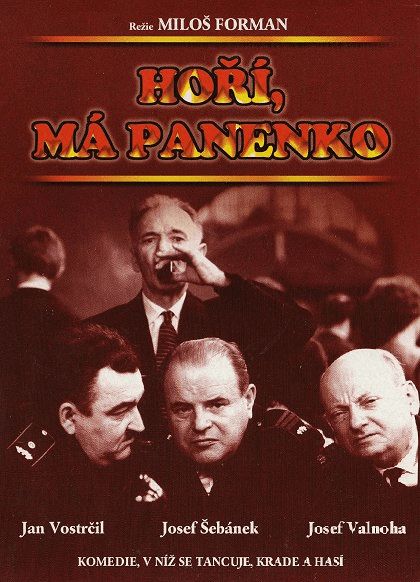
There would also be an Oscar nomination for 1967’s Hoří, Má Panenko (The Firemen’s Ball), set at a volunteer fire department’s annual ball. This was Forman’s first colour film.
In 1968, Forman went to Paris to discuss production of an upcoming film; during his stay, Russian tanks invaded Czechoslovakia. His film studio claimed he had left the country illegally and fired him; he therefore emigrated to New York.
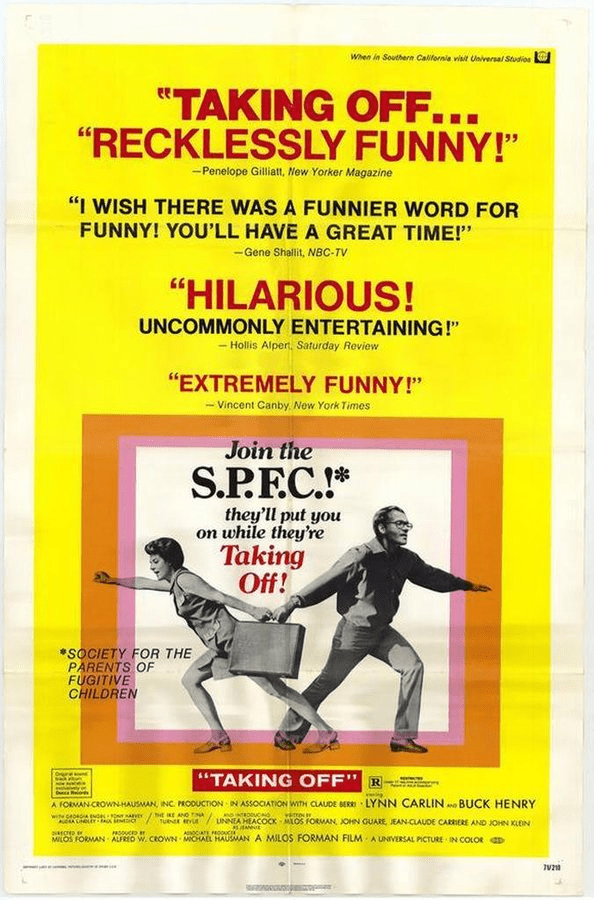
His American career didn’t get off to the best start – Taking Off (1971) won a prize at the Cannes Film Festival, but was not a commercial success, so much so that Forman ended up owing the studio money.
Much greater success came with 1975’s One Flew Over the Cuckoo’s Nest, with its five Oscars: Best Director, Best Actor, Best Actress, Best Picture and Best Adapted Screenplay. Only two other films have ever won in all these categories.

This was followed by a film adaptation of the musical Hair (1979) and of the historical novel Ragtime (1981).


However, the next huge success would come in 1984, with the film version of Peter Schaffer’s play Amadeus. The film grossed over USD 90 million, and won eight Oscars (across all ceremonies, it won 40 of the 53 awards it was nominated for).

Forman was allowed to return to Czechoslovakia for filming – this mainly took place in Kroměříž, although you’ll also see Prague locations in the film: https://movie-locations.com/movies/a/Amadeus.php.
In 1989, Forman’s adaptation of Les Liaisons dangereuses, Valmont, was overshadowed by Dangerous Liaisons, an adaptation by Stephen Frears which had been produced in the previous year.

Later productions, such as The People vs. Larry Flynt (1996), Man on the Moon (1999), and Goya’s Ghosts (2006), would garner mainly positive reviews, but would struggle at the box office.

Forman died after a short illness in Danbury Hospital, Connecticut, in 2018 (his home was nearby, in Warren, and he’s also buried in that town): https://www.bbc.com/news/entertainment-arts-43767278. He had become a US citizen in 1977.
The piazzetta here in Prague, in front of the Hotel Intercontinental, was named after him a few months after his death: https://www.ceskatelevize.cz/porady/10116288835-z-metropole/218411058230042/cast/651576/.

 What's in a Prague street name
Leave a comment