Originally published on X on 29 May 2024.


Until the 14th century, this was known as Starý uhelný trh (Old Coal Market), or Forum carbonum antiquum, after a market which was here but later moved to, yes, Uhelný trh: https://whatsinapraguestreetname.com/2024/09/26/prague-1-day-147-uhelny-trh/.
After that, it became known as Hrnčířská, thanks to its local craftsmen (a ‘hrnčíř’ is a potter or ceramist).
Then, from 1824, one part was called Horní Kozí, and the other Dolní Kozí (i.e. there were upper and lower parts). These were renamed as just plain Kozí in 1902, when the street was also widened.
‘Kozí’ is the adjective from ‘koza’, which means ‘goat’. The name of the street commemorates a local market where goats were sold (for another animal-based market, see https://whatsinapraguestreetname.com/2024/09/17/prague-1-day-123-vaclavske-namesti/).
Kozí certainly feels like two different streets glued together (the map above may also suggest this).
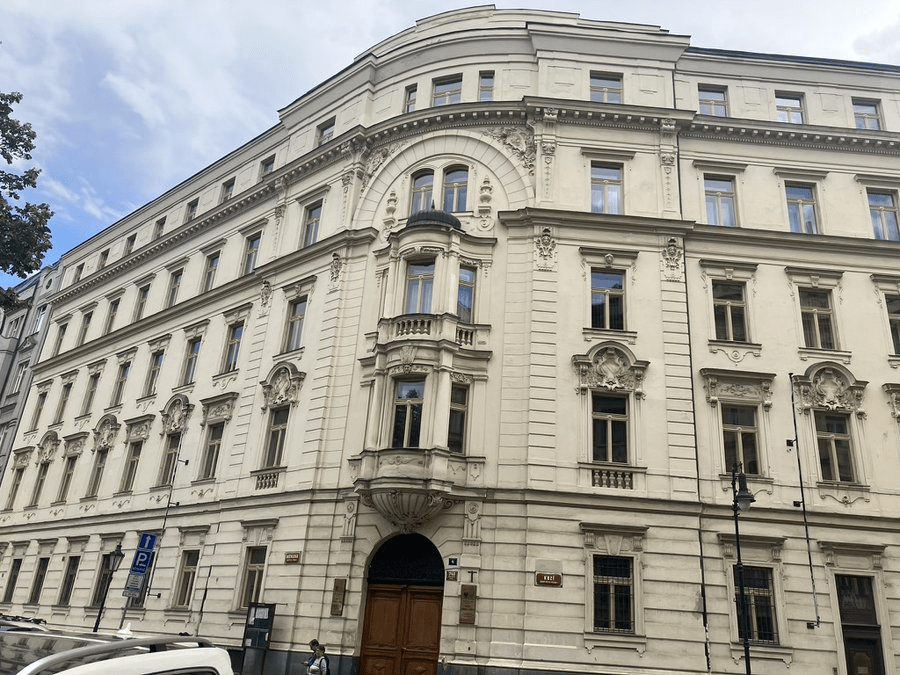
Noteworthy buildings on the street include the headquarters of the Český báňský úřad / Czech Mining Office at number 4, built between 1898 and 1899 based on a design by the architect Antonín Rosenberg.
While number 7 is the Dům Společenstva pražských stavitelů / House of the Society of Prague Builders, built slightly earlier (1876), based on a design by Josef Schulz.
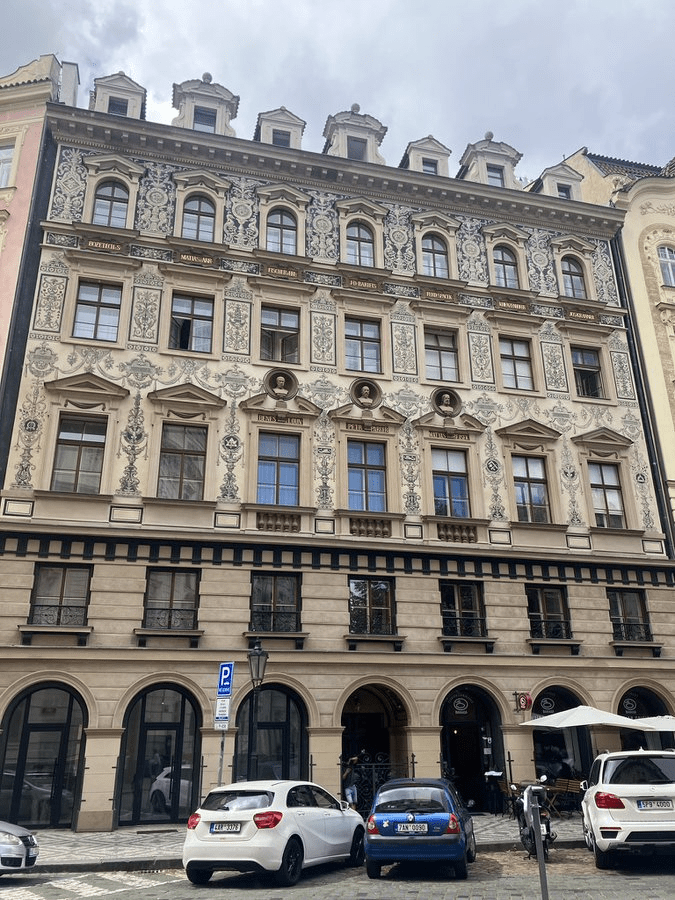
Zoom in, and you’ll see busts commemorating Petr Parléř, Matěj Rejsek and Benedikt Rejt, three of Prague’s most important architects.
Parléř can be thanked for reasonably well-known constructions such as St Vitus Cathedral and Charles Bridge; Rejsek has a street which I discussed way back in our Vinohrady era: https://whatsinapraguestreetname.com/2024/08/19/prague-2-day-76-rejskova/.
Because we haven’t had any entertaining vocabulary in a while, a ‘kozí bradka’ is a goatee.

 What's in a Prague street name
Leave a comment