Originally published on X on 7 June 2024.
A street with a name, but without a sign.
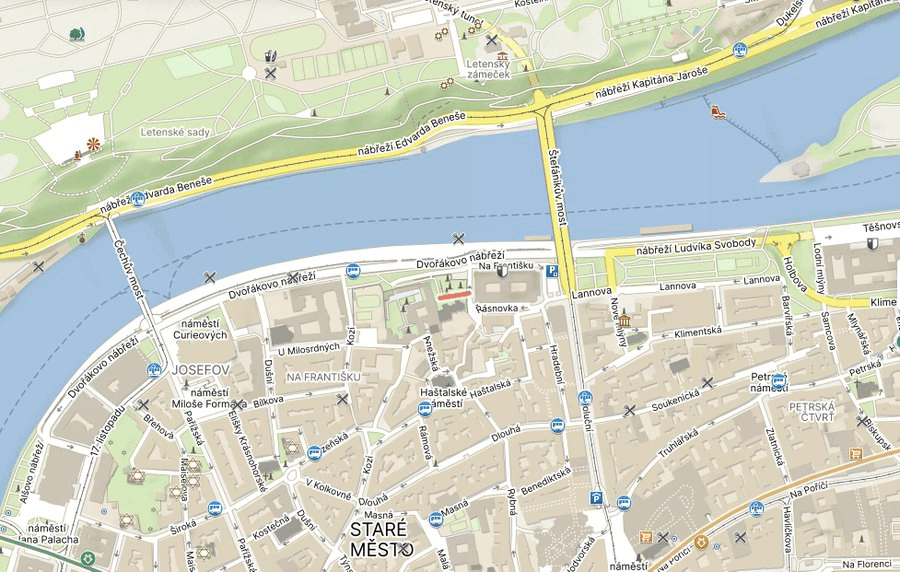
Malá Klášterní translate as ‘Little Convent Street’, so let me take you back to here: https://whatsinapraguestreetname.com/2024/11/05/prague-1-day-243-anezska/.
But what the street (all 30 metres of it) lacks in street signs, it makes up for in open spaces, specifically Zahrada za svatyněmi (‘The Garden behind the sanctuaries’), which was renovated in 2016.
On the one side, you’ve got a decent view of the convent (and basically the entire ‘street’).

On the other, you’ve got excellent views of both the Church of St Salvator and the Ministry of Industry and Trade.
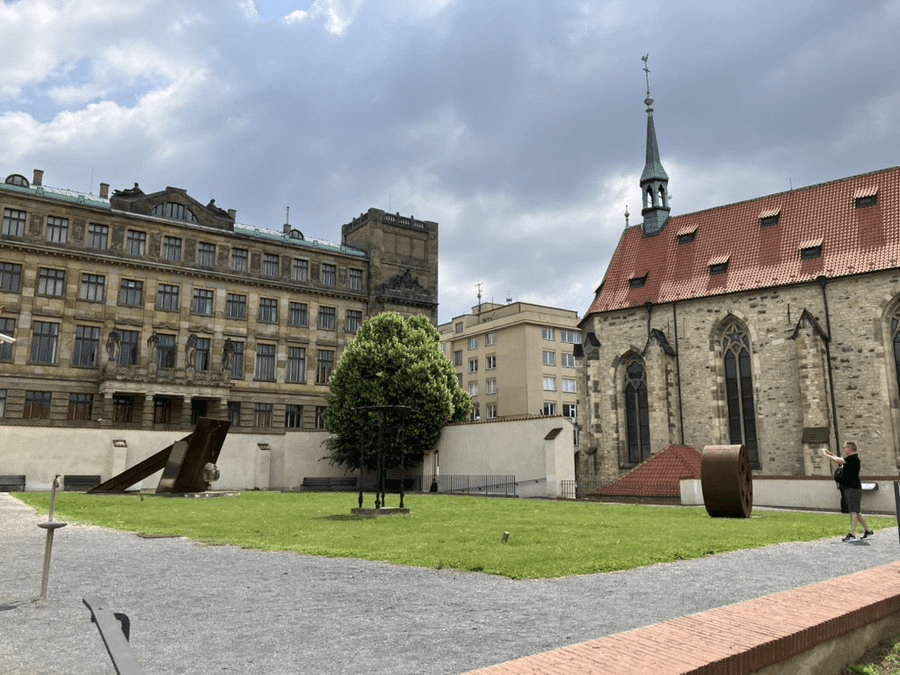
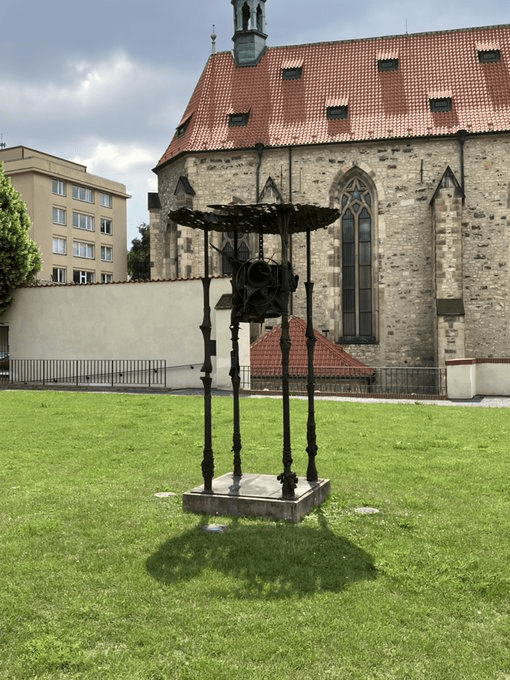
The park is also home to some statues whose modernity contrasts strongly with the surroundings. For example, here’s Buben (Drum) by Čestmír Suška (2001) and Zavěšené břemeno (Suspended burden) by Aleš Veselý (1968).

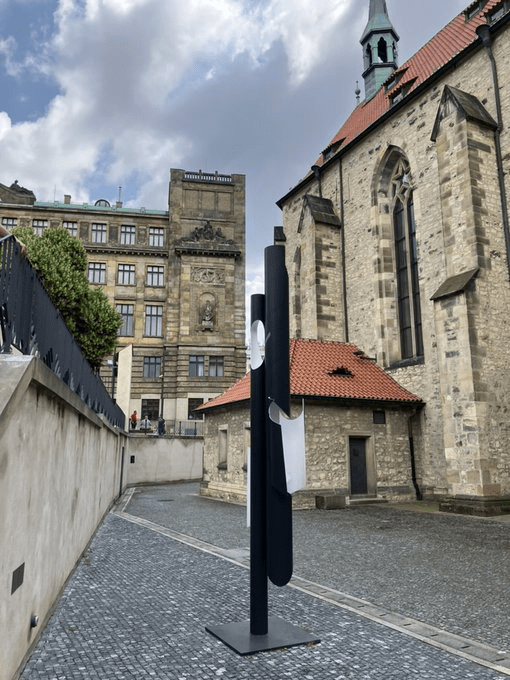
As well as Pád II (The Fall II) by Stanislav Kolíbal (1968) and Šikmý průřez šikmou osou (Oblique cross-section with an oblique axis – so, even less catchy in English), again by Aleš Veselý and created between 1992 and 2009.


Meanwhile, nearer to the street itself, you’ve got Černobílá plastika (Black and white sculpture) and Červená plastika (Red sculpture), both made by Karel Malich in the 1960s.

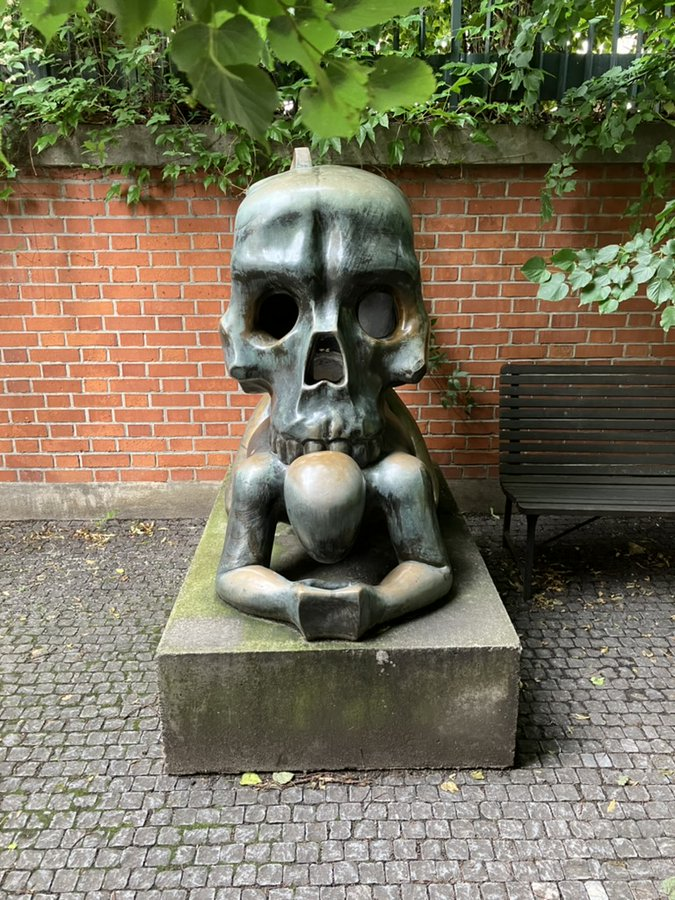
But, heading a bit further south, I imagine most people will be most struck by Podobenství s Lebkou (Parable With Skull), created in 1993 by Jaroslav Róna, who also created the famous Franz Kafka statue in Josefov.
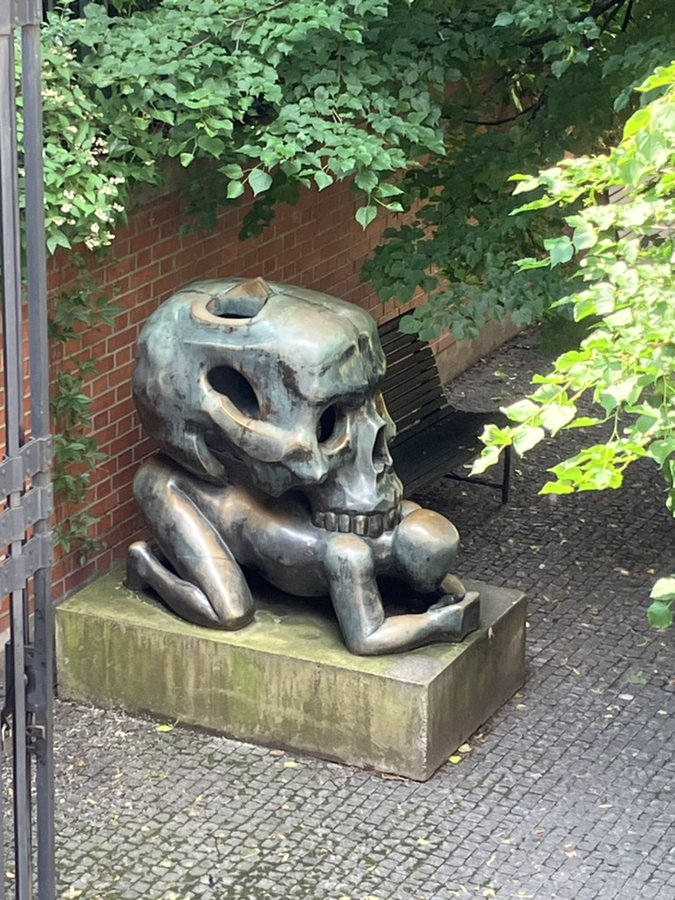
Recently moved over to the convent area from Prague Castle, it depicts a beggar weighed down by a large skull. It probably stands out more here than it did at the Castle, and its new location means you no longer have to pay to see it.

 What's in a Prague street name
Leave a comment