Originally published on X on 13 June 2024.
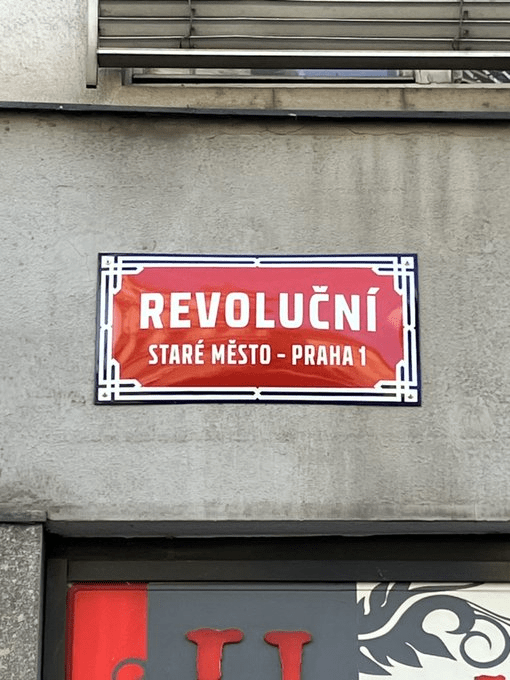
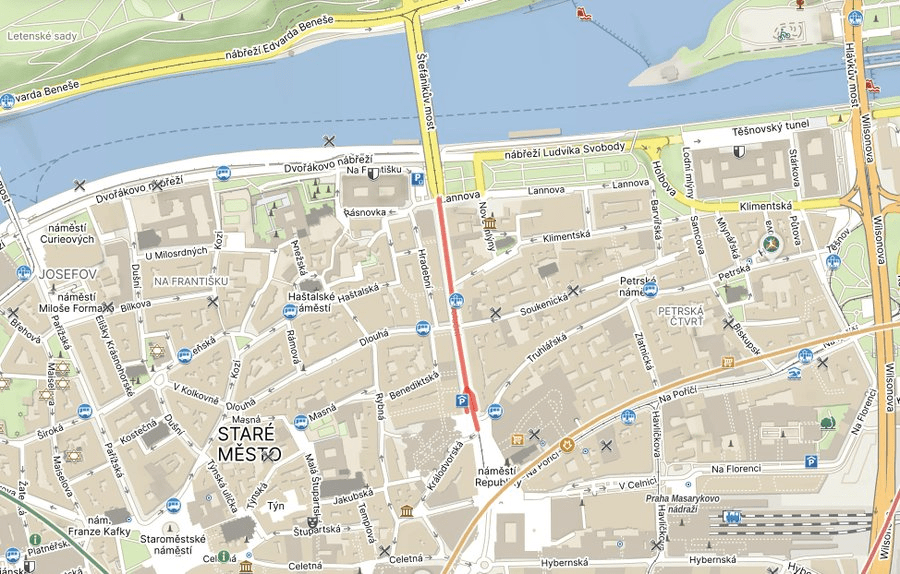
The street is located where the easternmost part of the Old Town walls once stood (see https://whatsinapraguestreetname.com/2024/11/09/prague-1-day-251-hradebni/).
In the 1700s, the part nearer the river was called Náplavní or Náplavka, both referring to the riverbank.
The southern part was called Trubní or Rourová – ‘trubka’ and ‘roura’ are both words for ‘pipe’ or ‘tube’, and a pipeline led from here to the Novomlýnská Water Tower (coming up in the next few days).
In the 1800s, the street was known as Alžbětinská třída, or, colloquially, Eliščina – Elizabeth Avenue, after a spa by the Vltava.
This name stuck until late 1918, when there was, yes, a revolution. I’m going to be lazy and point you to https://whatsinapraguestreetname.com/2024/09/25/prague-1-day-144-28-rijna/.
I’ve spent a few Saturday afternoons round these parts lately to take pics for this series, and Revoluční seems to have a disproportionately above-average number of incredibly drunk tourists around that time.
I assume there’s some pubs nearby with obscene offers on drinks, but if there’s another reason, feel free to tell me.
If you’re able to ignore them (some of them make it difficult), there are a couple of things worth looking at on the street, such as Palác Batex, which, in interwar Czechoslovakia, was the main meeting place for Prague’s queer community.
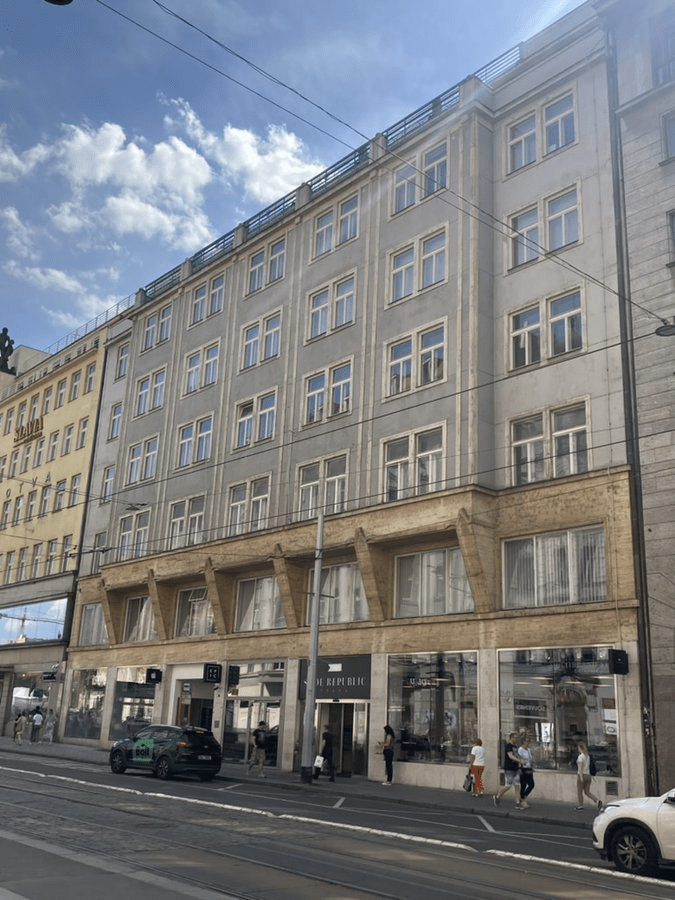
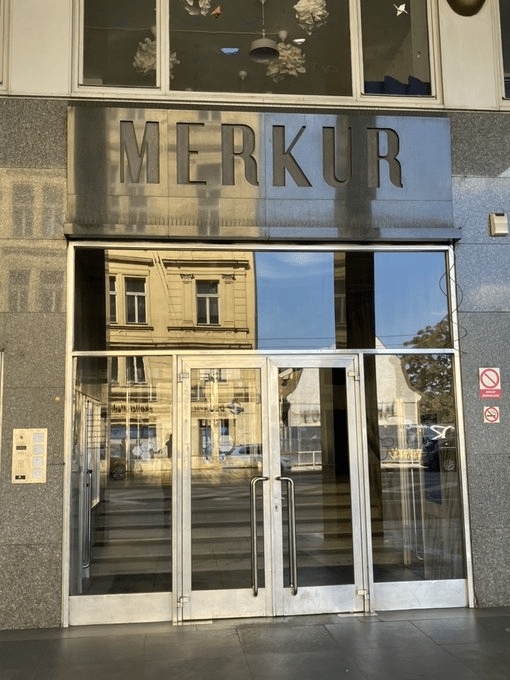
There’s also the functionalist Palác Merkur, designed by Jaroslav Fragner and built between 1934-6. It’s served many functions; in the 1960s, it was a check-in office for Czechoslovak Airlines, which sounds terribly archaic now.

Generally, however, it’s not unreasonable to categorise Revolućní as somewhere you pass to get from A to B (B often being Letná), rather than somewhere where you dawdle.

 What's in a Prague street name
Leave a comment