Originally published on X on 14 June 2024.

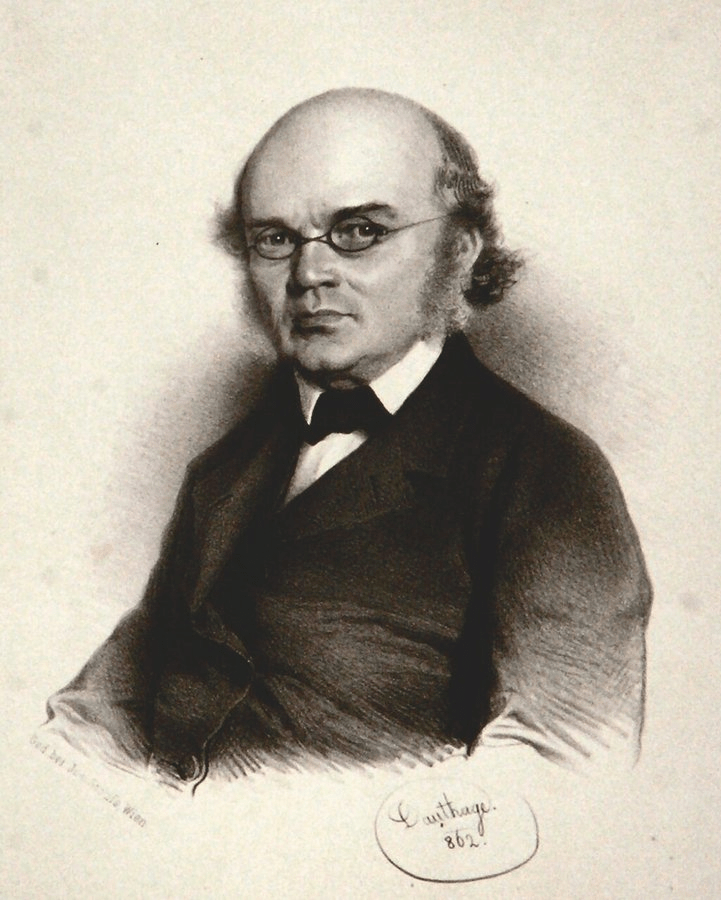
Vojtěch Lanna was born in Čtyři Dvory, now part of České Budějovice, in 1805. He was the son of a shipmaster.
When he was sixteen, he moved to Prague to study mechanical engineering at what is now ČVUT (the Czech Technical University).
However, he was expelled for misbehaviour, and returned to České Budějovice, where he got a job as part of the crew for boats transporting salt between Budějovice and Týn nad Vltavou. His father also taught him shipbuilding.
In 1825, Lanna became authorised to manage river shipments, and also travelled to Hamburg by boat.
Upon his father’s death in 1828, he inherited the family business, which branched out into shipping wood and graphite as well as salt.
He also leased horse-drawn carriages between Linz and České Budějovice – continental Europe’s second-ever public railway line – which meant he could import salt from Austria.
In 1832, Lanna married Filipina Peithnerová; when she died eighteen months later, he married her sister, Josefina.
Around this time, Lanna also leased all water structures on the Vltava between Budějovice and Prague; soon, the stretch of the river where he was in charge of construction and maintenance of buildings extended all the way to Saxony.
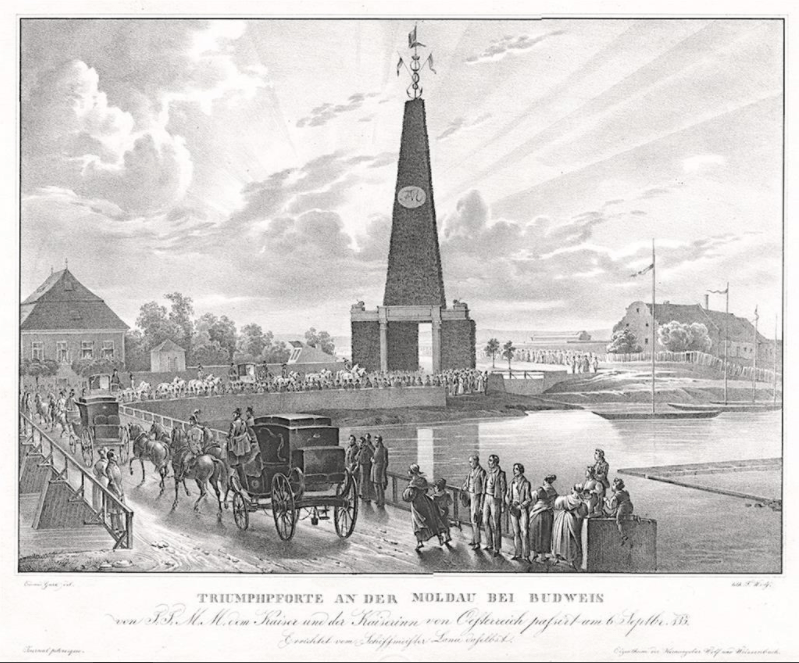
In 1835, Lanna, who was aware that it’s a good idea to know the right people, had a monumental gate built next to his shipyard in tribute to Emperor Ferdinand I, who was passing through; unsurprisingly, Ferdinand bestowed honours upon him soon afterwards.
In 1840, Lanna purchased Poříčí Castle and the surrounding land and villages, and – moment when it all comes together alert – assisted in the construction of the Emperor Francis Chain bridge: https://whatsinapraguestreetname.com/2024/11/09/prague-1-day-254-stefanikuv-most/.
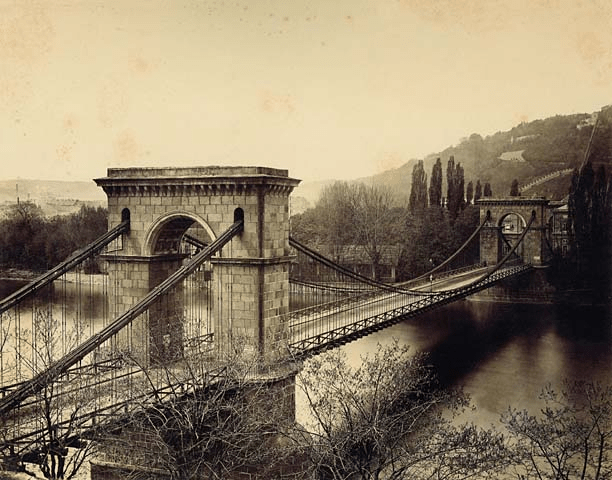
This assistance consisted in the fact that all the material – wood, iron and construction stone – was provided by Lanna. He also built Prague’s first stone embankment (now https://whatsinapraguestreetname.com/2024/09/30/prague-1-day-156-smetanovo-nabrezi-smetana-embankment/).
Further construction in the 1840s included Prague’s first railway station (Masarykovo – coming up before the Prague 1 series ends) and the Stádlec Suspension Bridge in South Bohemia; Lanna also helped Kladno develop as a centre of coal mining.

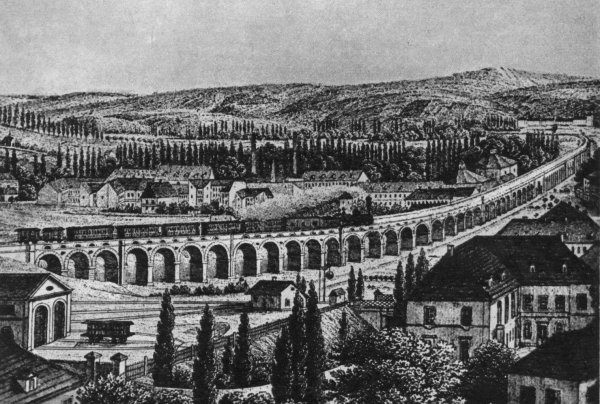
In the 1850s, Lanna would also be contracted to build the Karlín Viaduct (pictured), develop a foundry with a blast furnace in Kladno, and build the Western Railway.
He also moved the family to Prague and had a house built – it’s mentioned on https://whatsinapraguestreetname.com/2024/09/20/prague-1-day-134-hybernska/.
However, the underperformance of one of his companies (Prague Ironworks Company) put paid to construction of the railway for the moment; he was forced out of the company’s management in 1862.
Lanna died of heart failure in Prague in 1866.
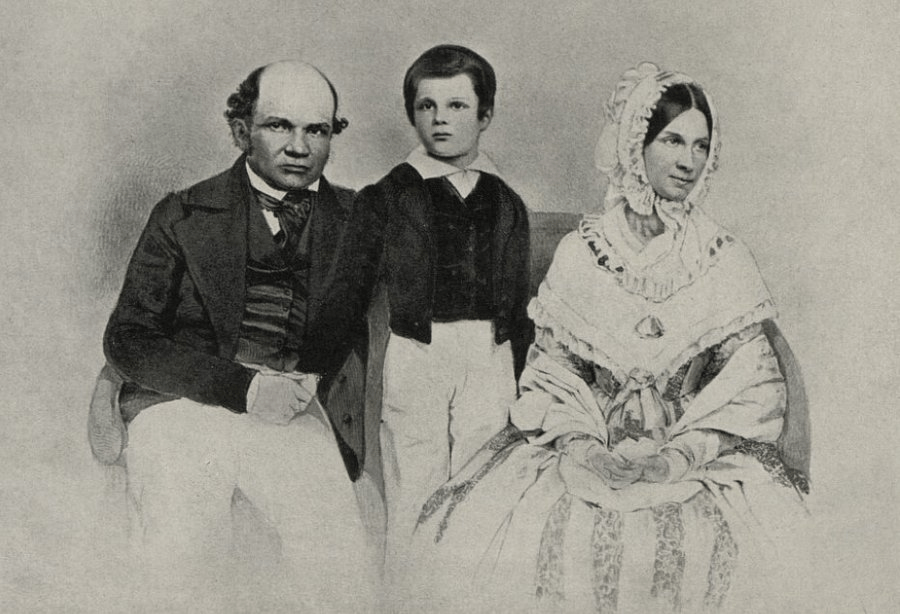
The family business was taken over by his son, Vojtěch Lanna Jr (pictured as a child with his parents), who would co-found the Museum of Decorative Arts in Prague (https://whatsinapraguestreetname.com/2024/10/23/prague-1-day-212-17-listopadu/).
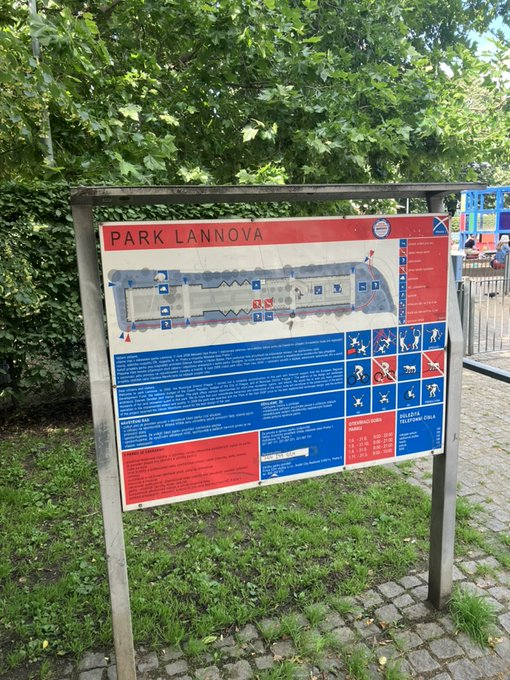
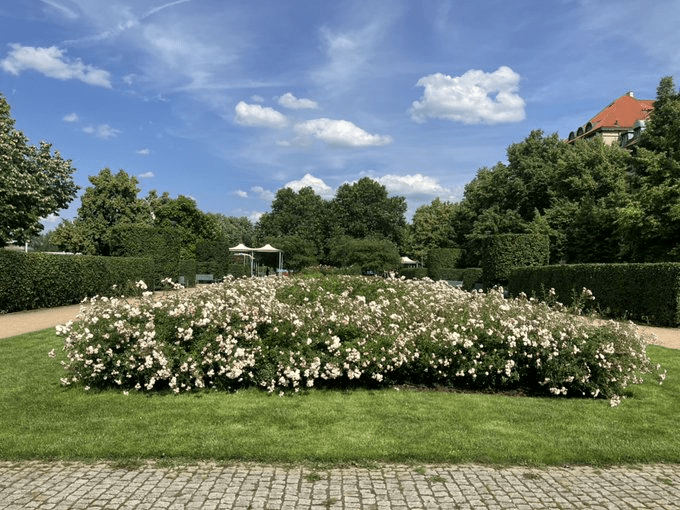
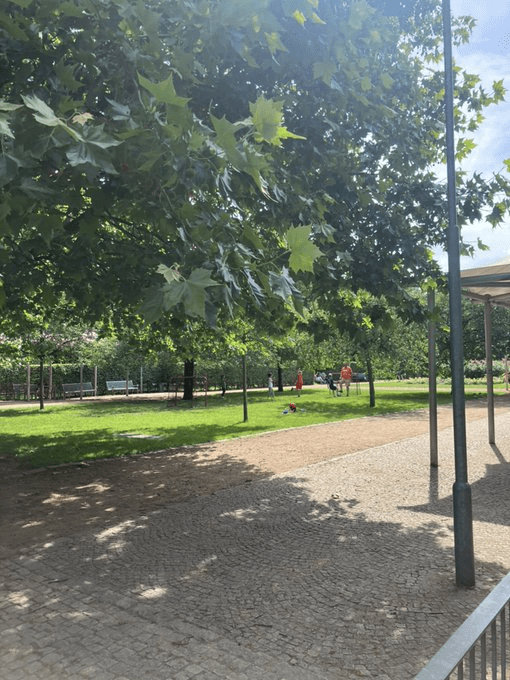
Lanna Sr has also given his name to a park – a very tranquil, underrated park, if I may – between the street and the Vltava.


 What's in a Prague street name
Leave a comment