Originally published on X on 16 June 2024.
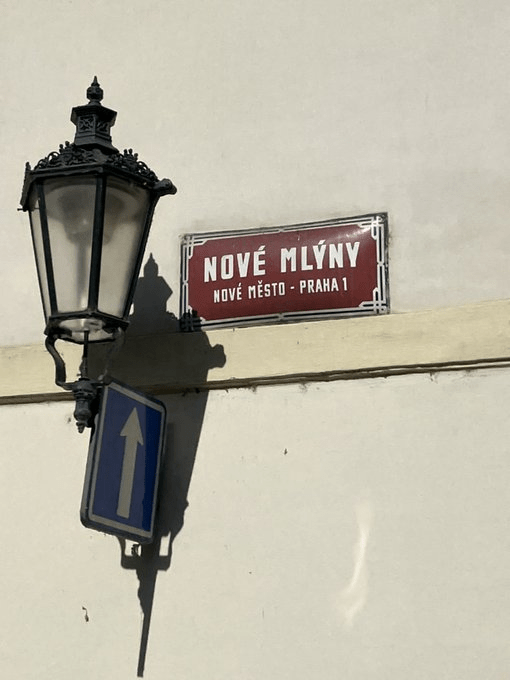

Before the New Town was founded in 1348, Prague got its water from public and private wells (there were aqueducts too, but these were only used for royal buildings and churches).
Later, four waterworks were set up; the ones serving this part of the New Town were called Novomlýnská (‘New Mill’).
The street name itself translates as ‘New Mills’ – i.e., there were several mills around here once upon a time.
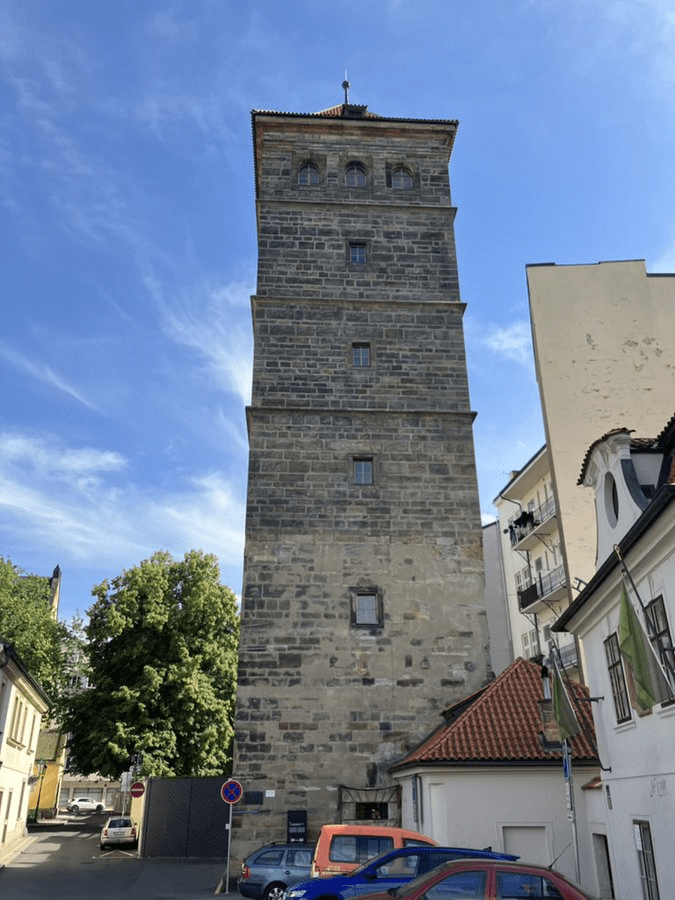
The water tower is first mentioned in writing in 1484, when it was made of wood; when a (somewhat less flammable) Baroque, stone version was built in 1658, it was the tallest of the water towers in Prague.
However, fireproof doesn’t mean waterproof, and, in 1655, flooding reduced the tower to nothing (half of it collapsed, causing the other half to fall into the Vltava).
Work on a replacement took place between 1658 and 1660; it served its original purpose until 1877.

Renovated in 2017, it features a multimedia exhibition called Praha hoří (Prague is Burning), and is the only water tower in Prague that’s accessible to the public (I think – please correct me if the Vinohrady Water Tower’s viewpoint is functioning these days).
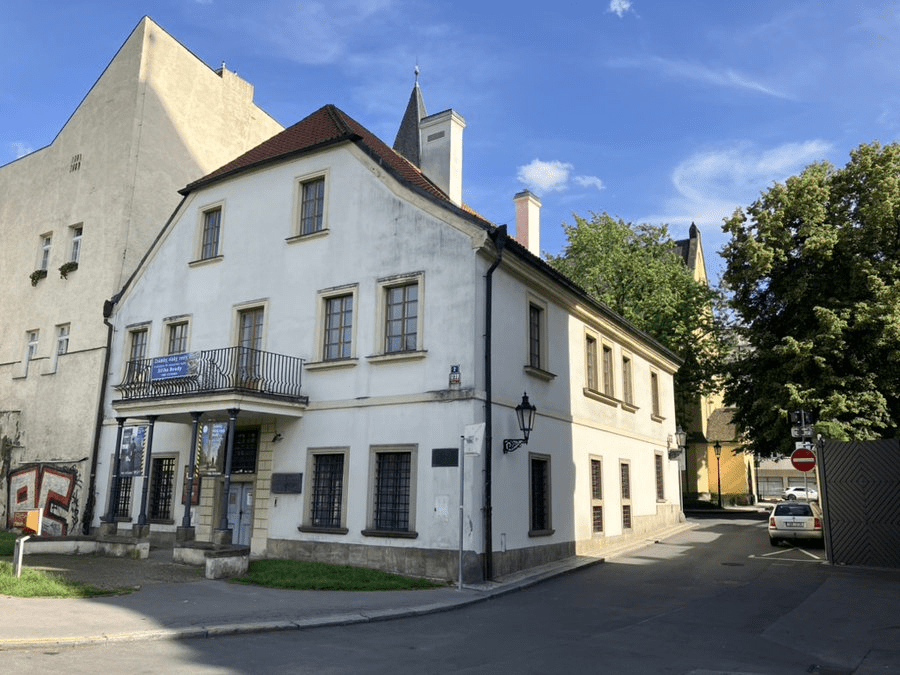
Vávrův dům, at number 2, is often erroneously referred to as Vávrův mlýn, but is actually the home of a former miller, not a mill itself. It’s named after Zdeněk Vávra, a real estate owner who bought the house in 1890 (it remained with the family until 1948).

It was taken over by the Prague Post Office in the 1970s, and, since being renovated in 1986-8, hosts the Prague Postal Museum.

 What's in a Prague street name
Leave a comment