Originally published on X on 28 June 2024.
A quick diversion today – only 400 metres away, from one train station to another, because this blink-and-you’ll-miss-it street is one I, erm, blinked and missed.

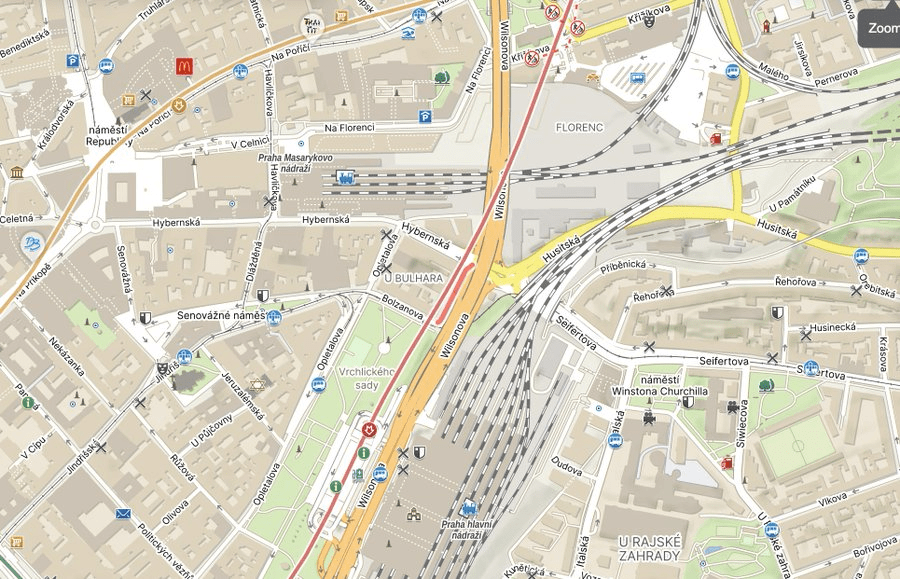
Once upon a time, what is present-day Wilsonova (https://whatsinapraguestreetname.com/2023/12/25/prague-2-day-9-wilsonova/) was a bit less hectic and uncrossable than it is now. U Bulhara is a remnant of how it used to be.
Well, one side of it is – the non-pictured side is a rather unsightly car park.

One theory is that Bulgarians used to have own vegetable gardens round here; also (and unrelatedly), in the 19th century, there was a local pub called U Bulhara. The street, meanwhile, didn’t get its name until 1979.
We know that there were Bulgarian students in Prague in the 19th century – in 1862, they and their Czech colleagues founded a society, Pobratim, aimed at freeing Bulgaria from the Ottoman Empire and helping its church to independence.
Seven years later, another secret society, Postojanstvo, was set up for the same purpose, but in Tábor.
The first official society, Bulharská sedjanka, was set up in Prague in 1880.
However, the first wave of Bulgarian gardeners settling in Czechoslovakia happened in 1912-3, during the Balkan Wars, with further waves after WW1 and at the start of the Great Depression.
They mainly settled in Slovakia, but also in major Czech towns, where they formed horticultural societies.
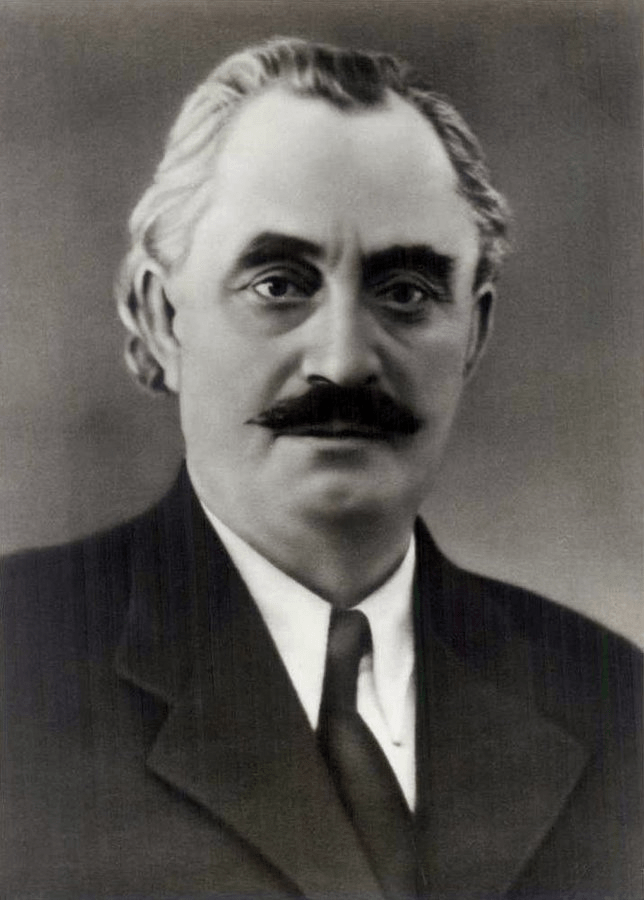
These were liquidated by the communists in 1951, being forced to join an organisation named after Georgi Dimitrov, the first leader of Communist Bulgaria.
The 2021 census counted 7,679 Bulgarians in Czechia (versus 316 Czechs in Bulgaria according to the not-entirely-recent census of 2001).
Perhaps the most famous Bulgarian with a Czech connection was Christina Morfova (1887-1936), an operatic soprano who debuted in Brno and later joined the Prague National Theatre.

Nice article on the links between the two countries here: https://bnr.bg/en/post/101759376/big-community-of-czechs-and-slovaks-settled-in-bulgaria-in-the-19th-century-driven-by-feeling-of-slavic-unity.

 What's in a Prague street name
Leave a comment