Originally publishe3d on X on 12 July 2024.
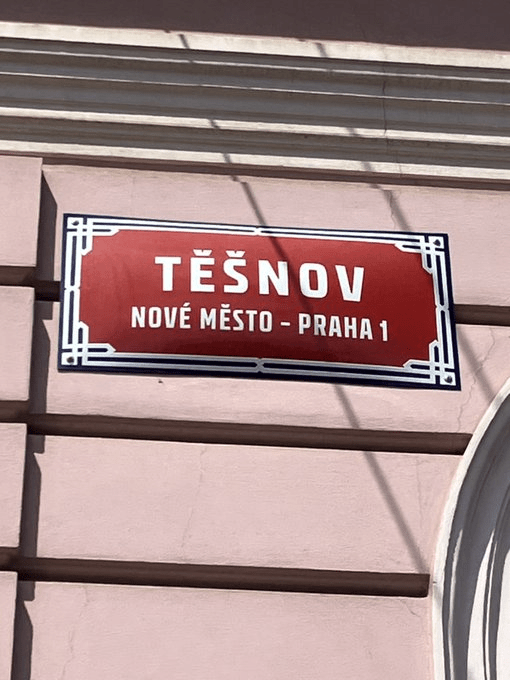
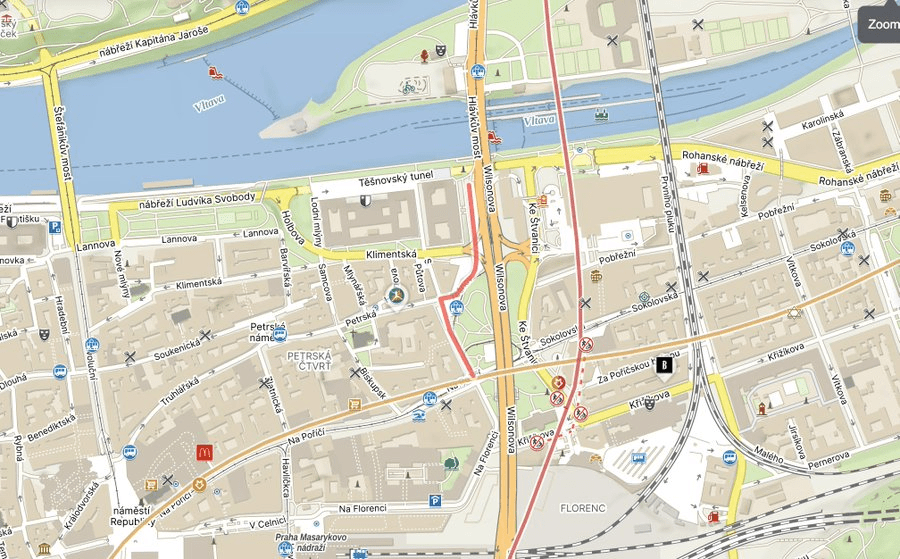
The first written mention of Těšnov, a settlement just outside the New Town walls, and only consisting of a few guardhouses, dates from 1437.
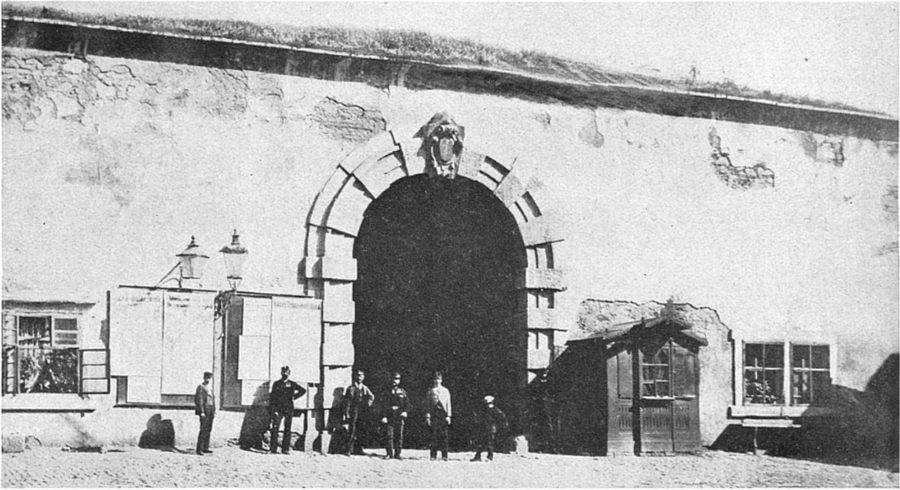
(Photo of the Pořící gate before its destruction in 1875)
You might remember that Pořící – immediately to the west – was largely inhabited by Germans; Těšnov is believed to be a corruption of Deutschenhof, or ‘German Court’.
Těšnov even had its own magistrate, but, not long after it was first mentioned, the settlement became deserted and wouldn’t be mentioned again for about four hundred years.
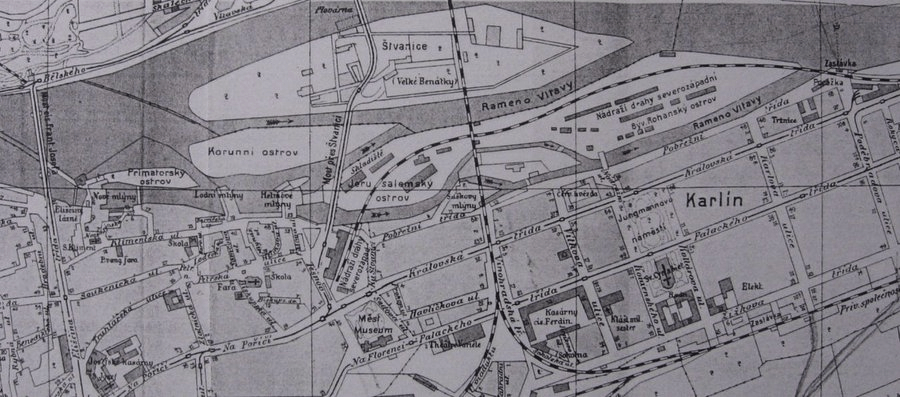
In the 1870s, Prague gained a trio of railway stations. You probably know the main one, and what is now Masarykovo, but the terminus of the Austrian Northwestern Railway was located where Těšnov had once been.
After using a temporary building on Rohanský ostrov for a couple of years, the train station was unveiled in 1875. It was called Praha – severozápadní nádraží / Prague – North-West Station.
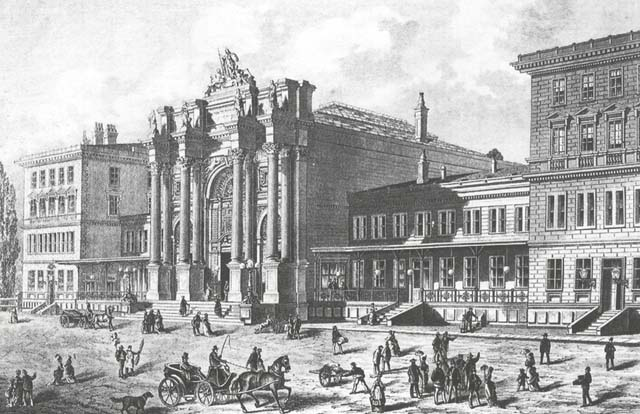
It was a spectacular Neo-Renaissance complex (by the architect Carl Schlimp), with a triumphal arch, four Corinthian columns and an allegorical sculpture of Austria.
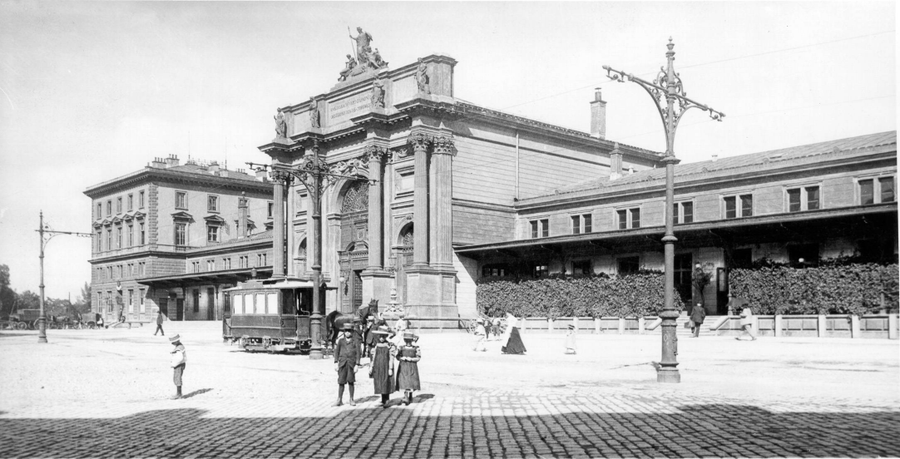
Houses began to be built around the station, and, in 1894, the new street was named Těšnov.
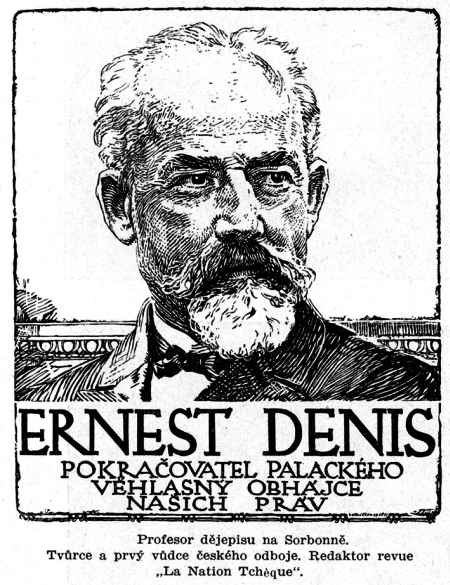
In 1919, the station was renamed Denison, after Ernest Denis (1849-1921), a French historian and Slavophile who had created the Comité national d’études, an organisation advocating for Czechoslovak independence.
In 1953, the station was renamed Praha-Těšnov. However, as the years went by, the authorities decided roads were more important than tracks.
This led to the decision to create a highway running through the centre of the city, but there was a problem with this plan: one of the corners of the train station stood where the road was meant to be.
There were discussions about turning the station into a museum, but many in the Communist Party wanted it to be demolished in the name of progress.
The last train left the station on 1 July 1972.
Efforts to save the building came to nothing, and it was blown up in 1985. The silver lining – a very, very, very thin line – is that many of its contents were transferred to the depositories of the Museum of the Capital City of Prague.
Těšnov (the street) was almost certainly a heck of a lot nicer before all this reconstruction happened too. Nowadays, it definitely has parts you’d avoid at night, and maybe also during the day.
That newly created road (https://whatsinapraguestreetname.com/2023/12/25/prague-2-day-9-wilsonova/) was already my least favourite thing in Prague 1 that isn’t a green scooter on a street corner at night *before* I learnt about this. FFS.
In ‘things that weren’t demolished’ news, Těšnov is where to go if you want to see the facade of the Ministry of Agriculture (or, more realistically, these days, protest outside it).


 What's in a Prague street name
Leave a comment