Na Zámecké was built in 1900.


‘Zámecký’ is the adjective deriving from ‘zámek’ – a castle.
In 1627, Sezima z Vrtby, a nobleman, purchased the then-village of Horní (Upper) Nusle. Around 1649, he had a manor house built where náměstí Bratří Synků is now.
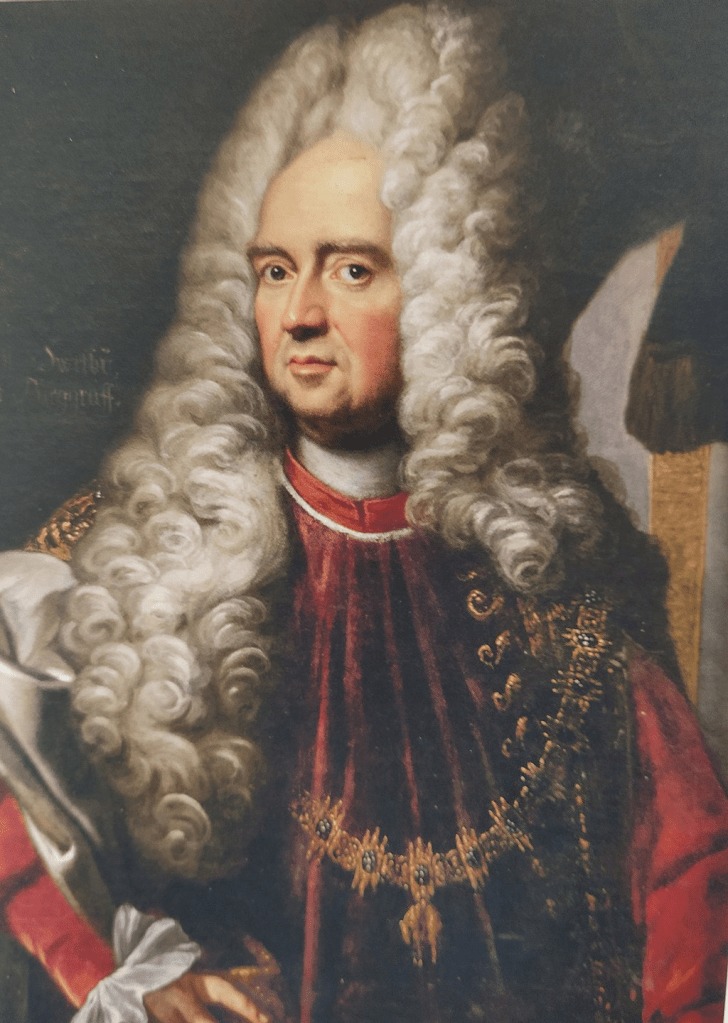
His grandson, Jan Josef z Vrtby (1669-1734), not only united Horní Nusle and Dolní (Lower) Nusle into one village, but had the manor house converted into a castle. Of course, none of this will be news to you if you were here on day 2: https://whatsinapraguestreetname.com/2025/01/02/prague-4-day-2-vrtbova/.
It had three floors, eighteen rooms, a dancehall, a chapel, a warehouse and a stable. Clearly wanting to make sure he had all bases covered, JJzV had a brewery built nearby in 1694.
In the mid-1700s, the Vrtby family sold the castle to Jindřich František II. z Mansfeldu, from another well-known line of nobles. It was prestigious enough for Maria Theresa to pay a visit.
Ultimately, the castle was a victim of industrial progress: when the Prague-Tábor railway line (which would later go all the way to Vienna) was constructed, the castle and its gardens were divided into two parts, and, in 1882, Nusle Railway Station (more on that later in this series) was established, taking up a large proportion of the grounds.
Meanwhile, Nusle itself was expanding, and further homes were needed. By 1903, the entire castle – which had arguably become more of a farmyard by that stage – had been demolished, and, by in 1905, the castle’s yard was gone too.
This is the castle as it looked in 1899.

And here is its wall in 1903.

Really, the name of this street is the only reminder that we have (there was a wine bar called Na Zámecké until about 2000, but then it became a bank, which is the exact opposite of what happened in the UK around the same time, when banks would turn into trendy wine bars, leaving a lot of locals slightly miffed).

 What's in a Prague street name
Leave a comment