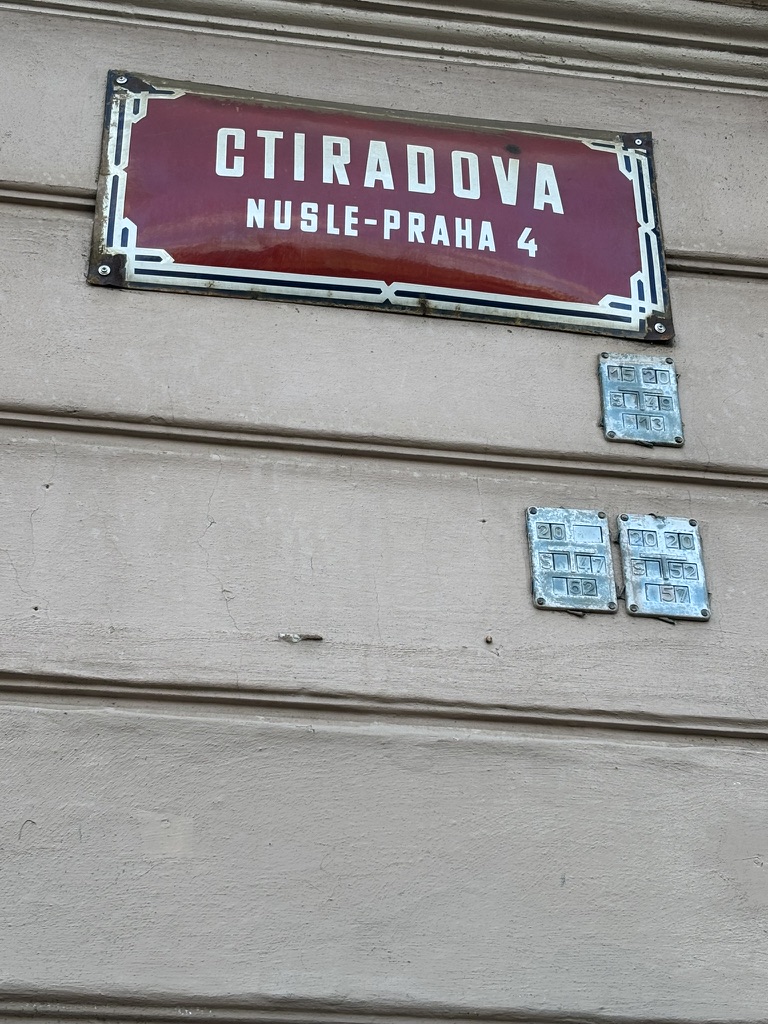
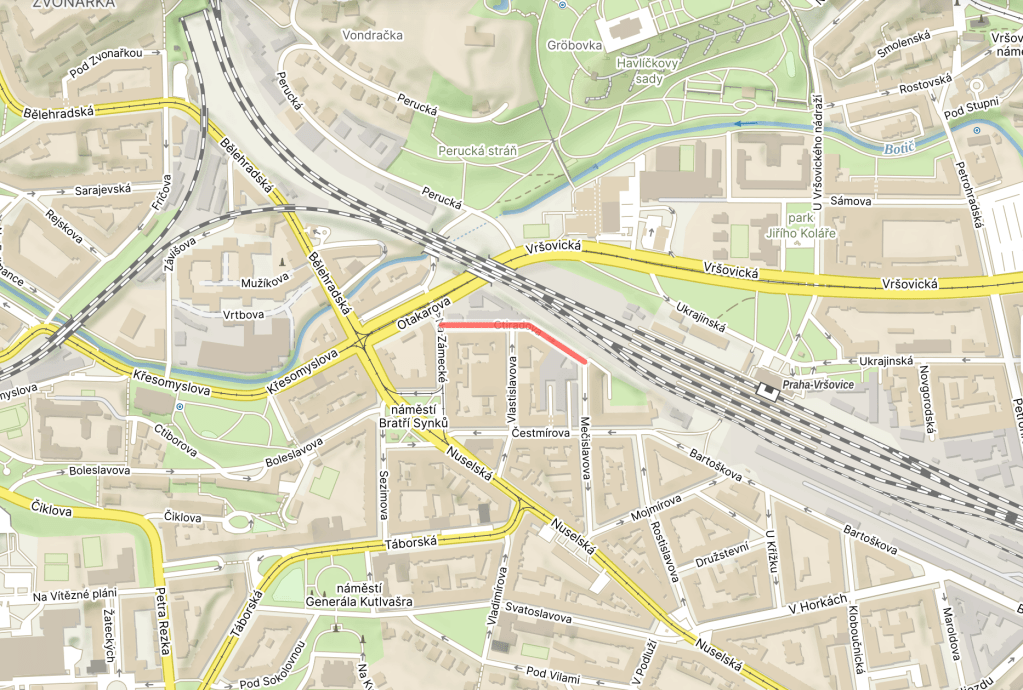
Ctiradova was built in 1900. It was called U nádraží until 1928, due to its location near the train station – we’ll get onto that soon-ish.
We’re back in mythology territory today, and it’ll help if you take a look at the story of Libuše: https://whatsinapraguestreetname.com/2024/08/23/prague-2-day-93-libusina/. If you’re pressed for time: Libuše ruled over her tribe as queen, predicted the future existence of Prague, and married Přemysl Oráč; their descendants would rule Bohemia until 1306.
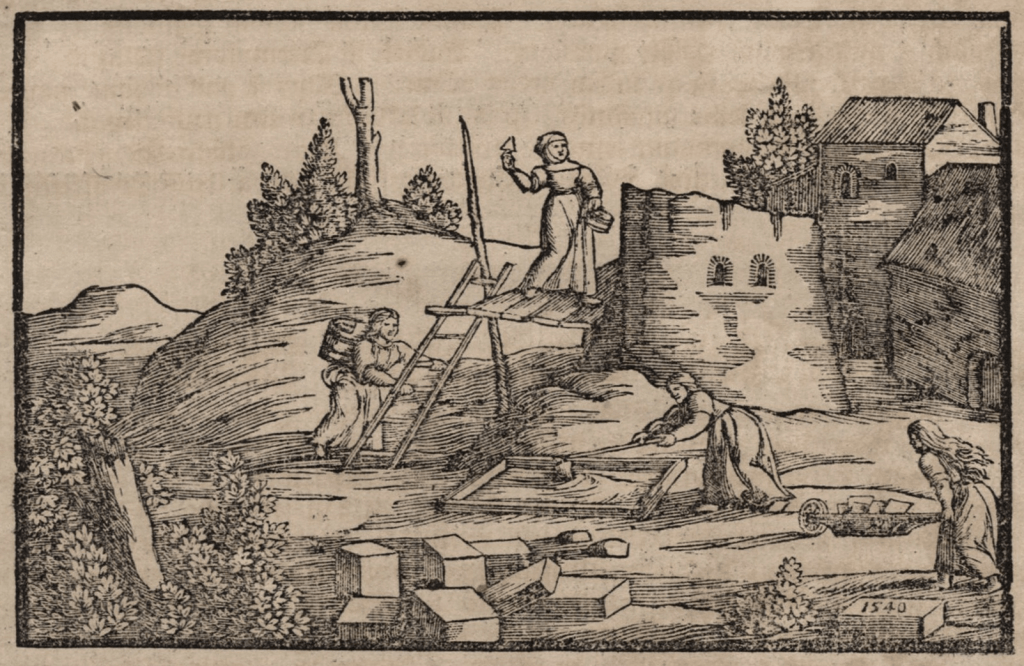
After Libuše died, the women of Bohemia set up a fortress at Děvín, and rebelled against the men of Bohemia, who ruled from Vyšehrad (https://whatsinapraguestreetname.com/2024/08/26/prague-2-day-118-vysehradska/). Predictably, the men thought this was something of a joke.
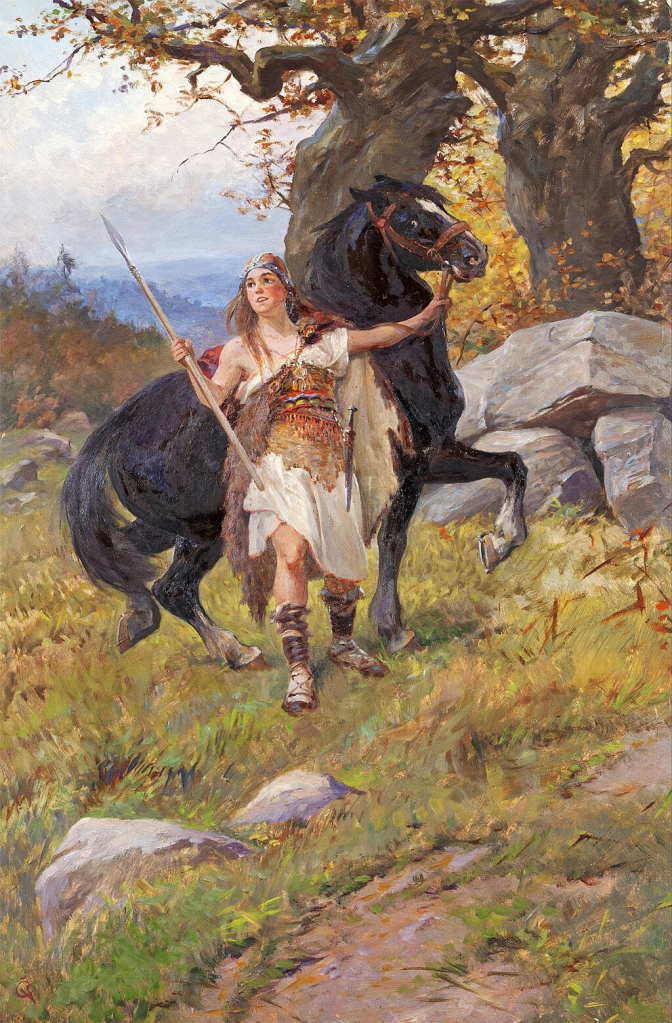
Realising that men often don’t think with their brains, the leader of the rebellion, Vlasta, would send her most beautiful girls out to grab the men’s attention. The entranced men would then head towards Děvín, after which the women would attack them – and win.
Vlasta (pictured) particularly disliked one of Přemysl’s friends, who was called Ctirad.
In the forest, she tied one of her most beautiful girls, Šárka, to a tree, and told her to cry out for help. Ctirad heard her, and came to her aid. He untied her and promised that he’d take her home.
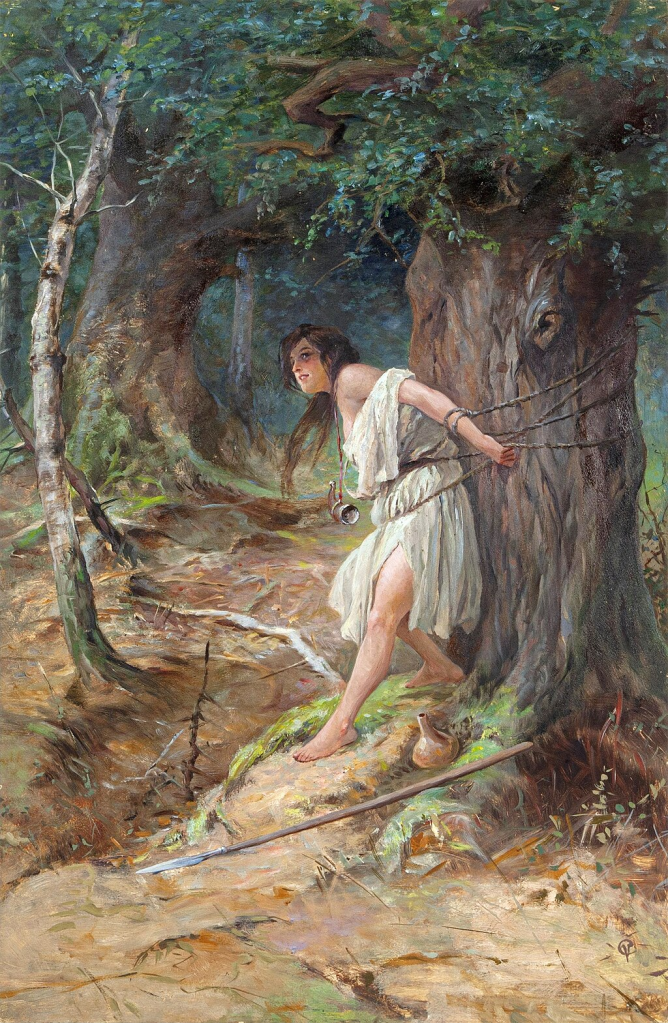
Šárka had a horn round her neck, and told Ctirad to blow on it. What Ctirad didn’t know was that this horn was basically saying ‘hey ladies, he fell for it’.
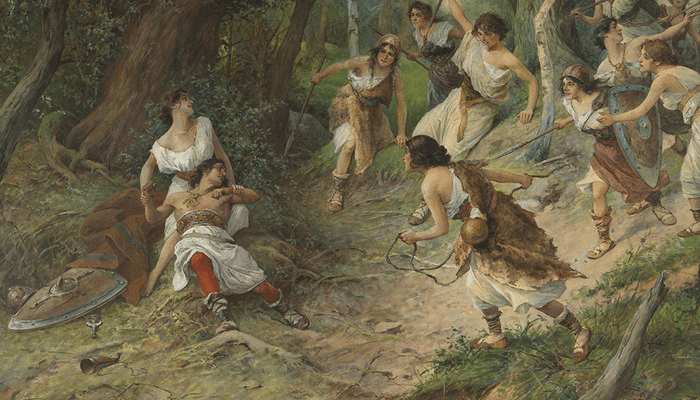
Vlasta’s warriors tortured and killed Ctirad at Děvín Castle, but their days were numbered once news of what they’d done made it back to Vyšehrad.
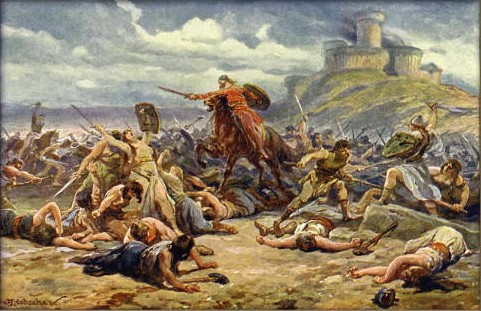
In the ensuing fighting, Vlasta was killed, and Děvín was burnt to the ground. Only men ruled from that point on, and, for crying out loud, it’s 2025 and the country still hasn’t had a female Prime Minister or President.
Šárka, meanwhile, killed herself by jumping off a cliff; it’s not clear why, but it’s possible that she had fallen in love with Ctirad and couldn’t handle the guilt of what had happened, or that she felt that this form of death was preferable to surrendering.
In any case, you’re likely to know the area where her death took place – it’s called Divoká Šárka (i.e. wild Šárka). If you’re a visitor to Prague, it’s very likely to be one of the first things you see when you make your way from the airport into the city; if you’re a local, you’ll know it as Prague’s post popular hiking location.
There’s a wonderful statue of Ctirad and Šárka at Vyšehrad, by Josef Václav Myslbek (who’s most famous for the status of Wenceslas and his horse on Václavské náměstí: https://whatsinapraguestreetname.com/2024/09/17/prague-1-day-123-vaclavske-namesti/).
It can be seen on https://en.wikipedia.org/wiki/Ctirad_and_%C5%A0%C3%A1rka (reminds self to go and get his own photo of it ASAP).

 What's in a Prague street name
Leave a comment