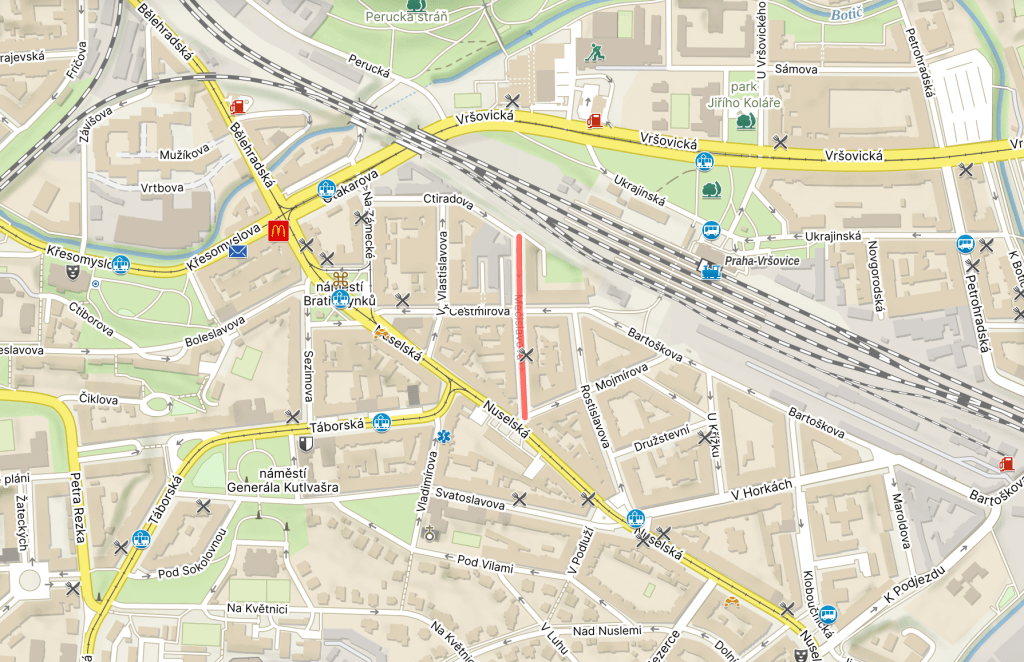
Mečislavova was built in 1892.
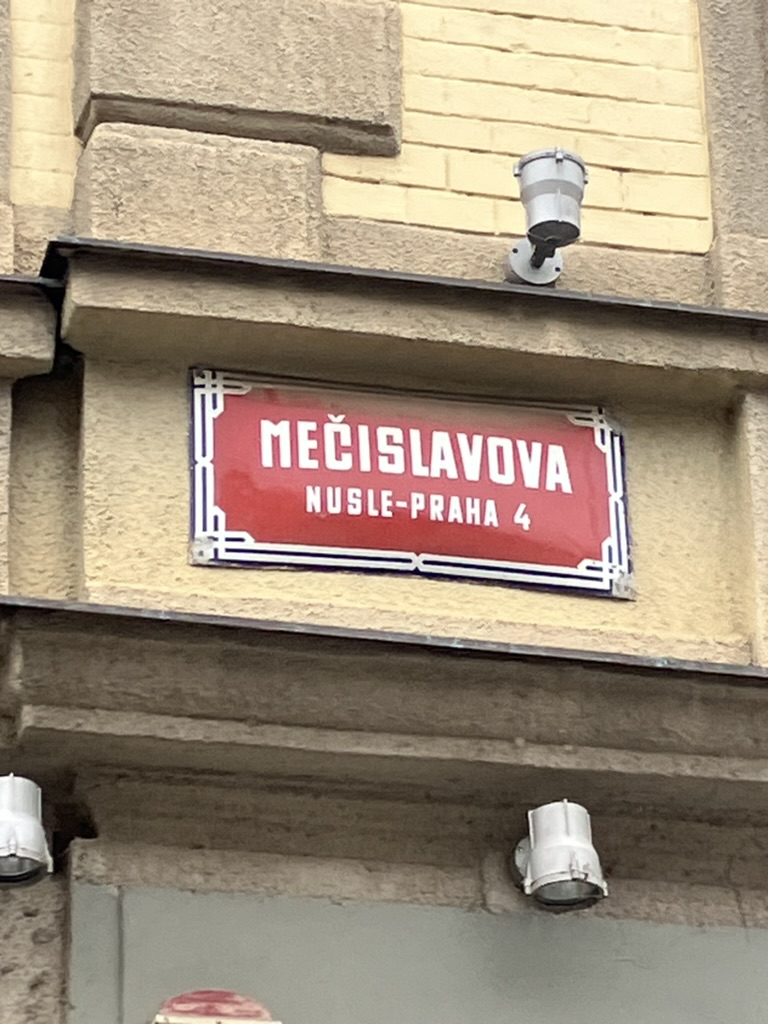
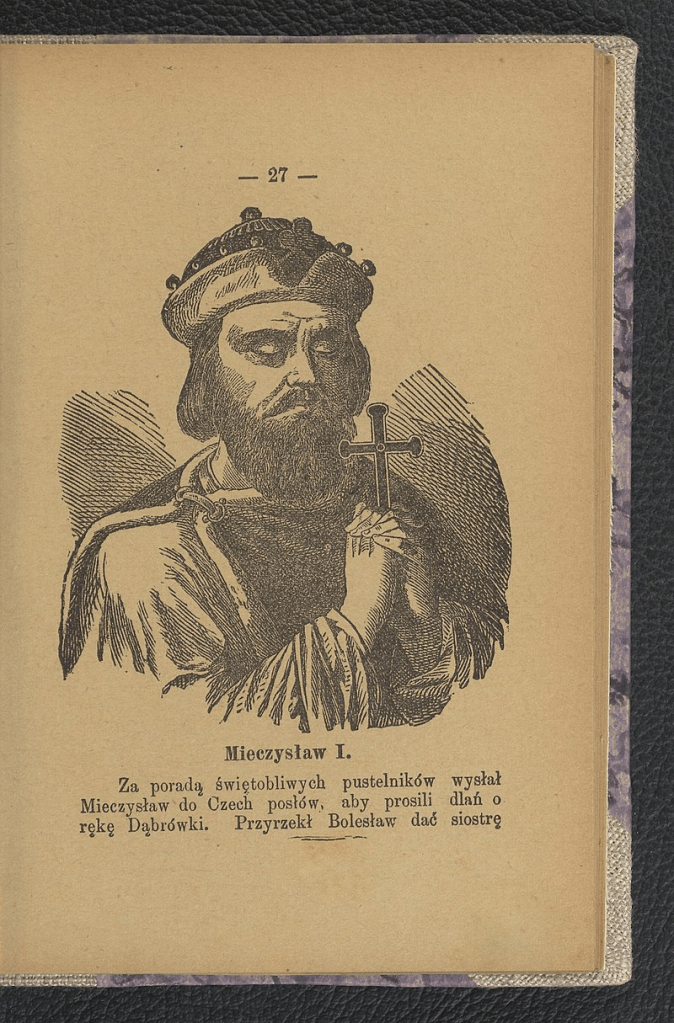
Mečislav is more commonly known as Měšek in Czech; in English, we use his Polish name, Mieszko. That was long thought to be a diminutive form of Mieczysław – still a common name in Poland – but many modern historians disagree.
Mieszko was born… at some point (take your pick of any year between 922 and 945, with the later chunk of this time period being seen as more likely). Legend has it that he was blind for the first seven years of his life, gaining sight when he went for his first haircut.
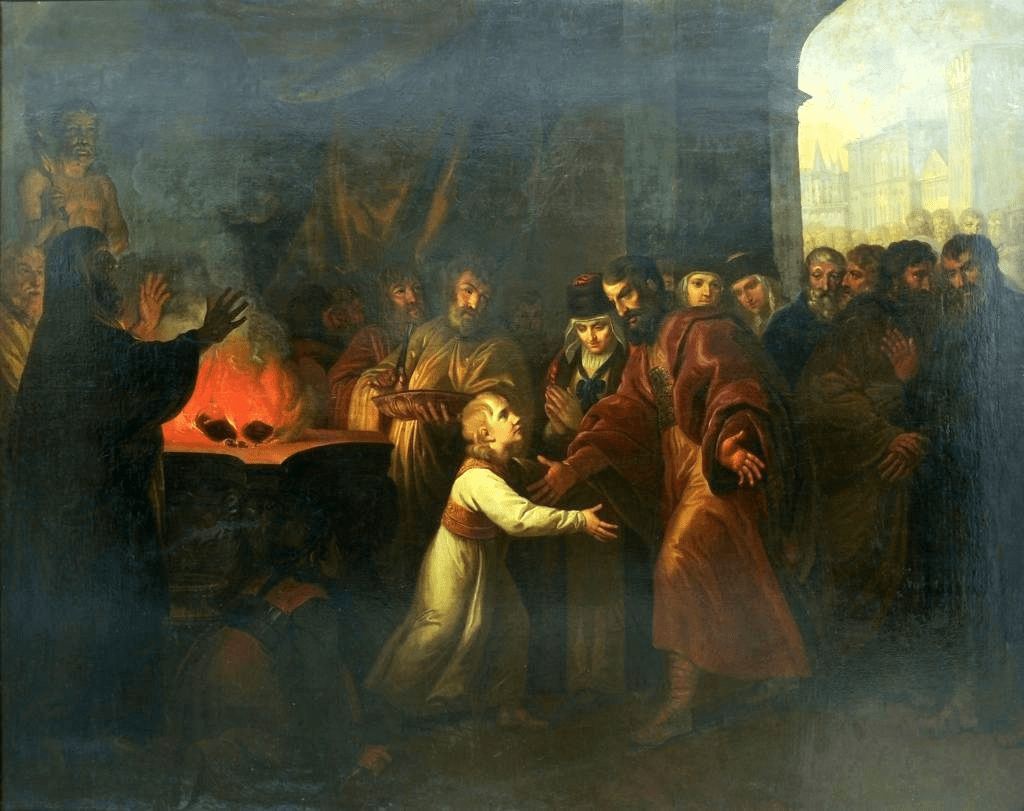
His father was supposedly Siemomysł, Duke of the Polans, but there is no concrete proof of his existence.
When he died – probably in the late 950s – Mieszko took over, although we can’t be sure exactly what the extent of the territory he ruled was. What we can be sure of is that Mieszko had quite a task ahead of him, as those he ruled over were fiercely loyal to their own tribes above all else.
Mieszko is first mentioned in writing in 965, when a Jewish traveller from Spain, Ibrahim ibn Yaqub, referred to him as the ‘king of the north’. Ibrahim ibn Yaqub is certainly important from a Czech viewpoint, too – he was the first person to ever mention Prague in writing: https://whatsinapraguestreetname.com/2024/10/12/prague-1-day-189-tynska/.
Upon taking power, Mieszko either conquered or consolidated his ancestors’ gains in Mazovia (think the mid-north-west of present-day Poland, approximately between Łódź and Białystok), and probably conquered Pomerania (think the lands on the Baltic Sea which, nowadays, are shared between Poland and Germany).
However, Mieszko’s expansionist desires were threatened, to the west, by German rulers (who also had their eye on Pomerania), and, to the south, by the Czechs. They held Silesia (including the part of Silesia that’s now in Poland), and, in 955, Boleslav I had got his hands on Lesser Poland, including Kraków.
Realising that, if you can’t beat them, join them, Mieszko entered into negotiations with Boleslav in 964 or 965, and, as a result, married Boleslav’s daughter, Doubravka.
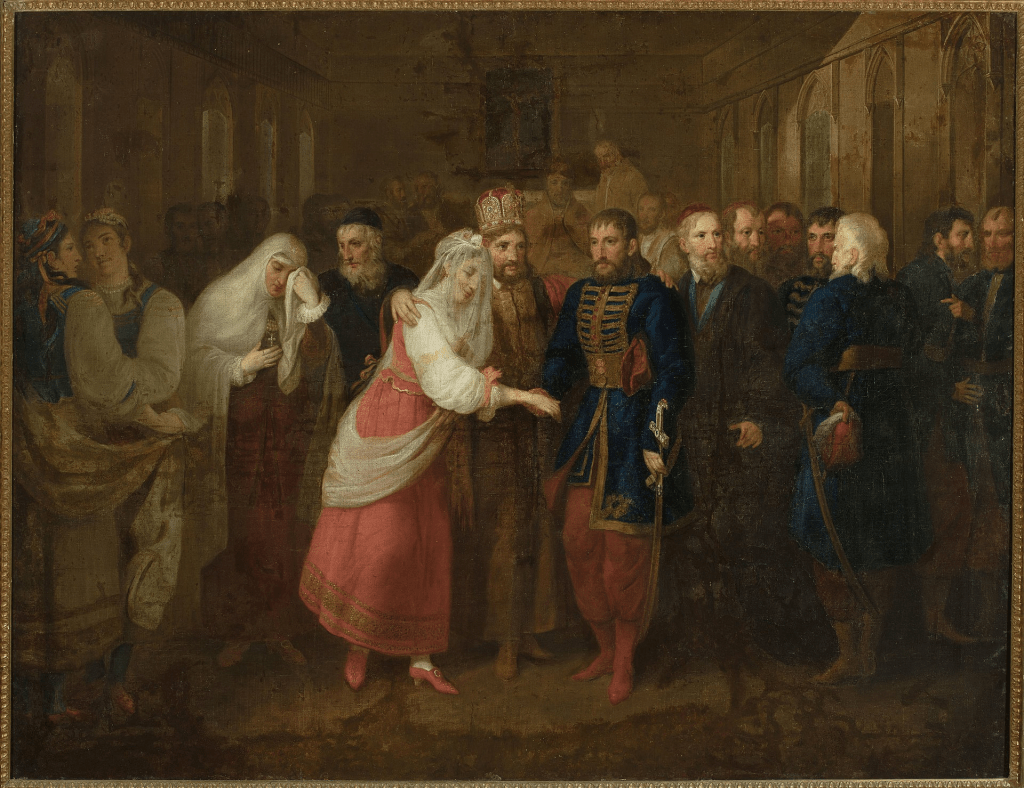
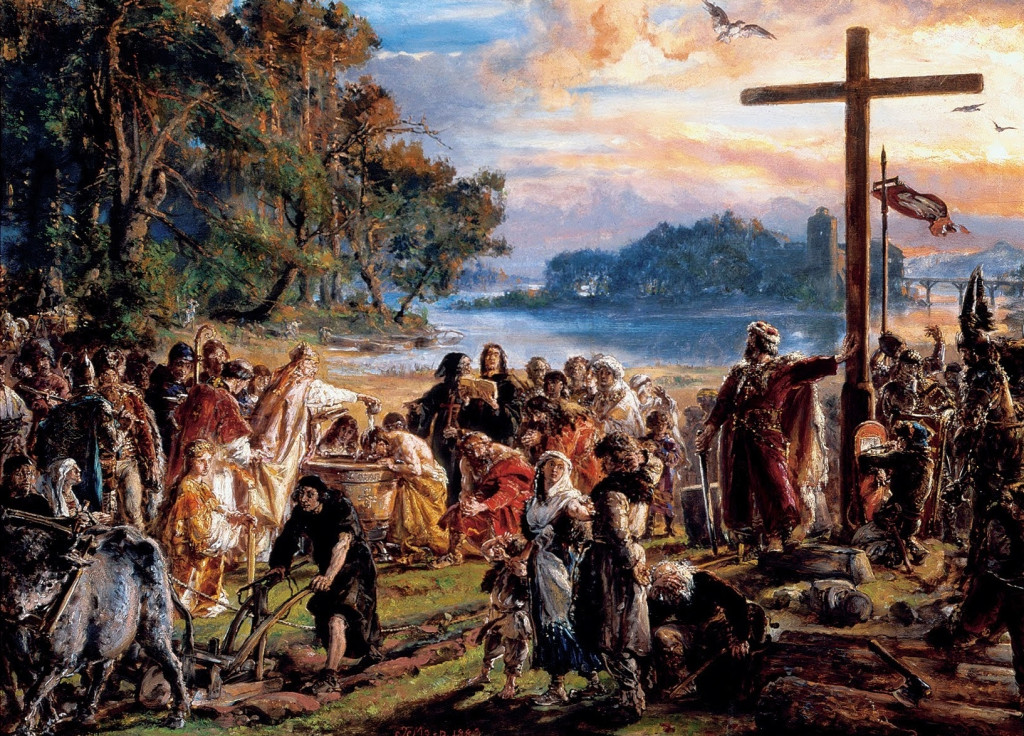
Mieszko also decided to accept Christianity – possibly for political reasons (major efforts to convert Bohemia had started much earlier). He was most likely baptised in 966.
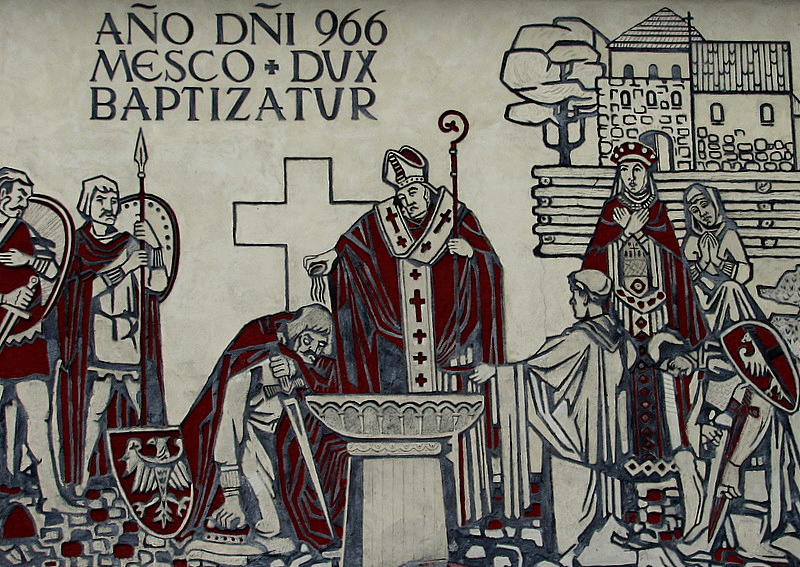
This explains why so much Polish church vocabulary – e.g. kościół (church), chrzest (baptism), kazanie (sermon) and biskup (bishop) is derived from Czech.
It also meant that no other people – especially the Germans – could attack Mieszko’s lands on the grounds that they needed to be Christianised.
A missionary bishopric, subordinate to Rome, was established in Poznań in 968.
Now that he could count on Czech support, Mieszko set about consolidating and strengthening his position in Pomerania, which was neither an easy process nor a short one.
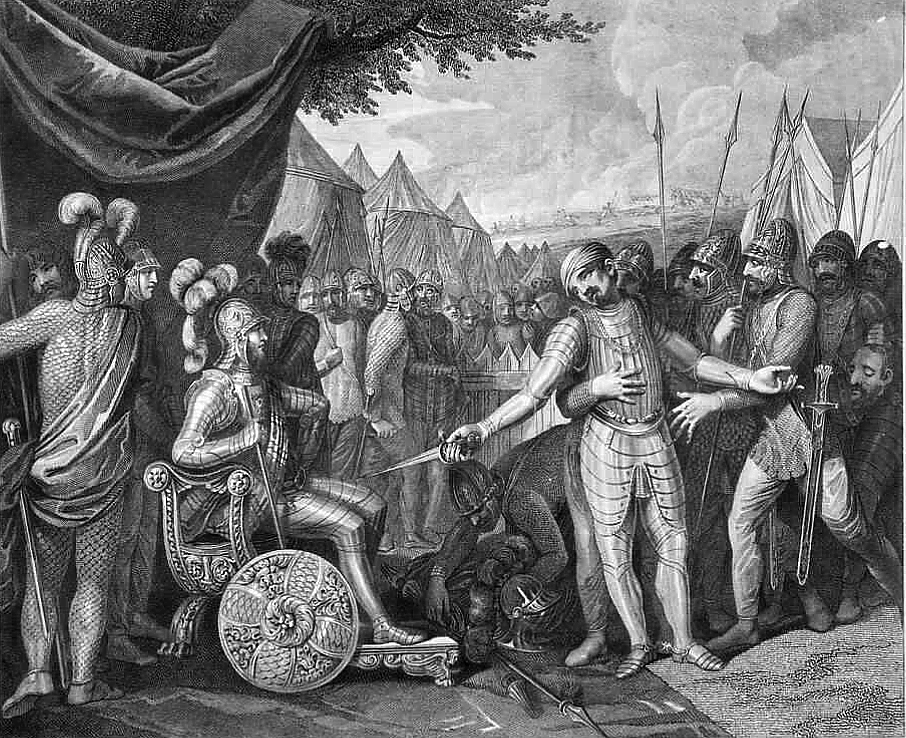
Doubravka died in 977, and Mieszko married Oda of Haldensleben, daughter of Dietrich of Haldensleben, Margrave of the Nordmark (roughly equivalent to present-day Brandenburg). Relations with Bohemia inevitably deteriorated.
In 990, Mieszko and Boleslav’s successor – also Boleslav (II) – ended up at war, with the Polish ruler gaining control over Silesia.
Mieszko died in 992, and was succeeded by his son, Bolesław I (the Brave) – meaning that, until 999, Bohemia was ruled by a Boleslav, and Poland by a Bolesław. And, in 999, the latter would also become Duke of Bohemia, known as Boleslav III (the Red). That’s a lot of Boleslavery to process.
Mieszko’s legacy is significant – the territory that he ruled over is the first land that we can call Poland, he brought Catholicism to the country (we can confidently say it has, erm, ‘persisted’ there), and left his son with territories twice the size of those he had had when he came to power.
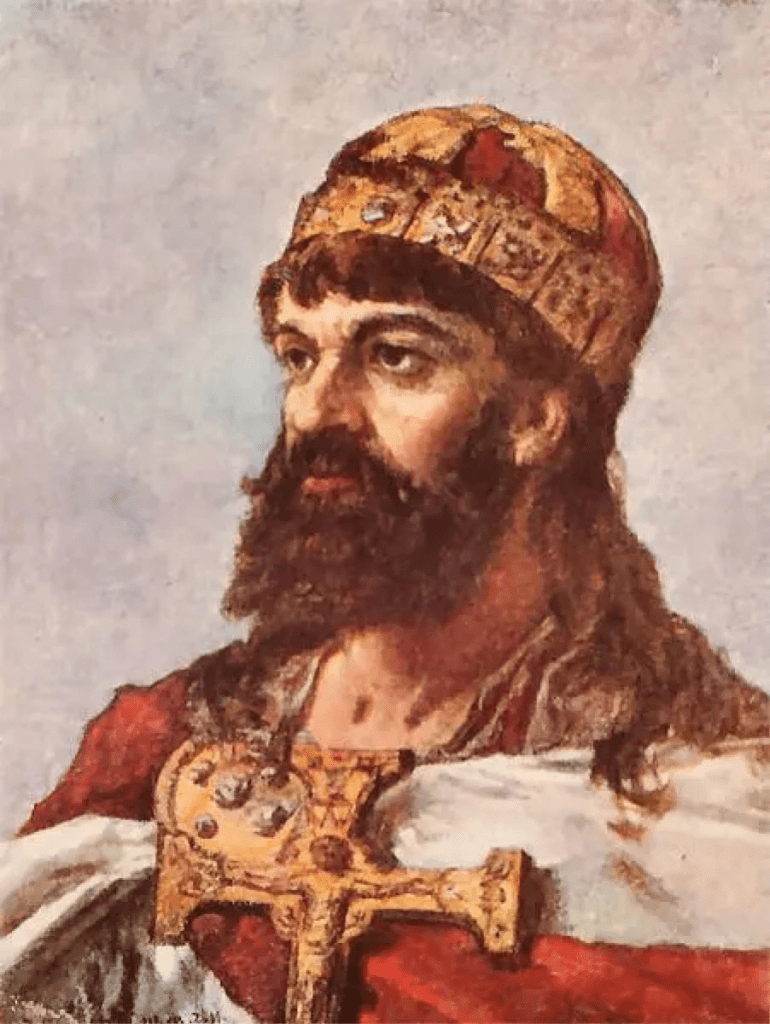
If you’ve been to Poland and didn’t pay for everything by card, you might have seen him.
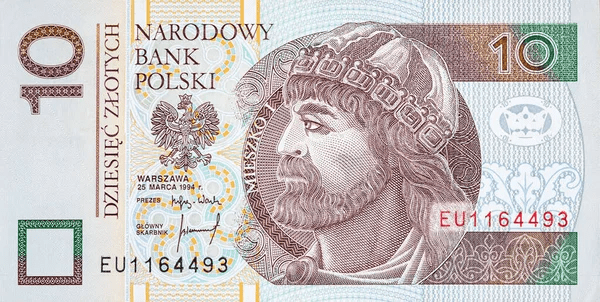
That’s only about € 2.30 these days, though, so maybe he won’t be around much longer, and this street, which, let us remind ourselves, hasn’t actually got his name right, will survive longer.

 What's in a Prague street name
Leave a comment