Čestmírova was built in 1892.
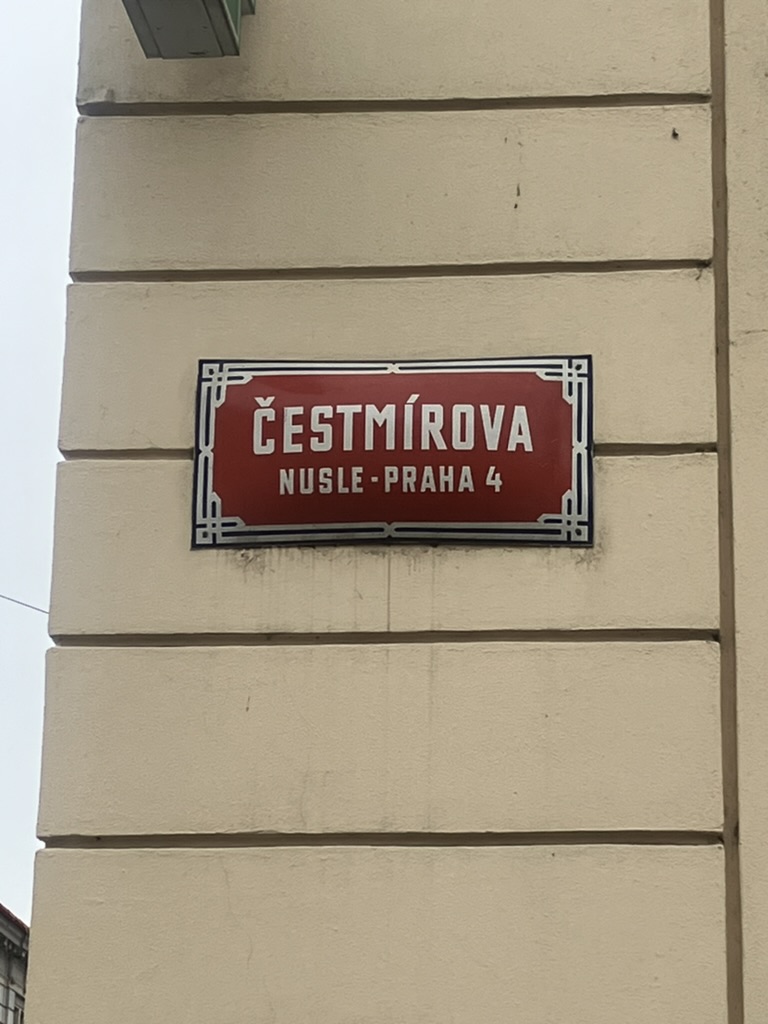
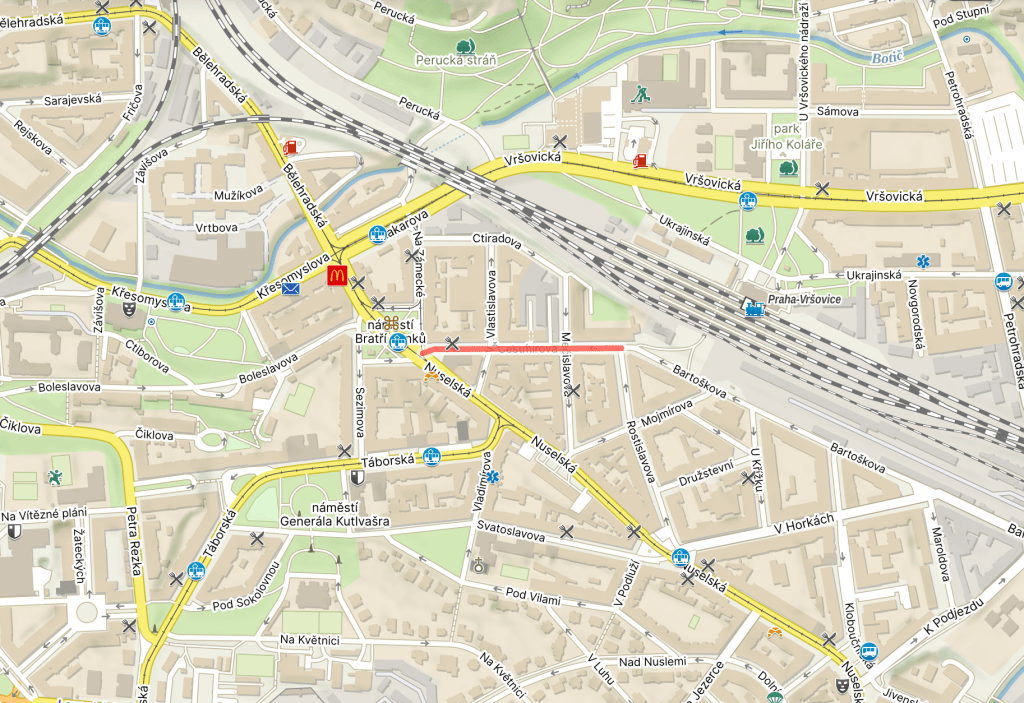
Čestmír is about as Slavic a man’s name as you can find; it means ‘peaceful’ (although, to say ‘peaceful’ in modern Czech, you’d say ‘mírový’.
About 2,500 men in Czechia currently have the name; for people of a certain generation, the first Čestmír that will come to mind is Čestmír Trnka, the lead character of the 1983 children’s TV series Létající Čestmír (Flying Čestmír), in which he travelled to the ‘planet of flowers’ and developed superpowers as a result.
Meanwhile, the Čestmír who this street is named after seems to have existed about as much as the 1980s interplanetary schoolboy one did.
To tell this story properly, we have to mention the Lučans, supposedly a Bohemian tribe which inhabited a territory called Lucko, with Žatec as its centre of power (https://whatsinapraguestreetname.com/2024/10/20/prague-1-day-207-zatecka/).
Their leader, who I’m obnoxiously going to pretend was called Lord Lučan, but was actually called Vlastislav (https://whatsinapraguestreetname.com/2025/01/10/prague-4-day-10-vlastislavova/), broke the peace with Prince Neklan (https://whatsinapraguestreetname.com/2024/08/25/prague-2-day-103-neklanova/), so Neklan prepared for war.
Neklan, however, was peace-loving and didn’t want to fight, so he sent a warrior to lead the army on his behalf. According to Komas and his Chronicle, this warrior was called Tyr.
Tyr led his army to success, but was killed in the process. For the record, all this supposedly took place around Tursko, nowadays a district in Prague West. It’s generally accepted that the battle did actually occur – but the location, scale and names of those involved are all questionable.
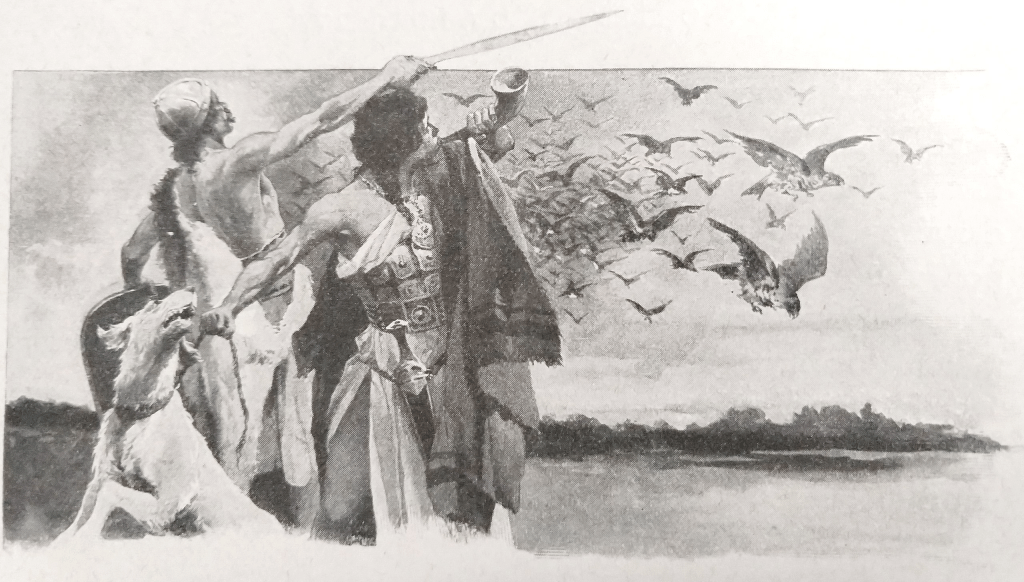
Kosmas wrote about this tale in his Chronicle in the 12th century, probably based on an ancient Czech song which hasn’t survived. Dalimil – whoever Dalimil was – also wrote about it in his own Chronicle in the early 1300s, and, by that time, ‘Tyr’ had changed to ‘Styr’.
Six centuries later, the tale would reappear in the Rukopis královédvorský – see https://whatsinapraguestreetname.com/2024/08/22/prague-2-day-91-lumirova/ for the reasonably mind-blowing story of that one. In this version, Tyr/Styr was now called Čestmír.
Alois Jirásek then took the name, and used it when relating the tale in his Ancient Bohemian Legends / Staré pověsti české, and this is version of the legend that people are most likely to know. Full text here: https://cs.wikisource.org/wiki/Star%C3%A9_pov%C4%9Bsti_%C4%8Desk%C3%A9_(1959)/Luck%C3%A1_v%C3%A1lka.

 What's in a Prague street name
Leave a comment