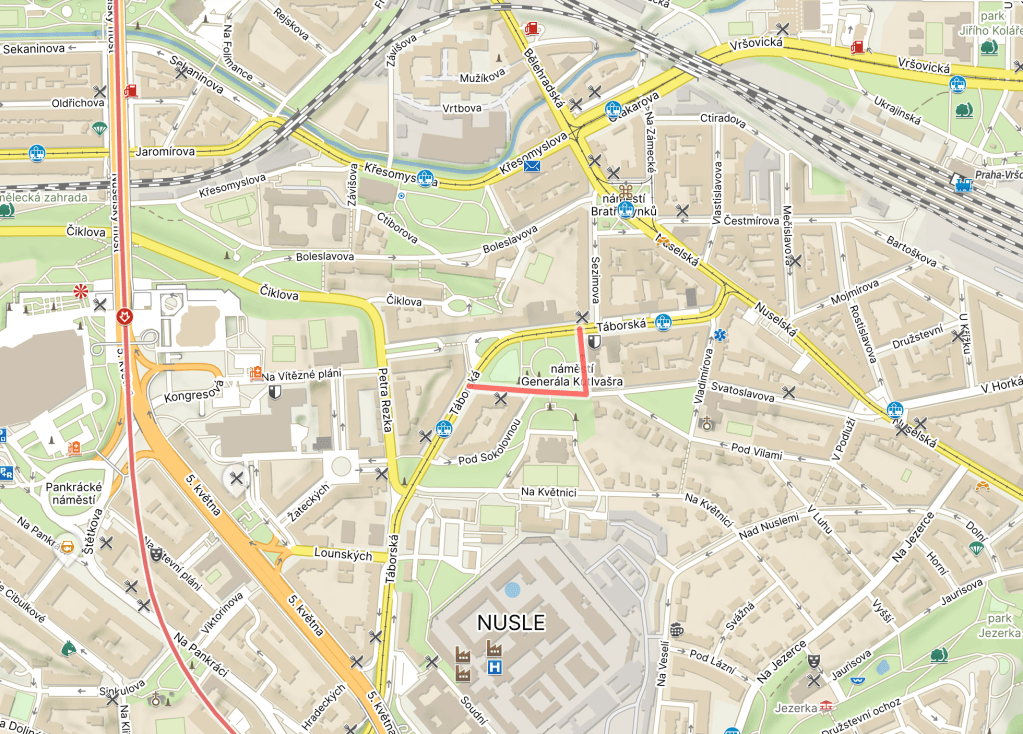
Náměstí Generála Kutlvašra (General Kutlvašr Square) was built in 1911.

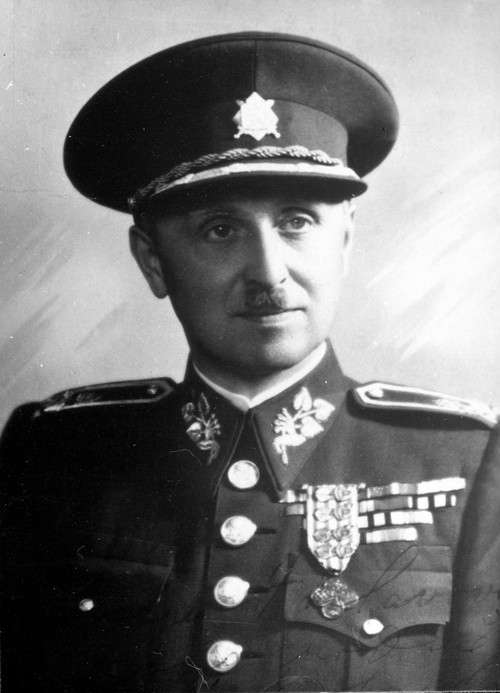
Karel Kutlvašr was born in Michalovice, near Havlíčkův Brod, in 1896. Graduating from business school in 1911, he first worked in Humpolec, then in Kyiv.
However, when World War One started, he joined the Czech Company, a volunteer unit consisting of Czechs living in the Russian Empire.

He was injured in the Battle of Zborov (mentioned on https://whatsinapraguestreetname.com/2024/09/12/prague-1-day-90-most-legii-legion-bridge/), and later became a battalion commander in the First Czechoslovak Rifle Regiment.
In 1918, he participated in the capture of Kazan; in 1919, he became the Regiment’s commander. Then, in 1920, he finally returned to Czechoslovakia.
In the 1920s, he served as a commander in České Budějovice, then in Chomutov, eventually becoming one of the country’s youngest generals.
He then served in Hradec Králové. By the time World War Two came, he was in charge of Border Region 35 in Vamberk (also in the Hradec Králové region).
During World War II, he was a member of Obrana národa (Defence of the Nation), a resistance organisation fighting against the Nazi occupation.
In April 1945 – during the planning phase for the Prague Uprising – he was named commander of the Bartoš Command, which was supposed to oversee the fighting in central Prague.
It was Kutlvašr who, on 5 May, ordered that the insurgents occupy the Radio Prague building.
Three days later, he was one of those who negotiated the Nazi surrender in Prague in exchange for the free passage of German soldiers through the city before they were captured by Allied forces.
Kutlvašr was military commander of Prague until 28 May, then went to Brno to serve the same role. However, he was dismissed by the Czechoslovak government just two days later, as requested by the Soviet Ambassador.
This was because of his role in the negotiations with the Nazis. Barely three weeks after commanding the Prague Uprising, Kutlvašr seemed to be out of a job.
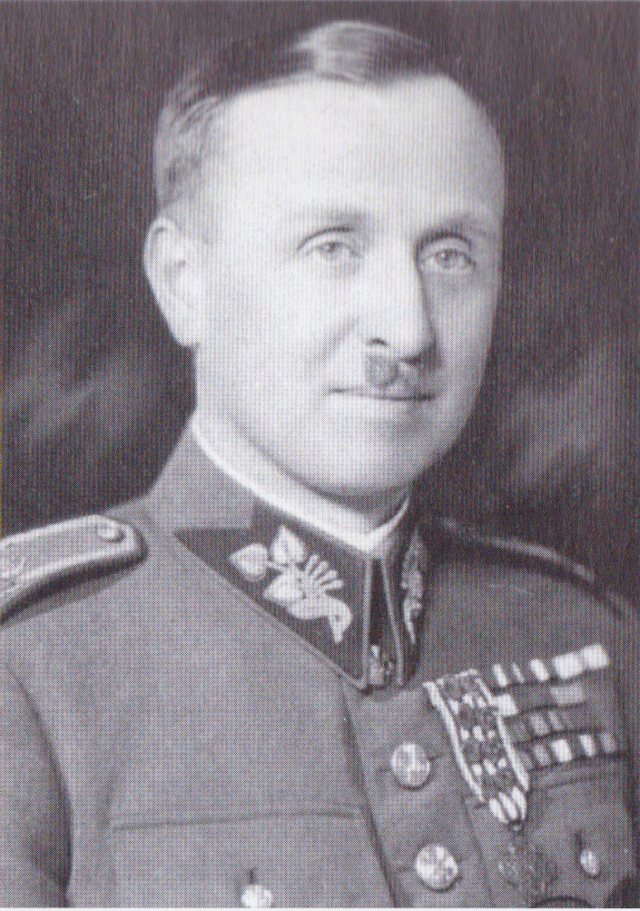
President Beneš intervened, and Kutlvašr served again from 1946 to 1948. However, when the Communists took power as a result of their coup in February 1948, he was put on leave again.
In December, he was arrested for his alleged membership in an alleged resistance group, ‘Pravda vítěží” (Truth will prevail). He was sentenced to life imprisonment in 1949, and was amnestied in 1960, by which point he was in very poor health.
Kutlvašr subsequently lived on Rybalkova (https://whatsinapraguestreetname.com/2024/07/07/prague-2-day-63-rybalkova/), but had to work due to his meagre pension. This included working as a watchman at the Nusle Brewery (https://whatsinapraguestreetname.com/2025/01/02/prague-4-day-2-vrtbova/).
However, he died during a medical examination in 1961. Charges against him were dropped posthumously in 1968, but he wasn’t fully rehabilitated until 1989. Nine years later, this square was named after him.
Nusle’s town hall – one side of which is on the square, although the picture below is from Táborská – has a bust commemorating Kutlvašr.


The square is also the location of this quite pleasing park, Jiráskovy sady (name explained on https://whatsinapraguestreetname.com/2024/09/01/prague-2-day-154-jiraskovo-namesti/).
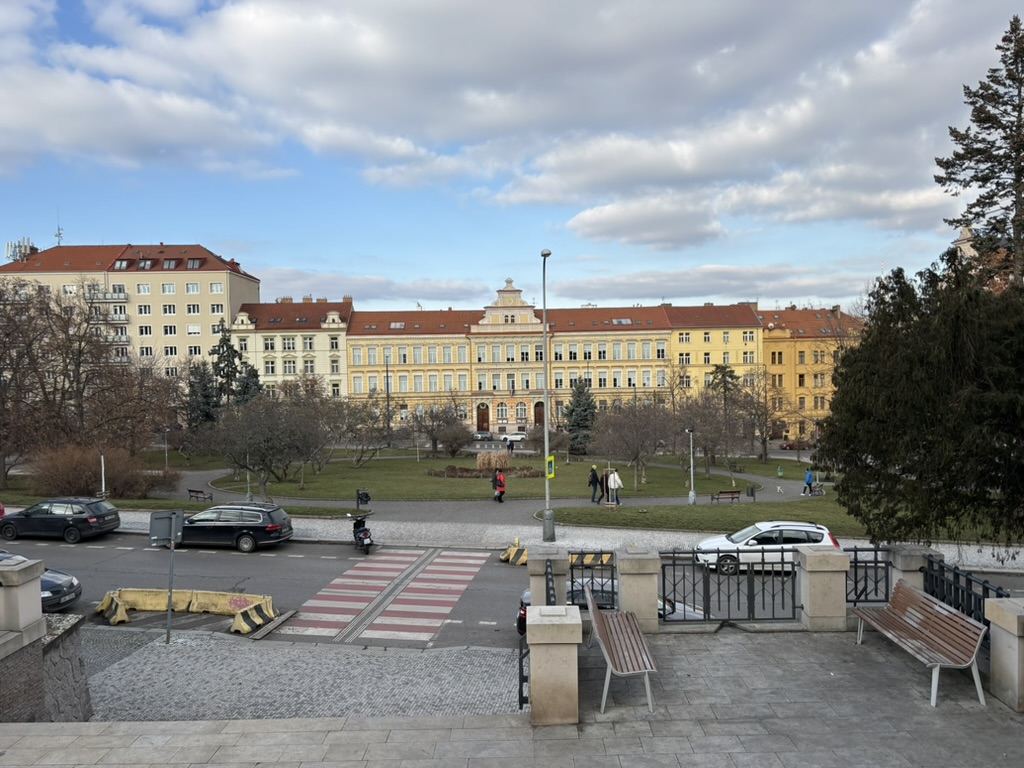

It was originally meant to have a church in the centre, but that plan was cancelled in 1948.

Until 1948 (except during the Nazi occupation), the square was called Palackého náměstí, despite there being another square called this to the north-west. There still is: https://whatsinapraguestreetname.com/2024/08/31/prague-2-day-145-palackeho-namesti/.
Then, in 1948, it was renamed náměstí Československých legionářů (Square of the Czech Legionnaires – again, you may want to click on the Prague 1, day 90 link I posted above).
The Legionnaires were clearly not quite communist enough, because in 1962, the square was renamed again, this time to náměstí Pařížské komuny (Square of the Paris Commune). For those not so versed in non-local history (full disclosure: this includes me): the Paris Commune was a revolutionary government that seized power in March 1871, but only ever controlled parts of the city, and only until the end of May of that year.
If we’re talking about France, Kutlvašr’s titles include both the Legion of Honour and the Croix de Guerre.

 What's in a Prague street name
Leave a comment