I can’t say with certainty when Svatoslavova was built, but it’s had its name since 1900.
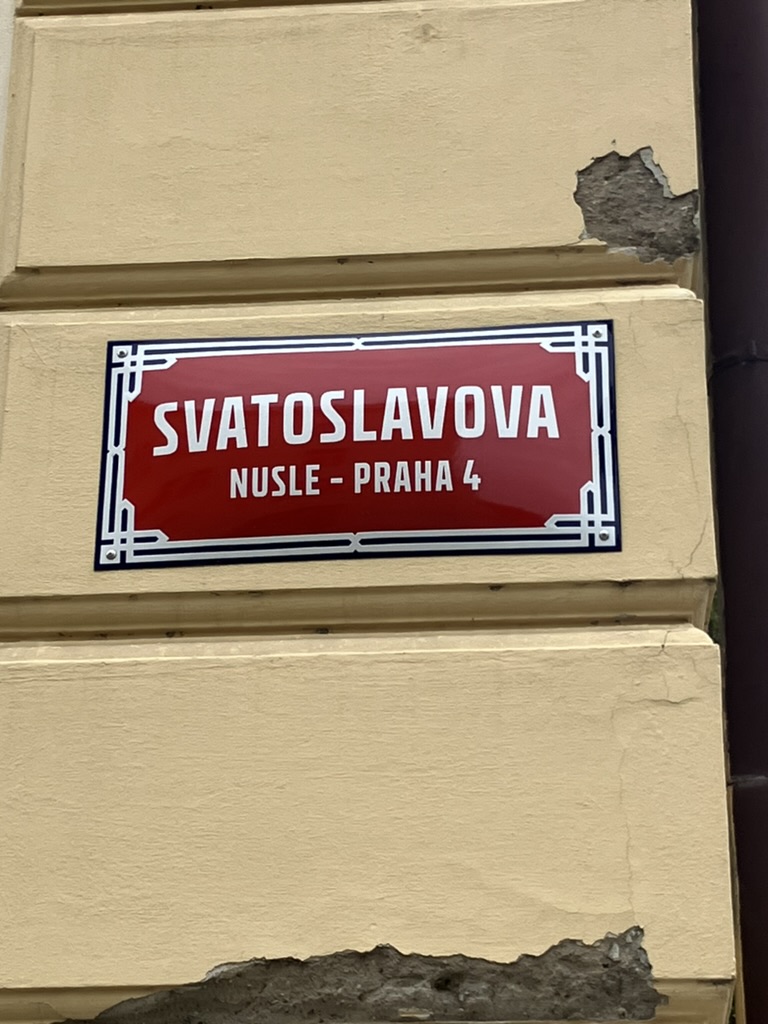
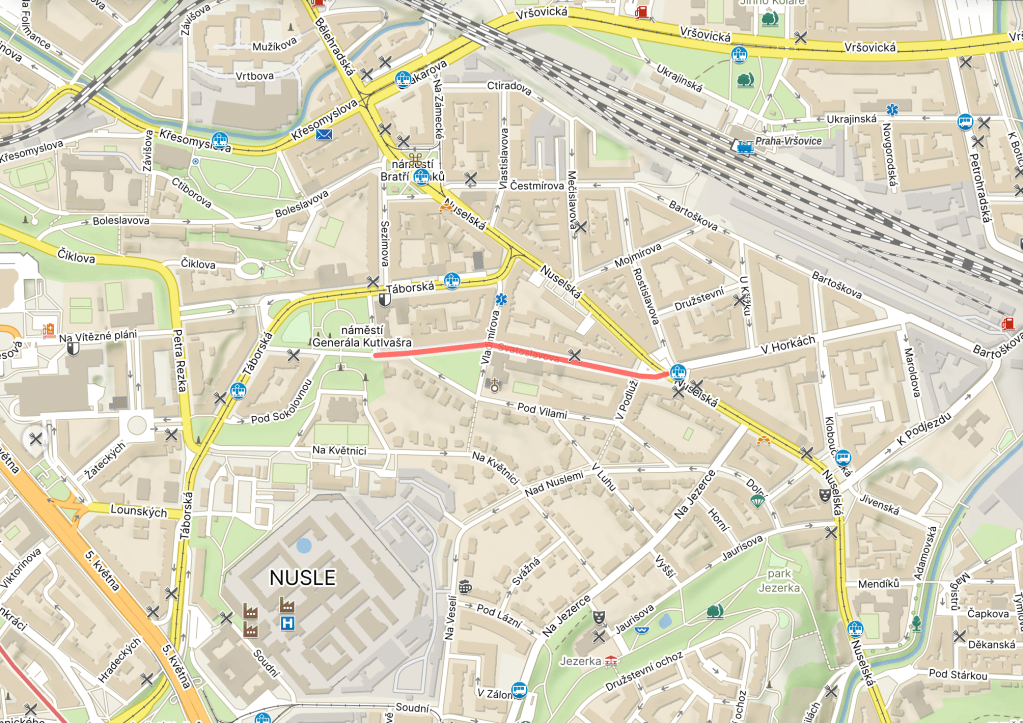
There are Svatoslavs that the street could be named after. I’ll get the more Czech – but less interesting – one out of the way, and then I’ll move on to option two.
Option 1
Svatoslav was an alleged Bohemian duke who, according to the Fulda Annals (an East Frankish chronicle covering a period from about 840 to 900), took part in a battle against the Franks on the Vltava in 872, along with five or six other dukes (including Bořivoj: https://whatsinapraguestreetname.com/2023/01/14/prague-3-day-134-borivojova/).
The Bohemians lost; it’s not known if Svatoslav survived, but he’s not mentioned in any other texts.
Option 2
Sviatoslav was born around 943, the son of Igor, Prince of Kyiv since 922, and his wife, Olga.
Igor was killed in 945 by the Drevlians, an East Slavic tribe, after which Olga ruled as regent until Sviatoslav was old enough to do so himself (we believe he ruled from 963).

However, before Igor died, he formed a close military alliance with the Byzantine Empire; this will be relevant later on.
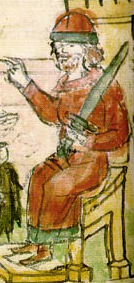
Olga converted to Orthodox Christianity in 957 (and is venerated as a saint nowadays), but Sviatoslav would remain a pagan for his entire life. For example, in a treaty signed with the Emperor of Byzantium in 971, he swore by two gods, one of whom was Perun – who you can learn a bit about on https://whatsinapraguestreetname.com/2023/12/23/prague-3-day-183-perunova/.
Once Sviatoslav was able to rule in his own right, he really got down to business. In 964-5, he and his Rus troops defeated a neighbouring tribe, the Vyatichi, and also put an end to the Khazar Khaganate, one of the strongest states in the region.
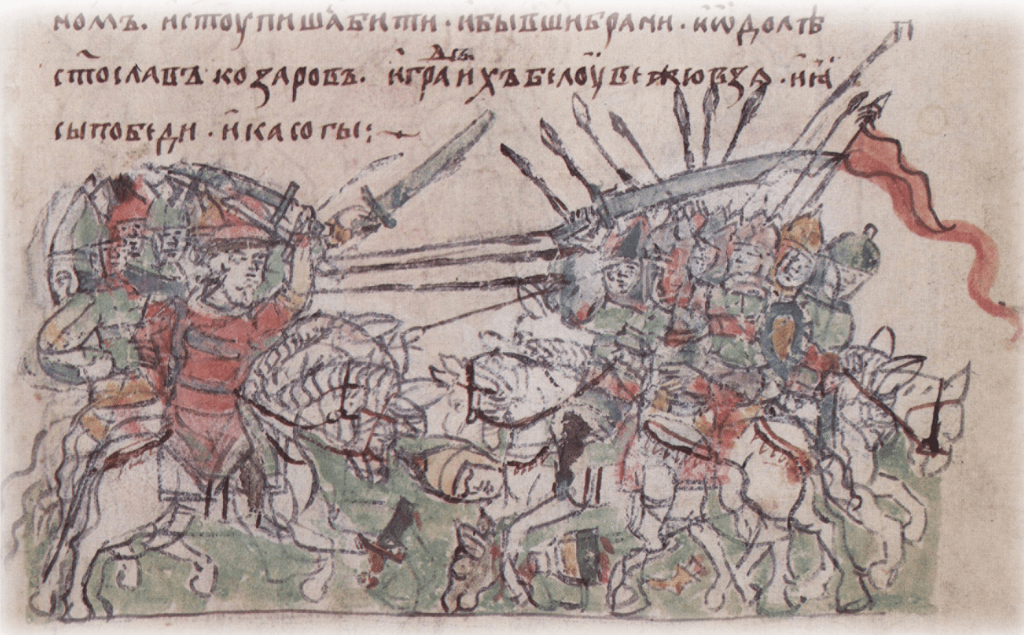
In 965, he destroyed the Khazar city of Sarkel, establishing a Rus’ settlement called Belaya Vyezha (White Tower) in its place. He also destroyed the Khazar capital, Atil.
Around 967, the Byzantine Emperor, Nikephoros II Phokas, asked Sviatoslav for help in a war against Bulgaria; Sviatoslav provided 60,000 men. He was victorious, and ended up occupying northern Bulgaria.
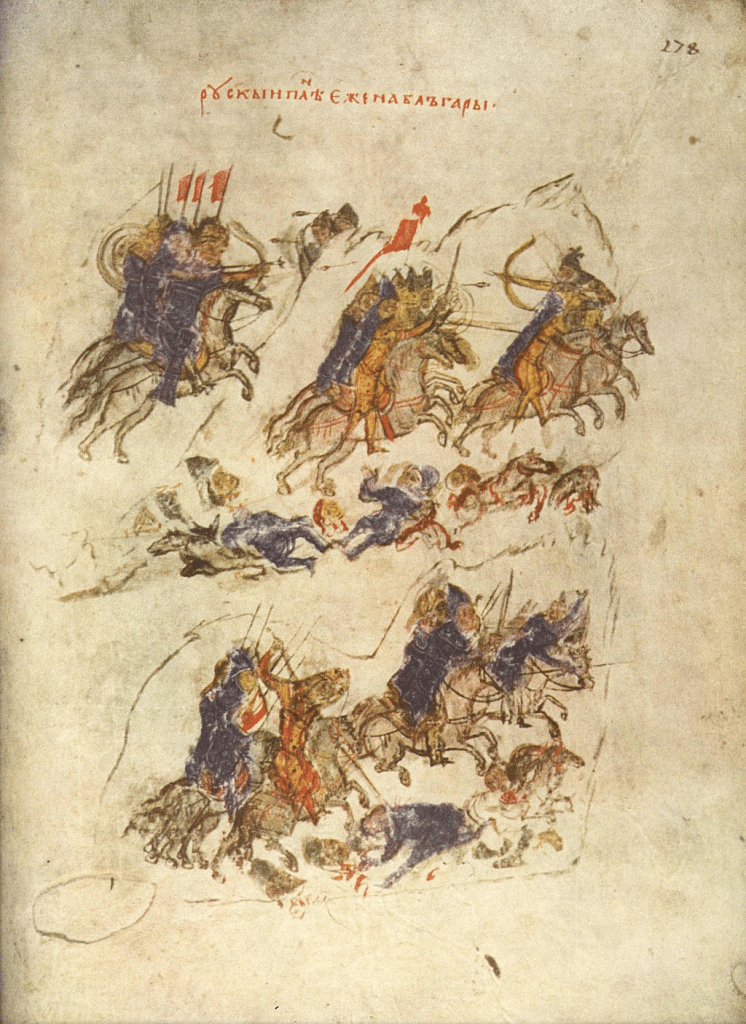
Meanwhile, the Byzantines bribed the Pechenegs, a nomadic Turkic people, into besieging Kyiv. Sviatoslav therefore returned, but refused to give up his Bulgarian gains to the Byzantines.
Sviatoslav decided to move his capital to Pereyaslavets (exact location unknown, but located in present-day Bulgaria or Romania). In 969, he left Rus’, which he had divided between his three sons.
He devastated Thrace, captured Philippopolis (current-day Plovdiv), and laid siege to Adrianople (current-day Edirne) in 970. Byzantium – now ruled by John Tzimiskes – launched a counter-offensive, defeating Sviatoslav’s forces at the Battle of Arcadiopolis.

John proclaimed himself the liberator of Bulgaria; Sviatoslav retreated to Silistra (modern-day Silistra, Bulgaria), where the Byzantines besieged him and his men for sixty-five days until he agreed to give up on the Balkans.
The Byzantines were scared that Sviatoslav wouldn’t keep his word, so John asked Kurya, the Pecheneg khan, to kill him before he got back to Kyiv. This happened near Khortytsia, the largest island on the Dnieper River, in 972.
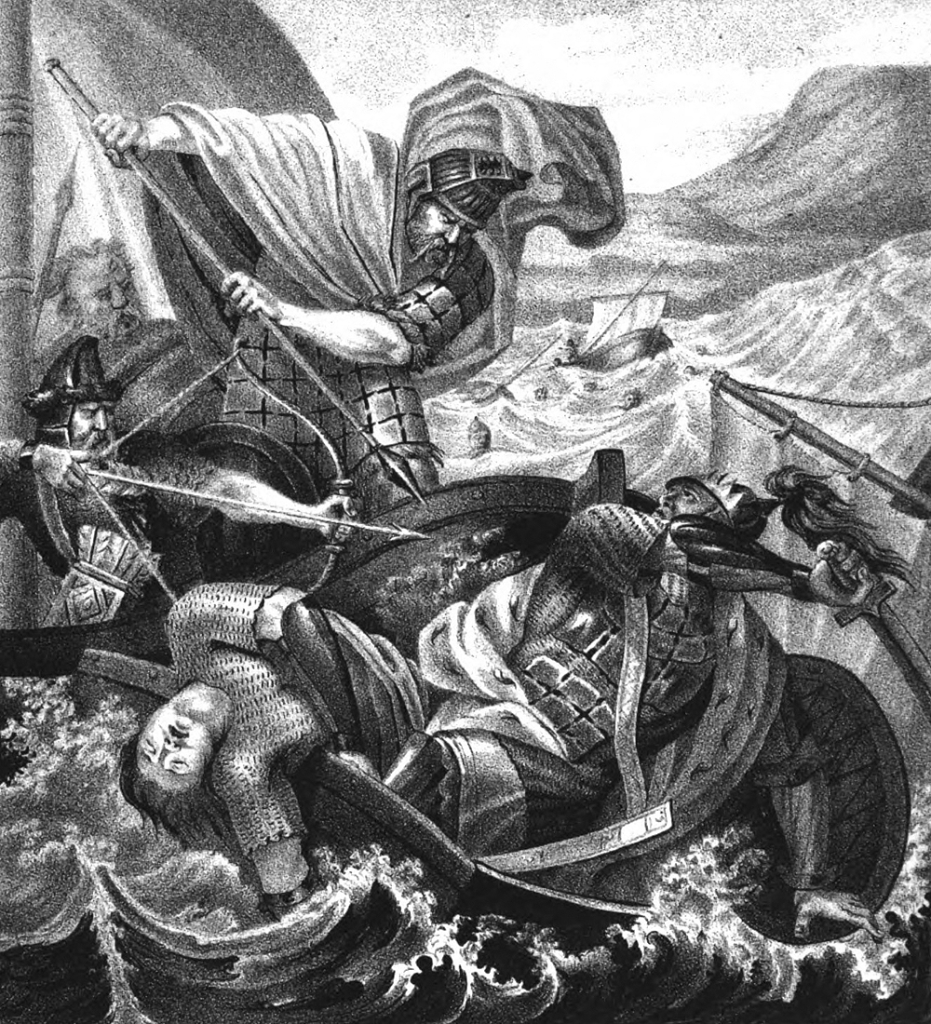
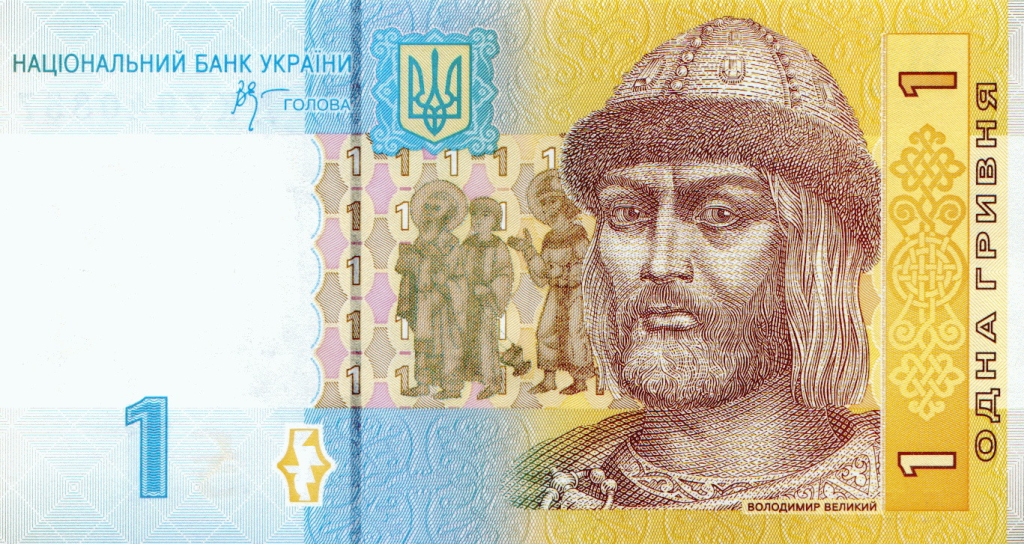
After Sviatoslav’s death, tensions broke out between his three sons; ultimately, two would be killed, and the third, Vladimir I Sviatoslavich, or Volodymyr the Great, would rule Kyiv from 978 to 1015, and would convert to Christianity in 988.
Initially, I thought that the street was much more likely to have been named after option 1. Then I started writing tomorrow’s post, and realised I was wrong.

 What's in a Prague street name
Leave a comment