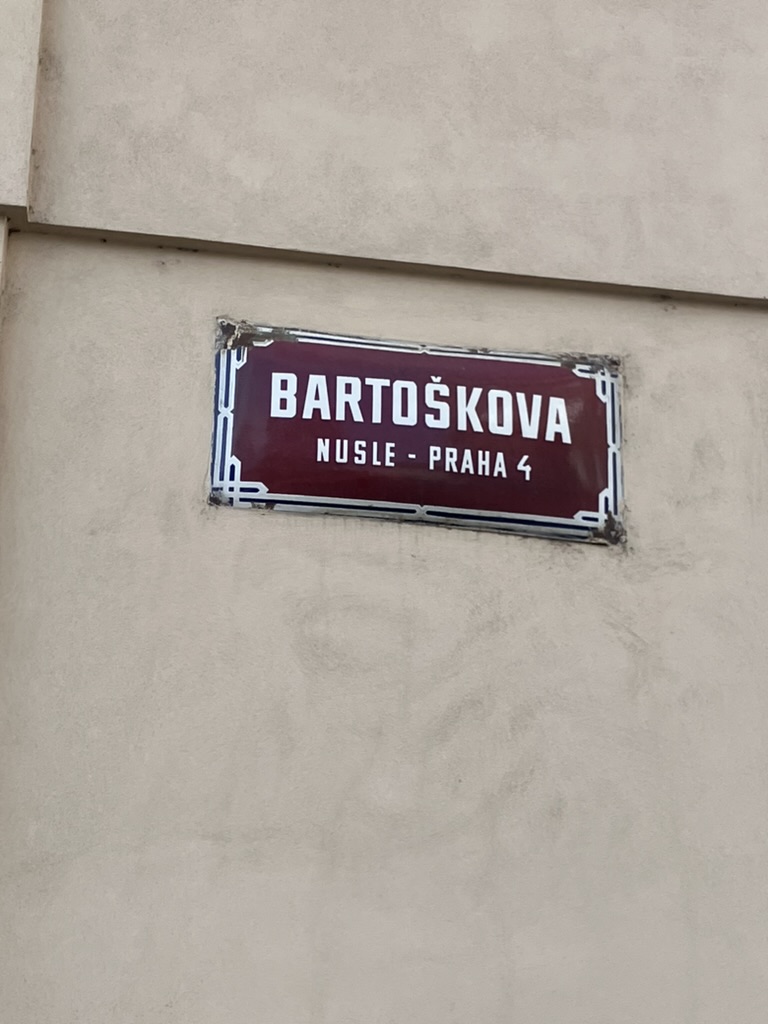
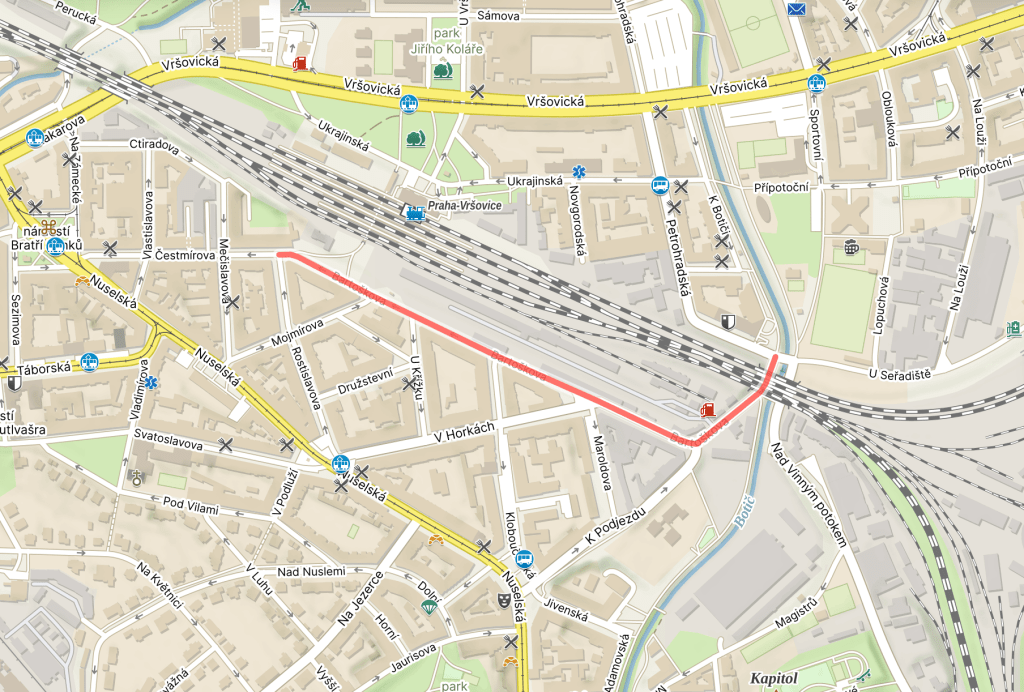
Bartoškova was built in 1910.
Theodor Bartošek was born in Ždánice, in South Moravia, in 1877; his father was a judge.
After finishing school in Brno in 1897, he moved to Prague to study law and philosophy, where one of the professors who had the greatest impact on him was one Tomáš Garrigue Masaryk (https://whatsinapraguestreetname.com/2024/09/01/prague-2-day-156-masarykovo-nabrezi/).
During his studies, he joined the Social Democratic Party, co-founded a student union, and edited a student magazine.
Despite having spent much of his early life thinking he would become a priest, Bartošek had, by this time, become an atheist; when the Volná myšlenka / Free Thought organisation was set up in the Czech Lands in 1904, he was one of its figureheads, travelling to international freethinker conferences, not only in Europe, but also in North America.
During World War I, the organisation was banned, and, in 1916, Bartošek was imprisoned, and then interned in a camp in Austria. When the camp closed down in 1917, he was called up for military service.
Once the war was over – and Czechoslovakia was a reality – he moved back to Prague and joined the Czechoslovak Socialist Party (ČSSD), winning a seat in the National Assembly in the 1920 elections.
However, Bartošek’s freethinking attitude clashed with that of the party; in 1923, he, and others, opposed the Defense of the Republic Act. As a result, he was expelled from the party – and stripped of his parliamentary seat. He joined the Socialist Union, a new political grouping.
However, this union was short lived – one of its two groupings decided to join the ČSSD in 1924. The second grouping – the one Bartošek was in – formed a new party, the Independent Socialist Workers’ Party, but ‘independent’ turned out to be a misnomer – this new party was merged with the Communist Party of Czechoslovakia in 1925.
Bartošek represented the Communists on Prague City Council and took part in cultural delegations to the Soviet Union; however, his membership of the party meant he was dismissed from the Freethinkers.
Arrested more than once during World War II, but acquitted at trial, Bartošek took part in the Prague Uprising in May 1945 (https://whatsinapraguestreetname.com/2025/02/05/prague-4-day-25-5-kvetna-5-may/).
After the war, he became vice-president of the Czech Bar Association (the legal type, not the drinking type), worked for the Czech Communist Party’s Central Committee, and, as a supporter of the Communist coup in February 1948, then worked for the Ministry of Justice.
In late 1953, Bartošek was elected to the Czechoslovak Academy of Sciences, but, afflicted by heart disease, died in Prague less than a year later.


 What's in a Prague street name
Leave a comment