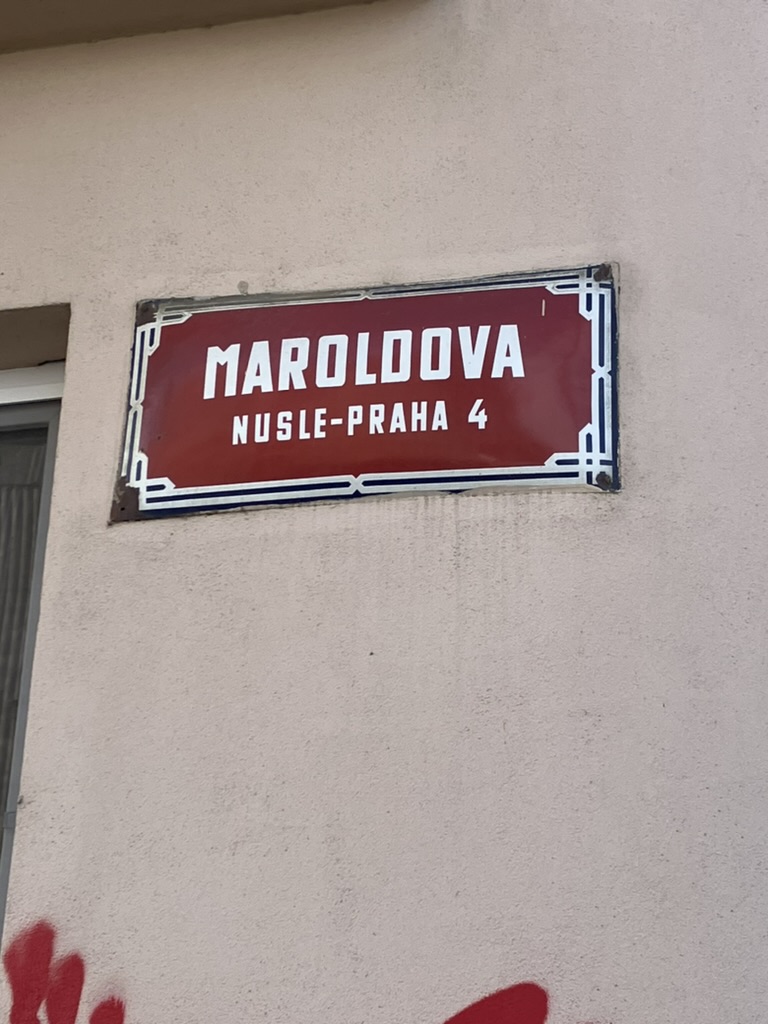
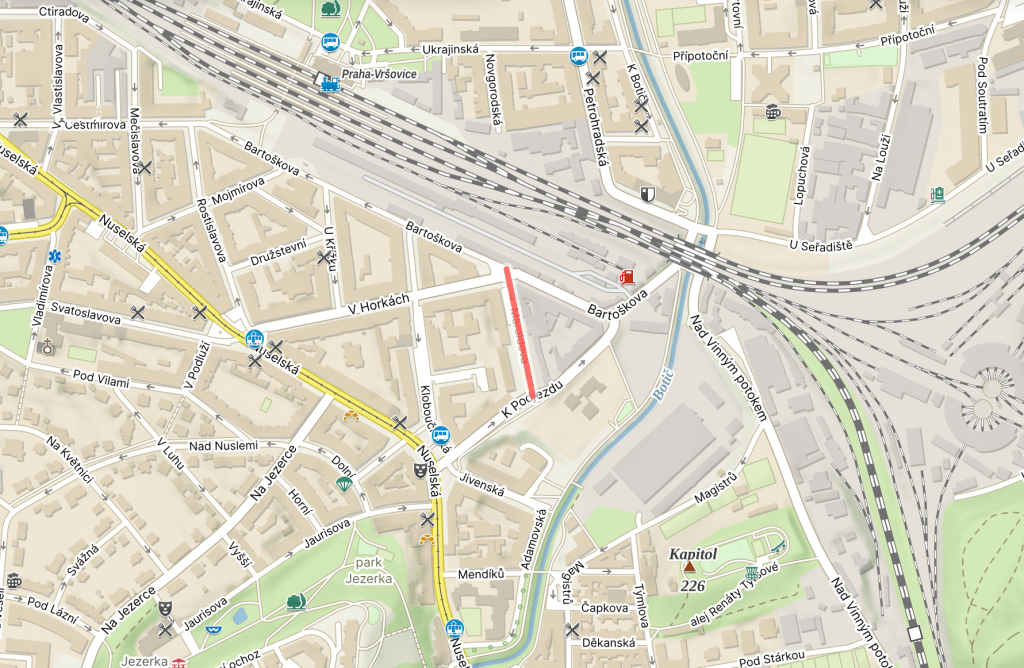
Maroldova was built in 1910.
Luděk Marold was born in Malá Strana in 1865; he was illegitimate and took his mother’s family name. He lost both parents by the age of seven, and was then raised by his aunt, Josefa Maroldová.
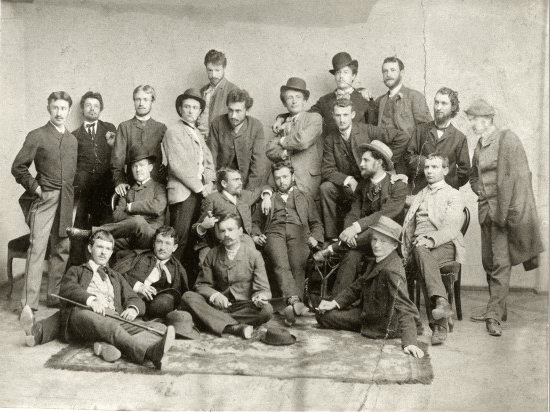
At the age of sixteen, he was accepted into Prague’s Academy of Fine Arts, but after a year, he continued his studies at the equivalent institution in Munich, where he produced paintings of everyday life and befriended fellow countrymen such as Alfons Mucha (they’re both in this photo).
He also earned money providing illustrations for German and Czech magazines, including Světozor (https://whatsinapraguestreetname.com/2024/07/06/prague-2-day-61-safarikova/).
In 1887, Marold returned to Prague, where he became editor at the Mánes Association (https://whatsinapraguestreetname.com/2024/01/18/prague-2-day-11-manesova/) and developed his reputation as a painter and illustrator.
This is his 1888 painting of Vaječný trh – Egg Market, which was located on https://whatsinapraguestreetname.com/2024/10/09/prague-1-day-178-rytirska/.

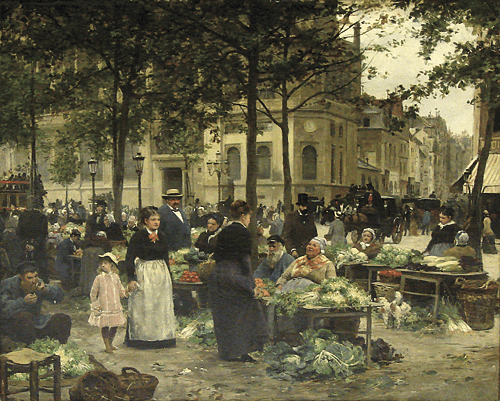
However, within a year, he was in Paris, and also making paintings of markets there – this is Zelinářský trh v Paříži / Vegetable Market in Paris.
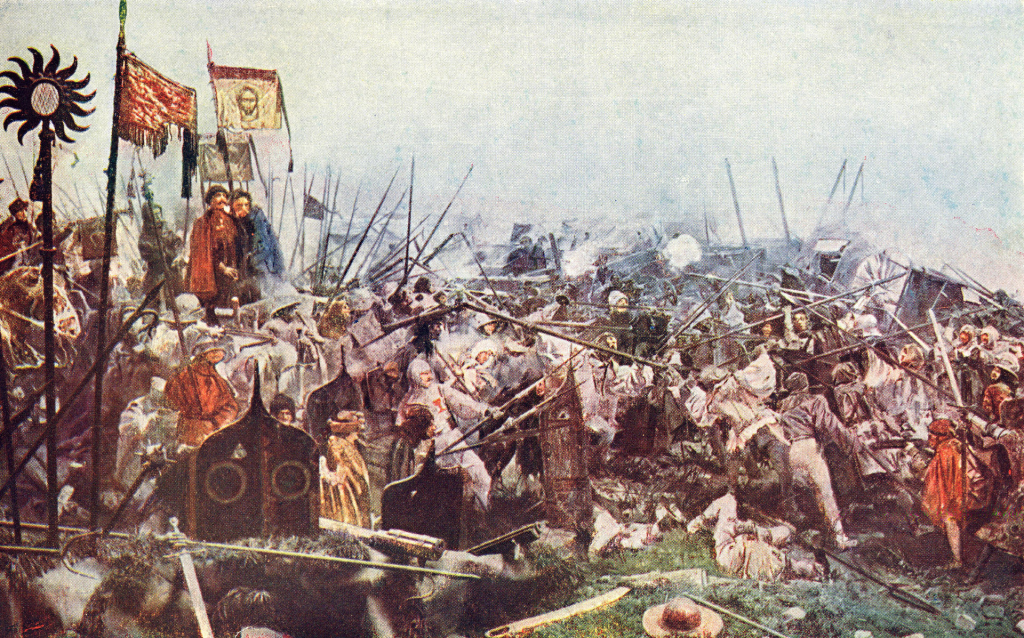
Returning to Prague, Marold was awarded a medal for his watercolours in 1898; in the same year, his panorama of the Battle of Lipany (https://whatsinapraguestreetname.com/2022/12/23/prague-3-day-120-lipanska/) was used to decorate the Výstaviště (Exhibition Ground) in Prague 6.
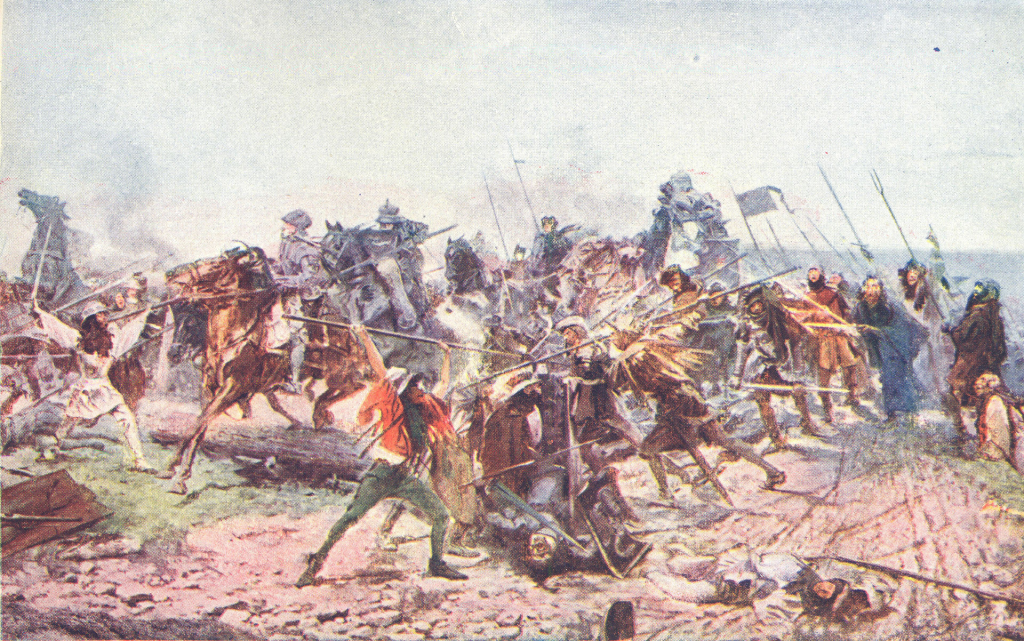
It’s still there – and is the biggest picture in Czechia: https://prague.eu/en/objevujte/marold-panorama-maroldovo-panorama/.
However, later in 1898, Marold contracted typhus, and died within a week. He was 33. His wife, Zdena, whom he had married in 1891, would take her own life in 1903.

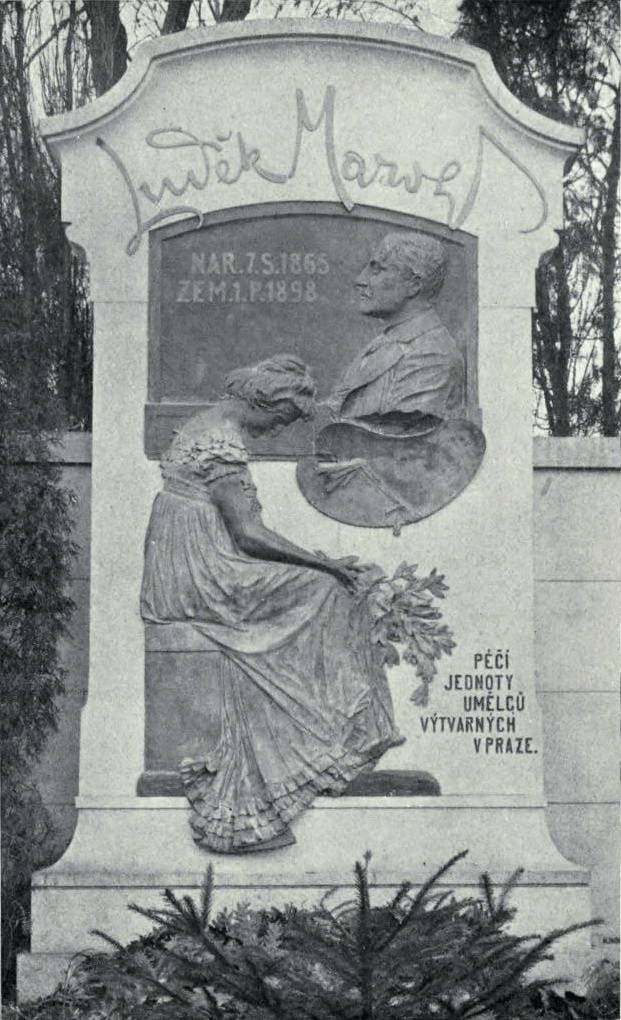
Marold is buried at Olšany Cemetery.

 What's in a Prague street name
Leave a comment