Soudní was built in 1931.

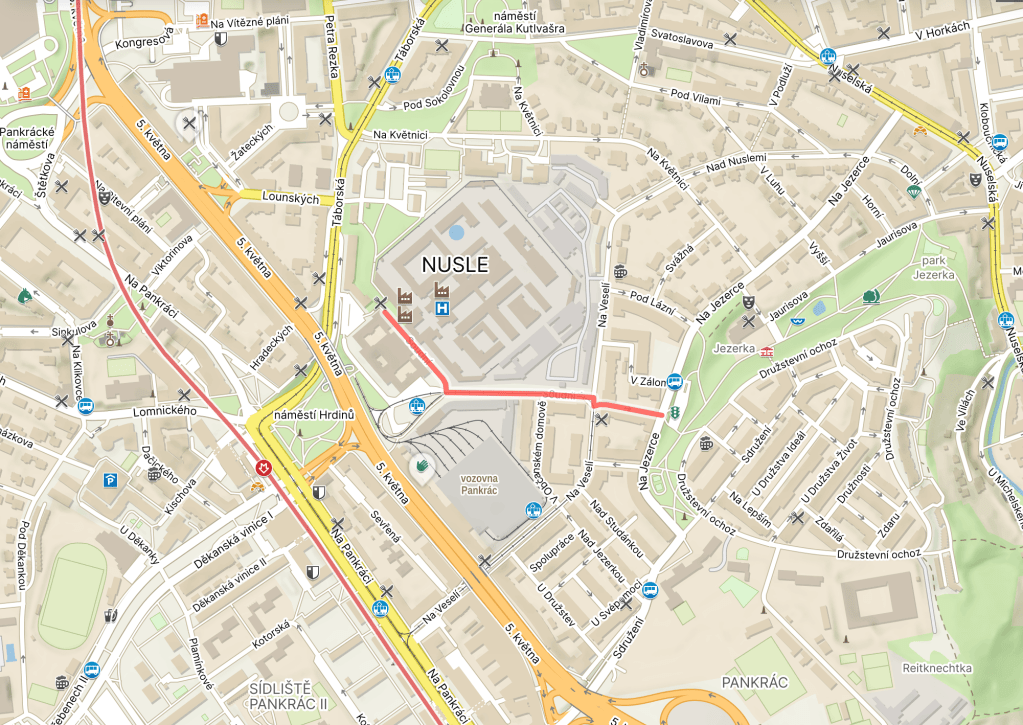
‘Soudní’ would typically be translated as ‘judicial’, from ‘soud’ (‘court’, but also ‘trial’).
In 1850, the High Provincial Court in Prague (Vrchní zemský soud v Praze) was established, replacing the General Court of Appeal. It was responsible for dealing with appeals in Bohemia (not Moravia), as well as checking up on judges, lawyers and notaries.
In 1918, a Supreme Court was formed with jurisdiction over the whole of the newly-founded Czechoslovakia; in the following year, it was moved to Brno.
On 1 January 1950, the Supreme Court – now replete with ‘people’s judges’ – was moved to náměstí Hrdinů. We’ll get to that square soon, so, for now, here’s how the building looks from Soudní (not its best side).

In 1960, it was renamed as the Supreme Court of the Czechoslovak Socialist Republic.
However, when Czechoslovakia was federalised in 1969, two more Supreme Courts were established: one for the Czech Republic, and one for Slovakia. The Czechoslovak court’s jurisdiction was limited to matters concerning the entire country.
In 1991, the Czechoslovak Supreme Court moved to Brno (again). It wouldn’t be called that for much longer, because, on 1 January 1993, the Czech Republic and Slovakia split into two separate countries.
The Czechoslovak Supreme Court in Brno became the Czech Supreme Court; the Czech Supreme Court became the High Court in Prague (Vrchní soud v Praze).
Nowadays, it has jurisdiction over affairs in Bohemia (Moravian and Silesian matters are seen to by a court in Olomouc). It mainly deals with appeals against decisions made by regional courts.
As for the building: it’s called the Palace of Justice (Justiční palác, although this is also translated by the more mundane ‘courthouse’). When Pankrác Prison was opened in 1889, part of its buildings was used the provincial criminal court.
The provincial court had its headquarters on Karlovo náměstí (https://whatsinapraguestreetname.com/2024/09/01/prague-2-day-164-karlovo-namesti/); however, in 1929, construction started on a neoclassical building here. The entire court moved in in 1933.
During World War II, the building was used by the Nazi occupiers as an extraordinary court (over 1,000 people would be executed in Pankrác Prison in the final two years of the war).
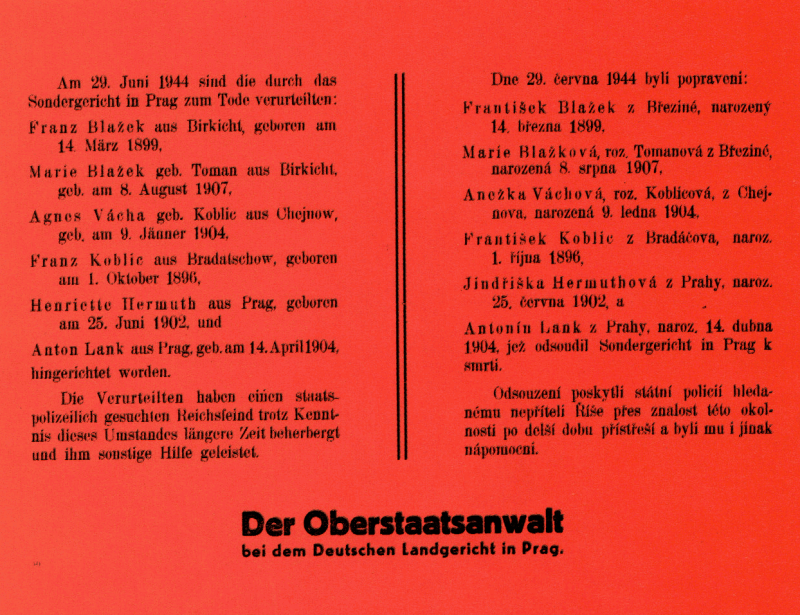
Things didn’t get much better in terms of justice and basic human decency afterwards; the building was the location of the show trials that led to the execution of Milada Horáková and Rudolf Slánský.
More stories about Pankrác Prison when we get to streets with Pankrác in their name; better photos of the court when we get to the square on which its front entrance is located.

 What's in a Prague street name
Leave a comment