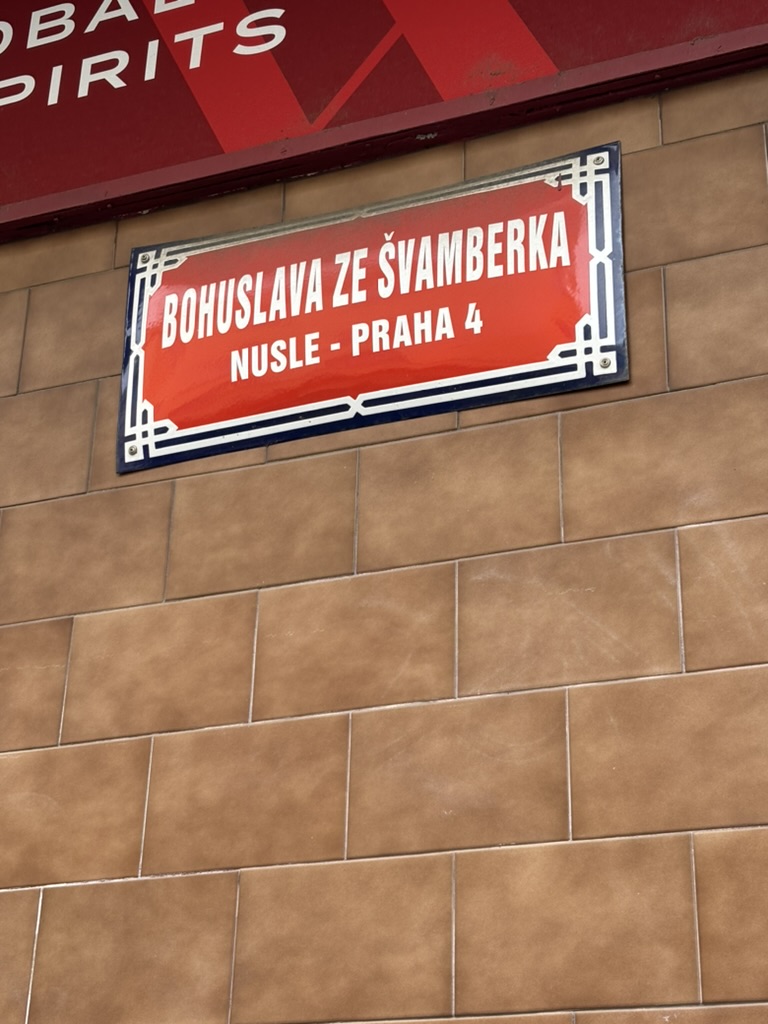
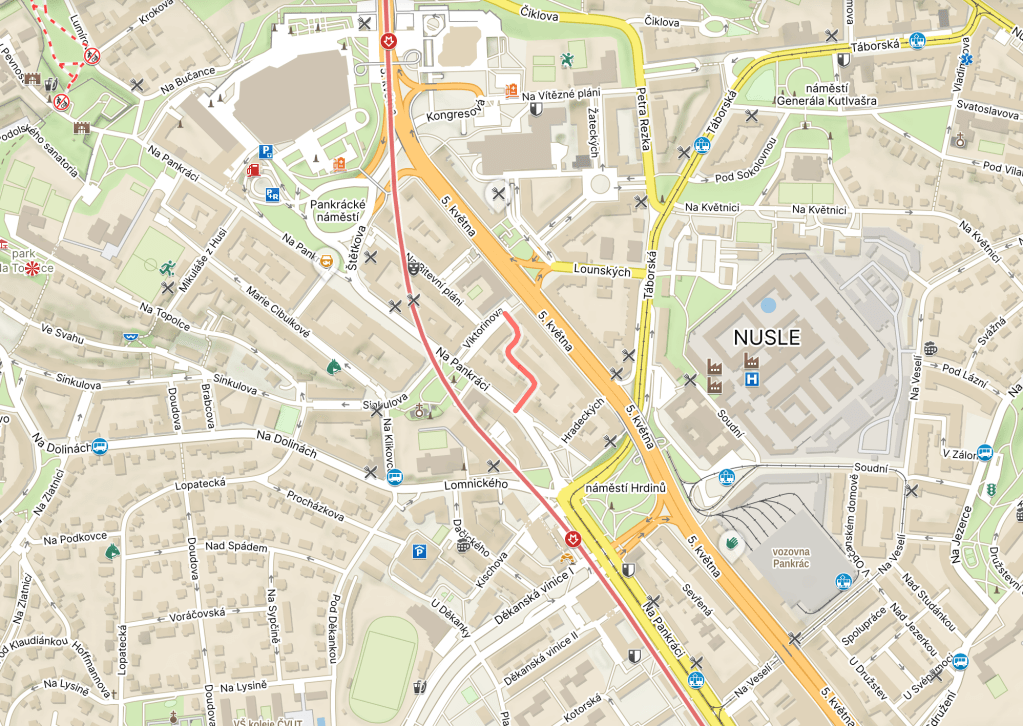
Bohuslava ze Švamberka was built in 1938.
Bohuslav (the sixth) was the son of Bohuslav (the fifth), who was the highest judge in Bohemia from 1390 to 1398. The Švamberks were a noble Catholic family.
In 1417, Václav IV asked him to ensure security (ie to protect Catholics from Hussites) in Western Bohemia. Within a couple of years, Jan Žižka (https://whatsinapraguestreetname.com/2023/02/26/prague-3-day-150-zizkovo-namesti/) had arrived in the Plzeň region; the two men clashed.
A key feature of these clashes is that Žižka would win time and again. During a further campaign of Žižka’s in 1421 – when the castle Bohuslav was residing in was about to be attacked – Bohuslav surrendered.
Bohuslav was imprisoned at Příběnice Castle (https://whatsinapraguestreetname.com/2022/12/04/prague-3-day-112-pribenicka/); when neither King Sigismund nor his family would pay a ransom, he decided to defect to the Hussite side.
In 1422, Bohuslav became a hetman in Tábor (https://whatsinapraguestreetname.com/2025/02/06/prague-4-day-26-taborska/); in the same year, he and Jan Hvězda (coming up quite soon) attempted a coup in Prague.
Upon Hvězda’s death in 1425, Bohuslav became chief hetman of Tábor. Despite further military victories in that year, he would die in November or December due to facial injuries sustained in a battle.
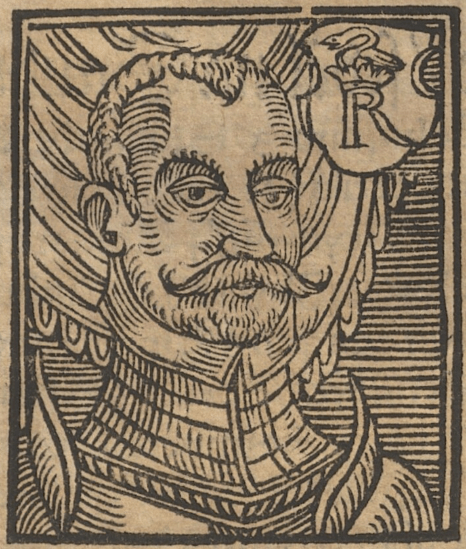
While Bohuslav probably had two sons, Bušek and Jan, this isn’t verified, nor do we have any details about his wife.
Until 1952, the street was named after Diviš Bořek z Miletínka, another Hussite hetman.

 What's in a Prague street name
Leave a comment