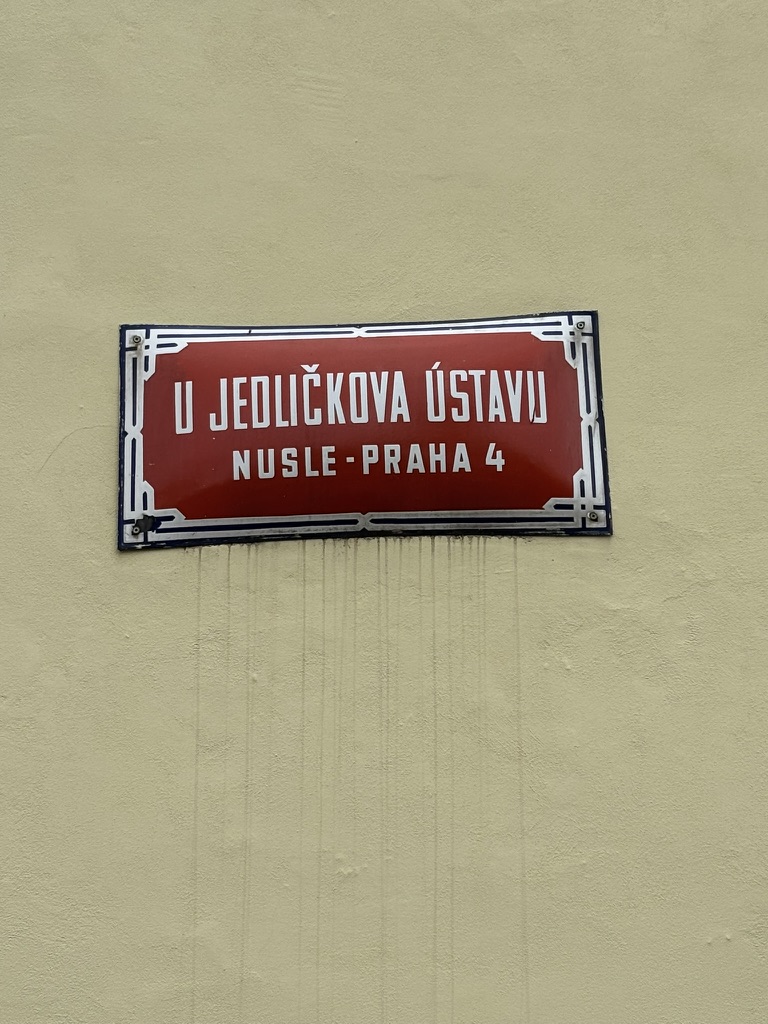
U Jedličkova ústavu was built in the 1930s, but not named until 1957.

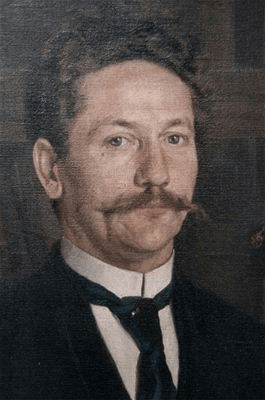
Rudolf Jedlička was born in Lysá nad Labem in 1869; his father had previously served as a doctor in present-day Slovenia, and his mother was the daughter of a mayor of Vyšehrad.
He studied medicine in Prague, graduating in 1895, which was also the year in which Wilhelm Röntgen invented the X-ray. In 1896, Jedlička became the first doctor in the Habsburg Empire to perform X-ray examinations.
He was also the first doctor in Bohemia to start using radium.
However, Jedlička suffered from career setbacks – an application to become chief physician in Olomouc was turned down, probably for political reasons, and, unexpectedly, he wasn’t asked to take over the clinic he worked at in Prague when its founder died.
Disillusioned, Jedlička started working at the Prague University Polyclinic instead, but physical problems also came into play: his previous exposure to radiation caused him to lose several of his fingers.
After a research trip to Rochester, Minnesota in 1908, Jedlička bought land in Podolí in 1909, and had a sanatorium built. It started accepting patients in 1914.
Also, in 1911, Jedlička became chairman of an association which aimed to build an association for disabled children. A year later, Jedlička took out a loan to buy a plot of land in Vyšehrad.
In 1912, the First Balkan War broke out; Jedlička funded an expedition of doctors who went to the Balkans. He personally operated on up to forty patients a day and received the Order of Saint Sava from King Petar I of Serbia.
Returning to Prague in early 1913, Jedlička got on with setting up the institute for disabled children which bears his name, and has given its name to the street.

Jedlička wanted to go to Serbia again when World War One broke out, but the Austro-Hungarian authorities, who sided with Bulgaria, forbade this, and, instead, he was called up to serve the Fifth Army in Bijeljina, Bosnia.
Jedlička managed to get called back after a month, largely thanks to the intervention of friends who persuaded the authorities that he was needed back in Prague, and continued his military service, but from Bohemia.
After the war, Jedlička was appointed a full professor of surgery by Tomáš Garrigue Masaryk (https://whatsinapraguestreetname.com/2024/09/01/prague-2-day-156-masarykovo-nabrezi/).
In 1925, he was finally asked to become head of the clinic that he had left a couple of decades earlier, but turned this down due to being extremely busy with other things – and feeling less well than he had previously.
Following two attacks of angina pectoris, he died on Nový Svět (https://whatsinapraguestreetname.com/2024/09/08/prague-1-day-20-novy-svet-new-world/) in October 1926, aged 57. Jedlička’s funeral took place at the National Museum, and he was buried at Vyšehrad.
The Jedlička Institute and Schools in Prague / Jedličkův ústav a školy v Praze continues to serve its original purpose: http://www.jus.cz/.

 What's in a Prague street name
Leave a comment