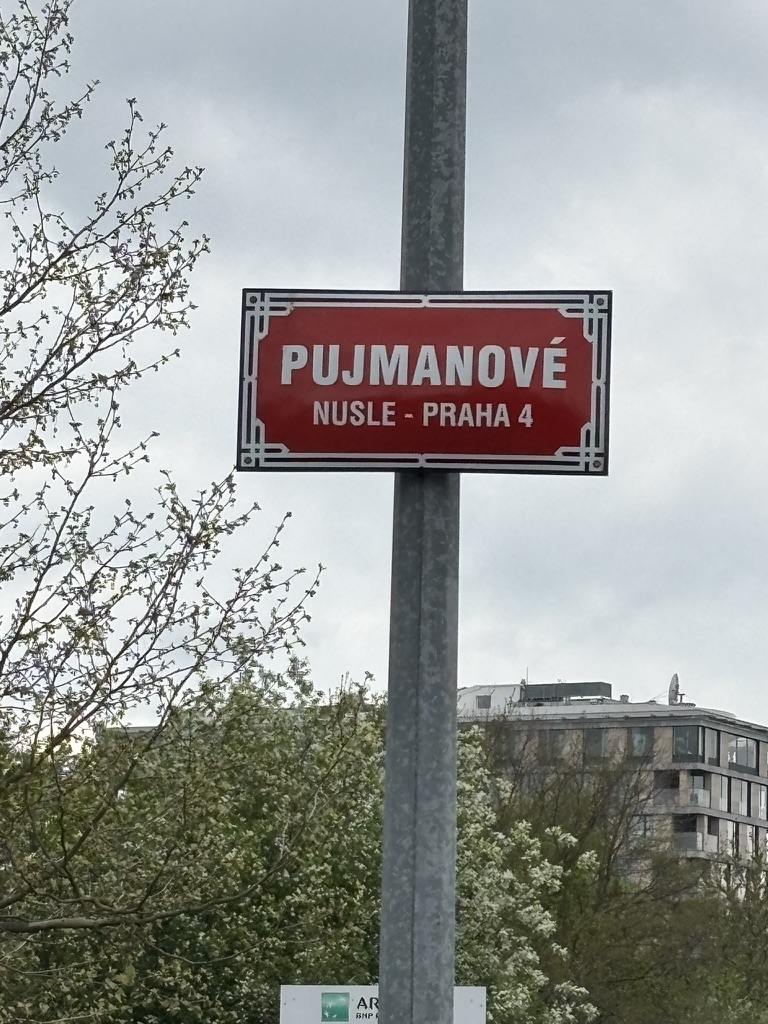
Pujmanové was built in 1962.

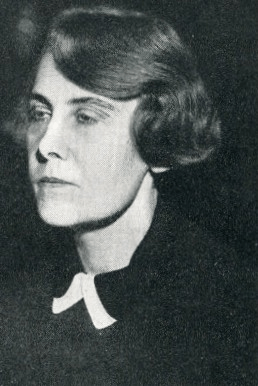
Marie Hennerová was born in Prague’s New Town in 1893. Her father, Kamil Henner, was a professor at the Law Faculty of Charles University, while her brother, Kamil, later became a renowned neurologist.
Moving to České Budějovice in 1912, she married Vlastislav Zátka, a lawyer; the marriage was short-lived, and she married her second husband, Ferdinand Pujman, in 1919.
Pujmanová published her first novel (Pod křídly – ‘Under the wings’) in 1919; her style at the time was influenced by impressionism.
Originally surrounded by right-wing intellectuals, Pujmanová took a big interest in left-wing politics from the 1930s onwards, travelling to the Soviet Union several times and, in 1937, becoming vice-chair of the Society of Friends of Democratic Spain.
Her written work also took on a socialist tone in this decade, 1931’s Pacientka doktora Hegla (Doctor Hegel’s Patient) concerned the position of women in society at the time.
She wrote articles for multiple newspapers – most notably Rudé právo – and, after WW2, was one of those in charge of evaluating and approving film projects.
After joining the Communist Party in 1946, Pujmanová was a staunch supporter of the Party’s February 1948 coup, joining the Syndicate of Czech Writers and taking part in purges.
She won the Klement Gottwald State Prize in 1951; her work by this time, in the socialist realist style, is held to be of much lower quality than her earlier writings.
Czech Wikipedia includes the brilliant sentence: ‘Her poetry is very political and suffers from all the problems of poetry of the 1950s’.
After suffering from repeated health issues, Pujmanová died in the sanatorium at Smíchov in 1958, apparently due to defective medication.
It’s mildly surprising that this street – hardly a short one – didn’t get a swift renaming in 1990.

 What's in a Prague street name
Leave a comment