Vodárenská was built in 1935.


By the late 1800s, Prague was expanding, as were the towns around it, such as Podolí. Industry was becoming stronger and stronger, and needed more resources. Such as water.
Therefore, in 1882, the Vinohrady Waterworks were built to supply water to the town of Královské Vinohrady. The water tower is still there, and can be read about on https://whatsinapraguestreetname.com/2023/12/23/prague-3-day-186-u-vodarny/.
Soon, the water was flowing to other nearby towns which would all become part of Prague in 1922: Nusle, Strašnice, Vršovice and Žižkov.
In 1885, the Prague Waterworks, located in Podolí, followed; these (pictured in 1908) supplied water for places as far away as Malá Strana, Karlín and Smíchov.
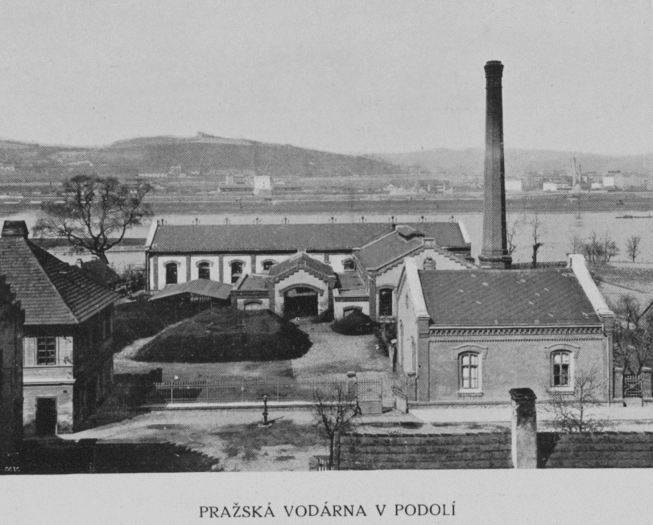
Further waterworks followed in Braník in 1906 (those will come up before we leave Prague 4 [which is not soon]).
However, the days of all these waterworks were numbered: on 1 January 1914, a new water supply line, the Káraný water source (with water coming from the Jizera river), was put into operation and was, for a time, to supply Prague and its suburbs.
By 1922, though, Prague was bigger than ever, and demand for water was outstripping supply. It was agreed that a new waterworks (Czech: vodárna) would be built here in Podolí, where the previous waterworks had already been closed down in 1911.
Building took place between 1925 and 1929, carried out by the Kress Praha company, based on a design by the architect Antonín Engel. Once the new waterworks were in place, the Vinohrady Waterworks ceased operations and were finally demolished in the 1950s.
Here are the new waterworks as they looked in 1931. Around this time, a chemical water treatment plant was added to the original building.

Reconstruction took place from 1956 to 1965, when a new building with an additional filtration station was built, and again in 1992. The Museum of the Prague Waterworks moved here in 1997.

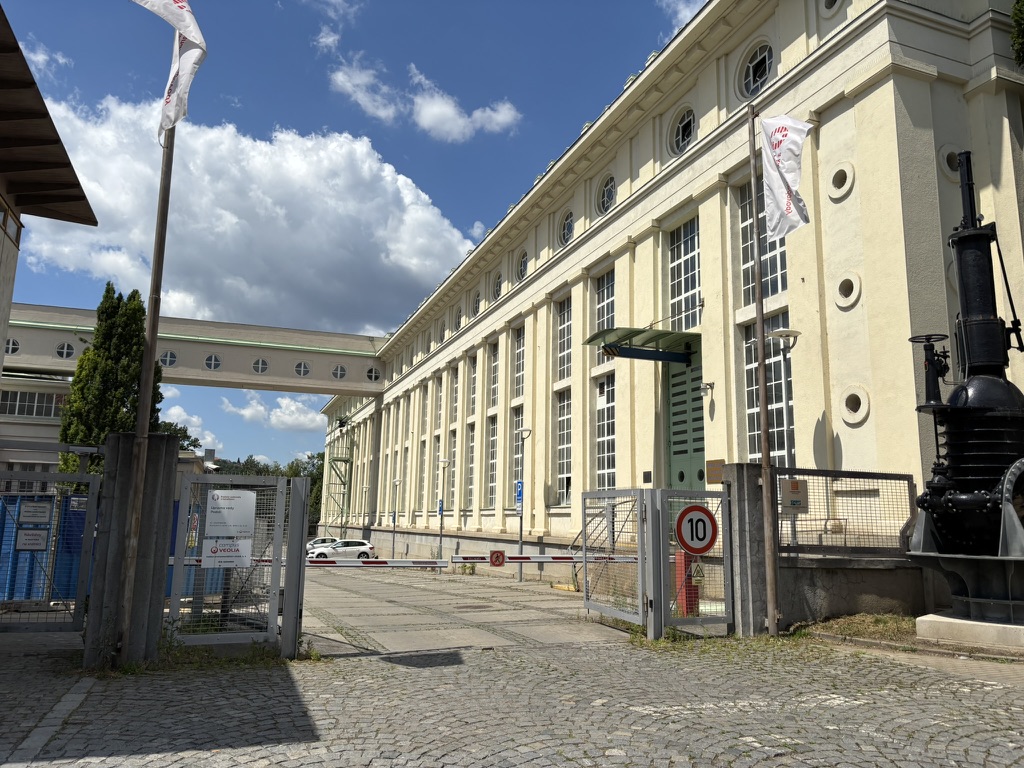
The waterworks are built in a neoclassical style, with a 45-meter water tower. The building is pretty stunning from any angle.
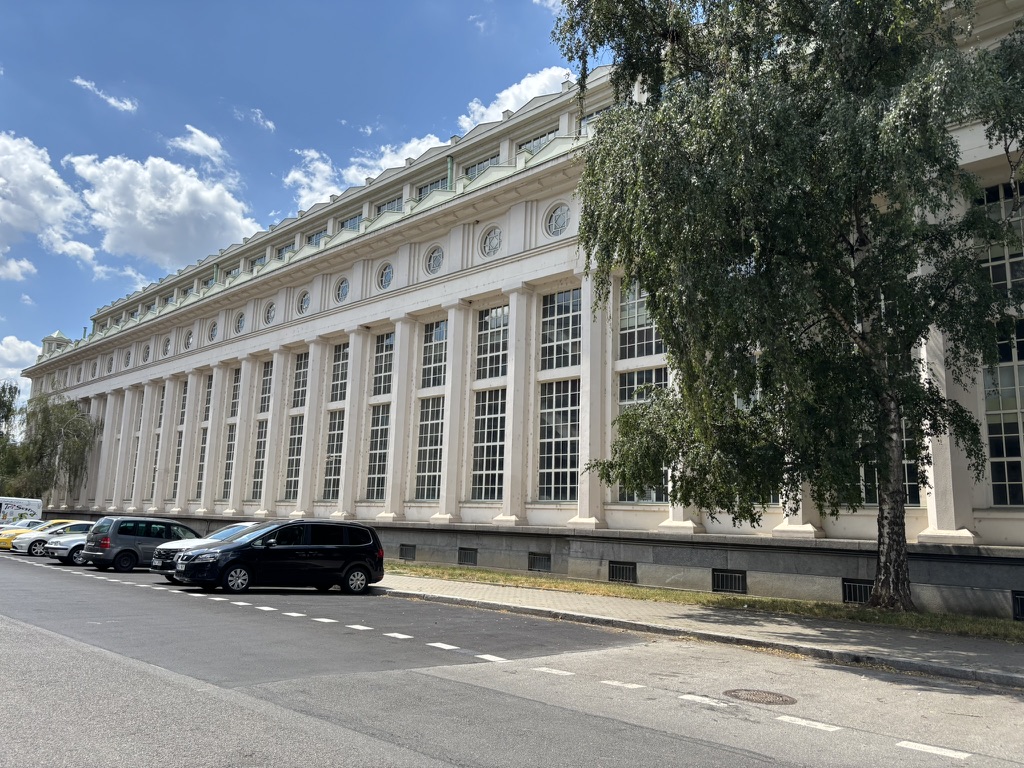

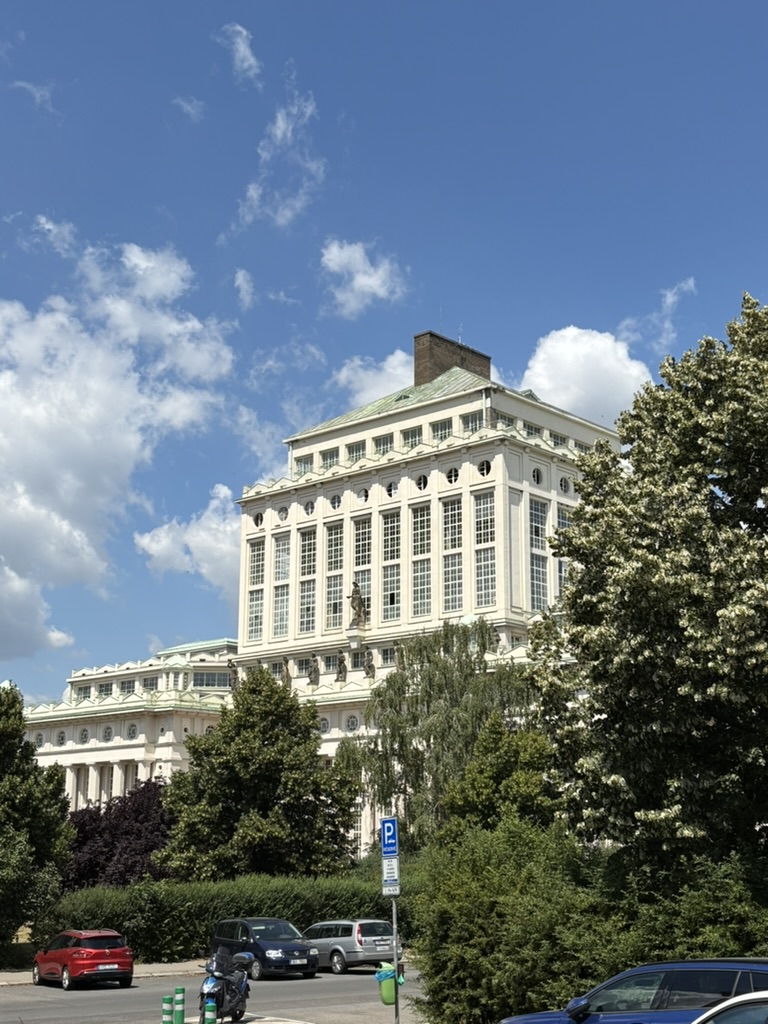
The statues that you can see here represent the Vltava (in the centre), and ten of its most significant tributaries. From left to right, you have the Vydra, Otava, Blanice, Malše, Berounka, Sázava, Blanice, Želivka, Lužnice and Nežárka.

You’d be looking at closer-up pictures of those statues right now, but the weather in Prague today meant that I decided not to go. Seriously good news for the water supply, mind.

 What's in a Prague street name
Leave a comment