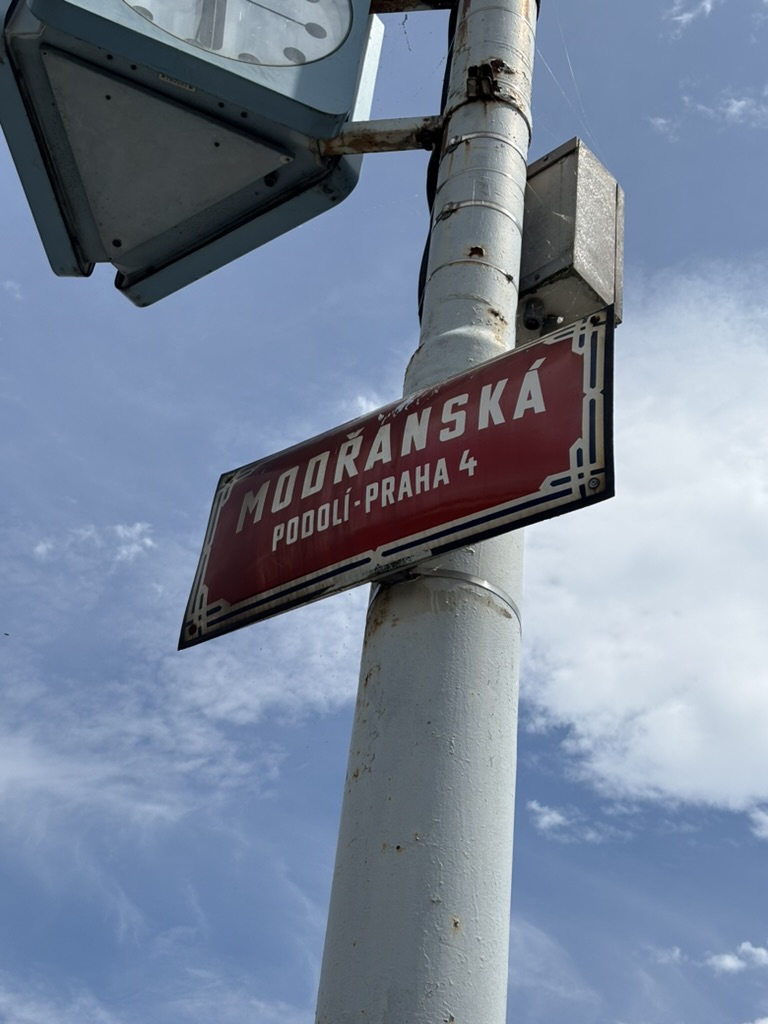
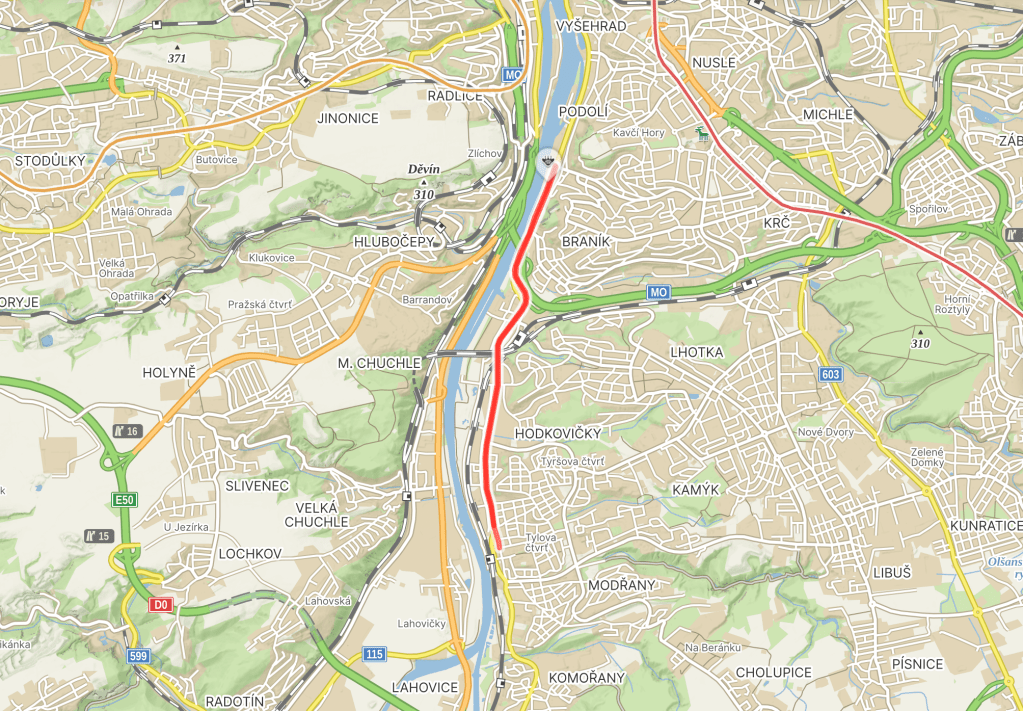
In 1178, Soběslav II, Duke of Bohemia, declared that he was giving the Vyšehrad Chapter (https://whatsinapraguestreetname.com/2024/08/24/prague-2-day-94-k-rotunde/) a gift – some land in Modřany. This is the earliest confirmed mention of the place.
The origin of the name isn’t clear, but experts think it may have been named after the ‘hyacint modrý’, the blue hyacinth.
Further kings, including Charles IV (https://whatsinapraguestreetname.com/2024/10/15/prague-1-day-196-karlova/), gave the Chapter further land in the area.
Modřany was completely burnt down during the Hussite Wars, and, in 1429, was the site of fighting between Hussites and Catholics. The parts of Modřany which had belonged to Vyšehrad became the property of Prague’s Old Town.
They would then lose it again in 1547, as punishment for resisting against Ferdinand I and the Habsburg regime in general.
In the 19th century, Modřany – rural up until this point – became a suburban area. It became an independent parish in 1855, had passenger trains to Prague from 1881, and acquired its own post and telegraph office in 1891.
It wasn’t until 1968 that Modřany officially became part of Prague.
There’ll be a lot more to say about Modřany when we start walking down its streets – but, as it’s in Prague 12, I’m in the slightly terrifying position of saying, for the first time ever, ‘I’ll do that in the coming decade’.
In the meantime, that’s us done with Podolí! Braník coverage begins tomorrow.

 What's in a Prague street name
Leave a comment