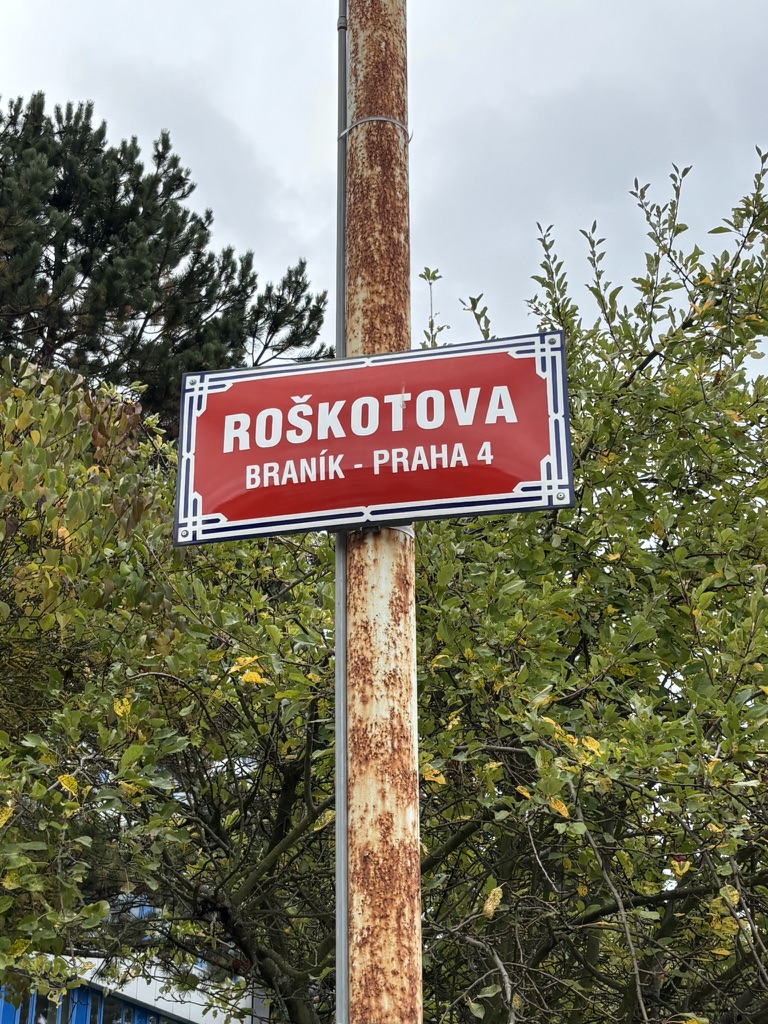
Roškotova was built in 1990.

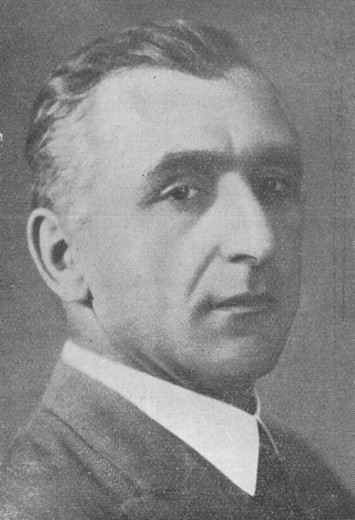
Kamil Roškot was born in Vlašim in 1886; as a teenager, he studied at the gymnasium on Křemencova (Bohemia’s first Realgymnasium – see https://whatsinapraguestreetname.com/2024/09/13/prague-1-day-100-kremencova/).
From 1904 to 1910, he studied civil engineering at Prague’s German Technical University, while taking part-time architecture classes at the Czech counterpart.
This was followed by further studies – of philosophy and art history at Charles University – from 1911 to 1913, and, after military service on the Russian and Serbian fronts in WW1, architecture at the Academy of Fine Arts (1919 to 1922).
In 1921, Roškot became a founding member of the Association of Building Design (soon renamed as the Association of Architects).
His architecture was based around reimagining urban areas in the form of ideal geometric formations.
Internationally, he got attention for his Czechoslovak pavillions at World Exhibitions in Milan (1926), Chicago (1933; picture one) and New York (1939; picture two; noticeably, the pavilion represented the whole country despite the Nazis having recently dismembered it).


He also built several residential buildings around Prague – I would love to share links to the streets they’re on, but this will have to wait, as they’re mainly in Prague 6, 7 and 10.
However, the building of his you’re most likely to recognise is somewhat out of the centre. It was opened in 1937, and, until 2012, went by the name of Prague Ruzyně International Airport.
(I hardly need to explain who it’s named after now, but all the same, here you go: https://whatsinapraguestreetname.com/2024/09/14/prague-1-day-104-namesti-vaclava-havla/)
While the architect Adolf Benš was responsible for the main building, Roškot prepared the overall layout of some of the other airport buildings, including houses for the airport director, administrator and gatekeeper.
Neither was responsible for these new machines that everyone was having a hullaballoo about last weekend, so please take your rage elsewhere and keep trying to find a time machine that can take us back to 2016 and do that year differently.
Roškot also designed what is now the Ministry of the Interior in Prague 6 (picture from 25 February 2023, during a commemoration of the first anniversary of the full-scale Russian invasion of Ukraine).
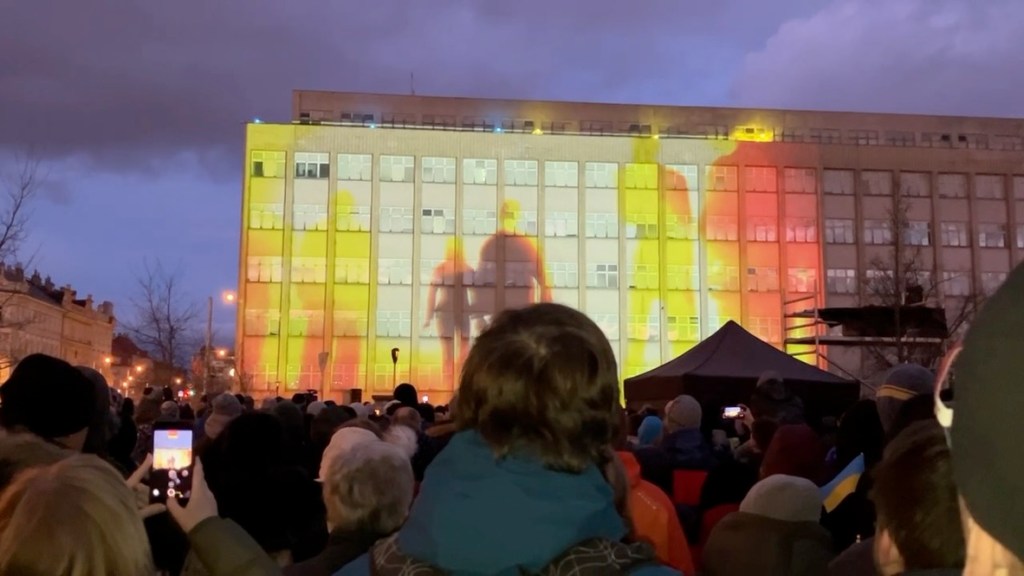
When he designed it, it was scheduled to be the Supreme Accounting and Auditing Office.
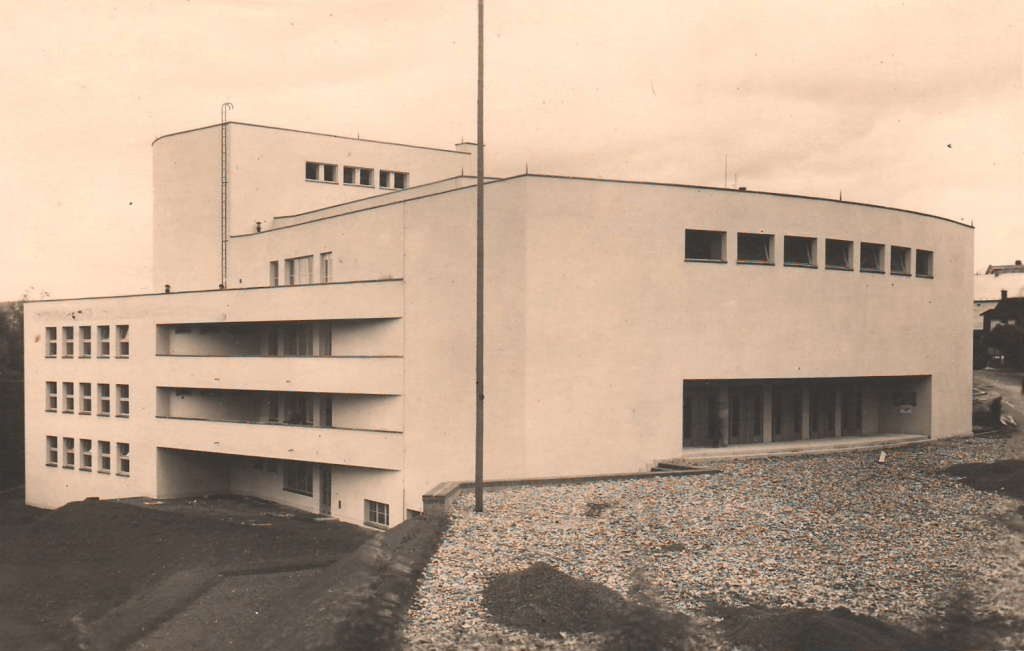
His most famous work, though, is probably the Roškot Theatre in Ústí nad Orlicí, opened in 1936 (postcard from around that time).
Roškot died in Paris in 1945, and a posthumous exhibition of his work took place in Prague a year later.
His sister, Anna Roškotová (1883-1967), was a renowned painter.

On Roškotova itself, you’ve got the Jaroslav Ježek Conservatory, which specialises in contemporary music; https://whatsinapraguestreetname.com/2023/01/14/prague-3-day-136-jezkova/ is a post I particularly enjoyed writing.
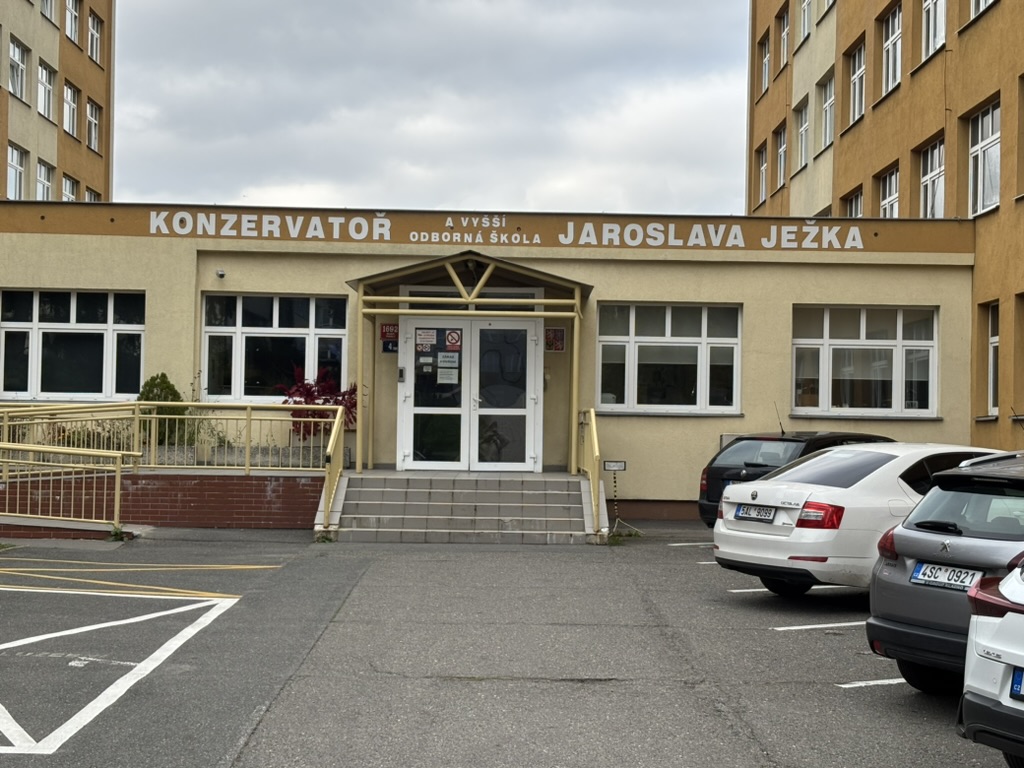
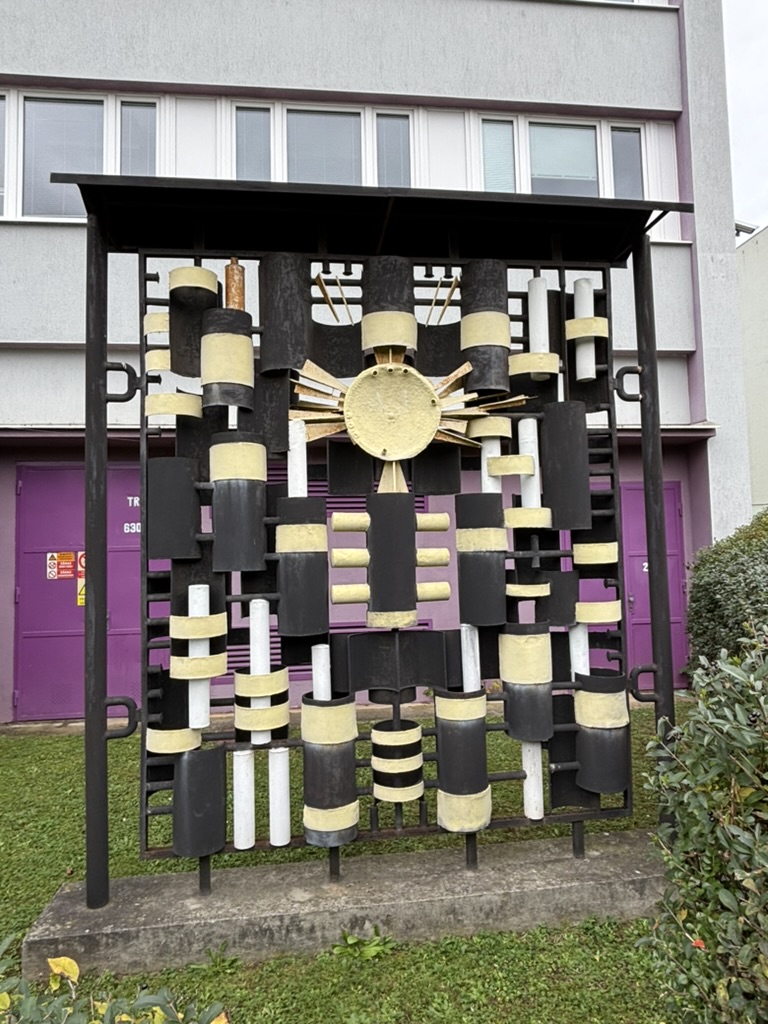
And round the corner, you’ve got this decorative piece which caught my eye.

 What's in a Prague street name
Leave a comment