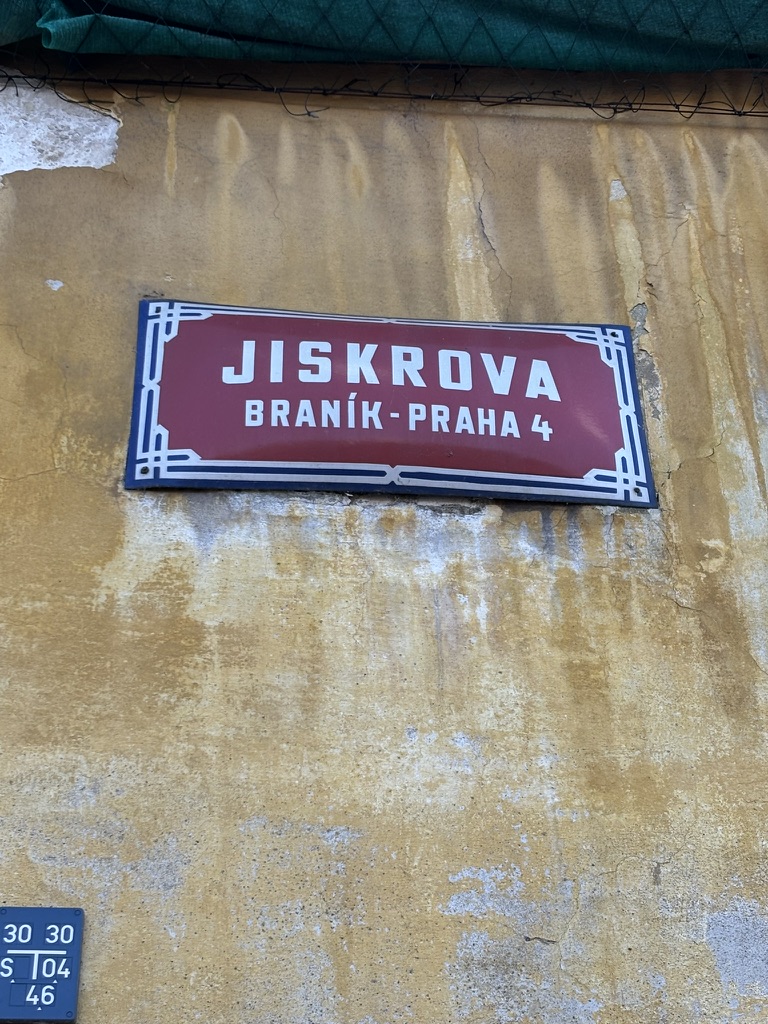
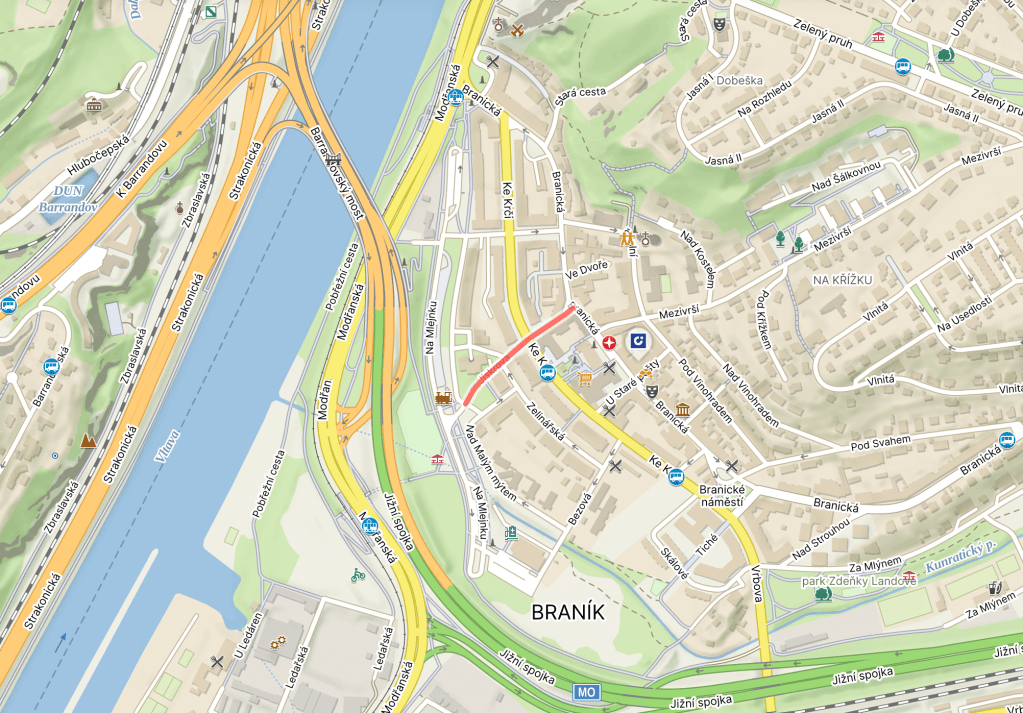
A street with this name was founded in Braník in 1935, but was destroyed in 1990 during construction works.
In 1991, this street – about a kilometre away from the original Jiskrova – was given the name instead. Internet searches indicate that it was originally part of Modřanská (https://whatsinapraguestreetname.com/2025/09/29/prague-4-day-185-modranska/), but the map above isn’t helping me to visualise that successfully.
Jan Jiskra z Brandýsa was born into a noble Moravian family around 1400. He gained military experience as a youth, both in Italy and in the Czech Lands.
During the Hussite Wars, he fought as a moderate, defending Plzeň from more radical factions. After them, he started to serve Sigismund, who was not only King of Bohemia, but also of Hungary and Croatia, as well as being Holy Roman Emperor.
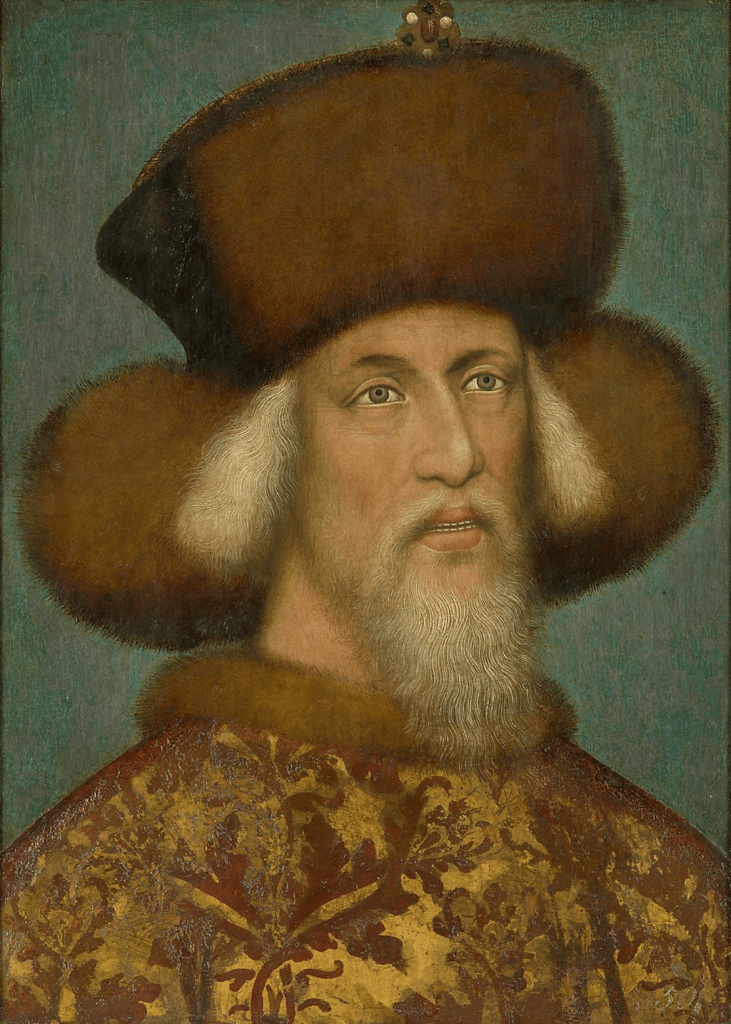
He helped Sigismund’s efforts against the Turks, mainly around Belgrade.
Sigismund died in 1437 while en route from Prague to Hungary, leaving behind one adult child, Elizabeth.

The Catholics and moderate Hussites supported putting Elizabeth’s husband, Albert of Austria, on the throne (both are pictured below); the more extreme Hussites wanted Casimir, brother of Władysław III, King of Poland.
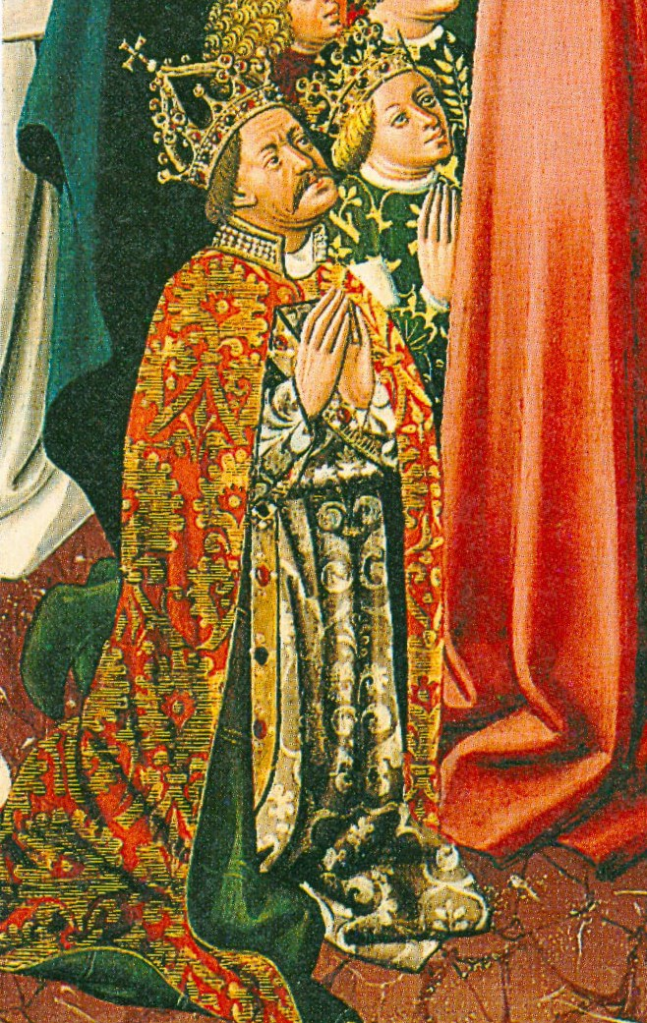
Albert died in 1439 while travelling back from an unsuccessful expedition against the Turks in Hungary. His son Ladislav was born after his death, and consequently became known as Ladislav Pohrobek (Ladislav the Posthumous).
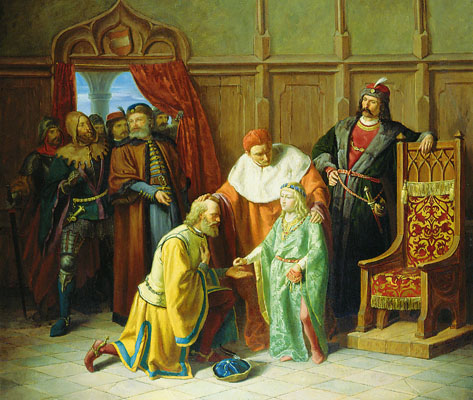
When Ladislav was three months old, Elizabeth had him crowned King of Hungary; the Hungarian nobility wanted Władysław III. Elizabeth fled Hungary for Upper Hungary, i.e. present-day Slovakia. She also asked Jiskra to protect her son’s interest.
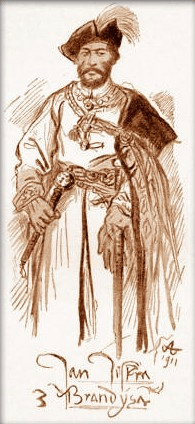
Jiskra managed to get an army of 5,000 Hussites together, and promptly occupied large parts of Upper Hungary, thereby cutting Poland and Hungary off from each other.
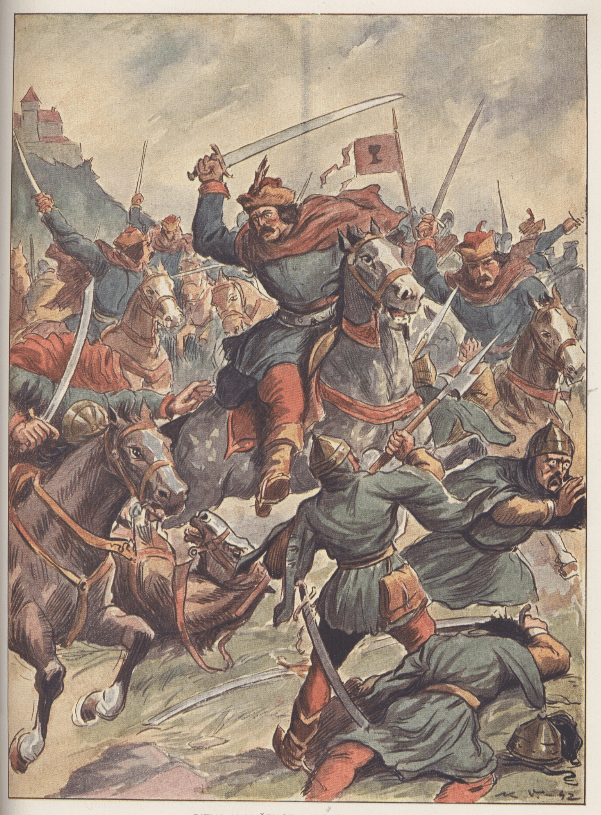
Władysław III disappeared following the Battle of Varna in 1444; Elizabeth had died in 1442. Jiskra became Chief Captain of Upper Hungary in 1445, but spent much of the next few years in on-off conflicts with János Hunyadi, who served as regent of Hungary under the still very young Ladislav.
Hunyadi resigned the regency in 1453; Ladislav stripped Jiskra of his position and property in Hungary, but called him back into service a year later to help against the former Hussite fighters who were plundering Upper Hungary.
Ladislav died unexpectedly in Prague in 1457, aged just seventeen. Jiskra opposed the new King of Hungary, Matthias Corvinus. He eventually capitulated in 1462, and agreed to pay tribute to Matthias.
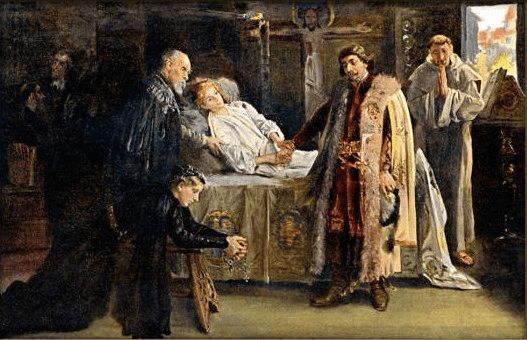
(In the meantime, the next Bohemian king would be George of Poděbrady: see https://whatsinapraguestreetname.com/2023/12/23/prague-3-day-189-namesti-jiriho-z-podebrad/)
In 1467, Jiskra represented Matthias Corvinus in peace negotiations with the Turkish Sultan, Mehmed II. We don’t know when he died, but there’s a text from 1468 referring to him being alive, and one from 1471 saying he was deceased.

In 1917, the first cavalry regiment of the Czechoslovak legions in Russia (https://whatsinapraguestreetname.com/2024/09/12/prague-1-day-90-most-legii-legion-bridge/) was named after Jiskra.

 What's in a Prague street name
Leave a comment