Vrbova was built in 1935.
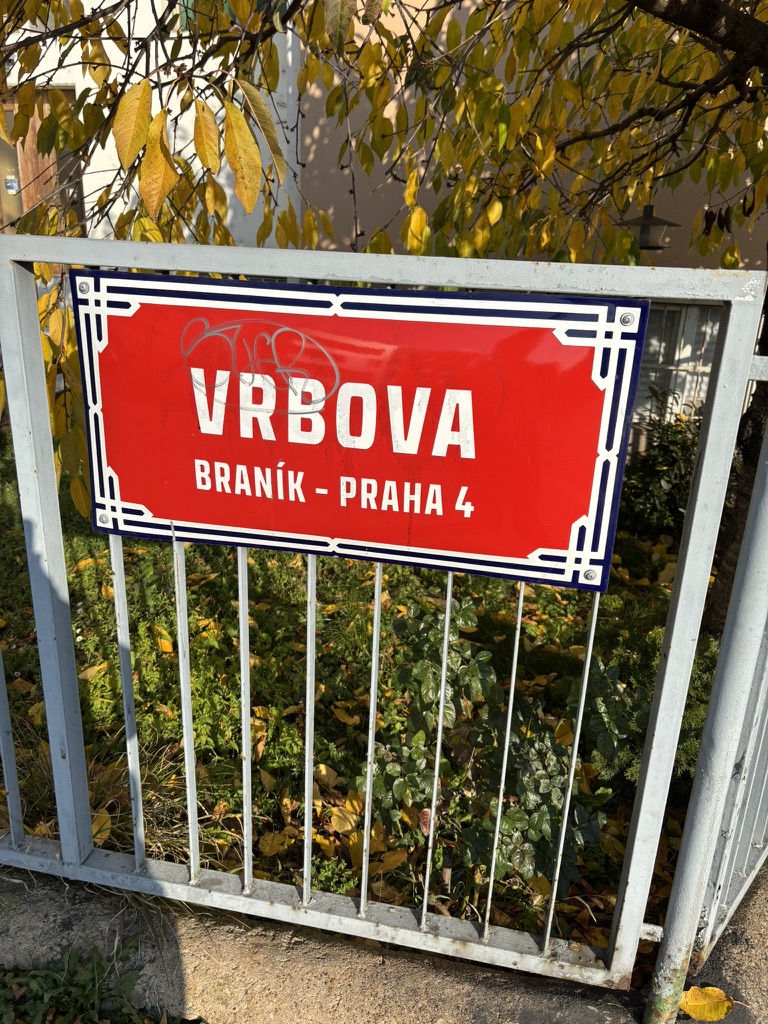
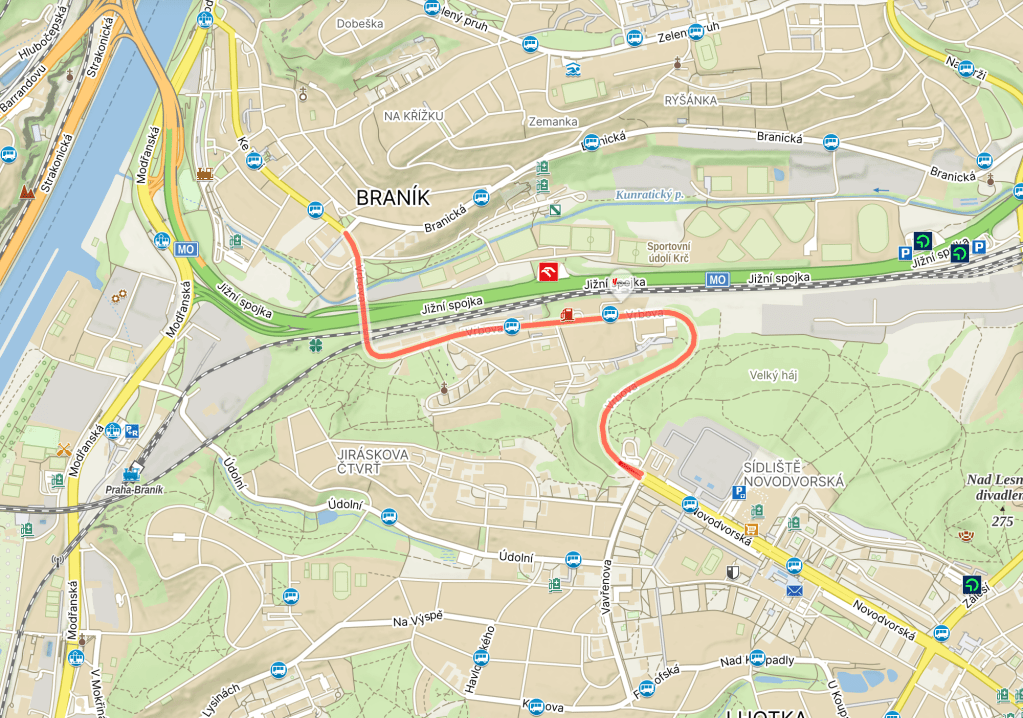
Originally, it was two streets – one called Pod myslivnou (Under the gamekeeper’s lodge), and one called Ve studeném (a name we’ll get on to before we leave Braník). They were joined and renamed in 1973.
The villa district covering parts of Braník and Hodkovičky (which is up next in this series) was built during the First Czechoslovak Republic, i.e. between the World Wars.
Several of its streets – all of which will be coming up in the next few weeks – were named after fictional characters from works by author of historical novels (and Staré pověsti české / Ancient Bohemian Legends, a mainstay of many bookshelves and many of the stories in these posts), Alois Jirásek.
You can find much more on him here: https://whatsinapraguestreetname.com/2024/09/01/prague-2-day-154-jiraskovo-namesti/.
The area with all the villas became known as (and is still known as) Jiráskova čtvrť – Jirásek’s district.
One of Jirásek’s most famous works is the five-part F. L. Věk, ‘a picture from the history of our national awakening’, published between 1888 and 1906. It’s set during the Czech National Revival, specifically between 1769 and 1816, and is named after its lead character, the merchant František Ladislav Věk.
One of the characters – and the one who has given his name to this street – is Matouš Vrba, a priest who decided to travel Bohemia and promote the Czech language, which he said was ‘not dead but sleeping’.
He’s characterised as a kind type who cares about the common people… but also with something of an obsessive dislike of the French and their Revolution.
F.L. Věk was made into a television series in the early 1970s; here’s a playlist of clips.

 What's in a Prague street name
Leave a comment