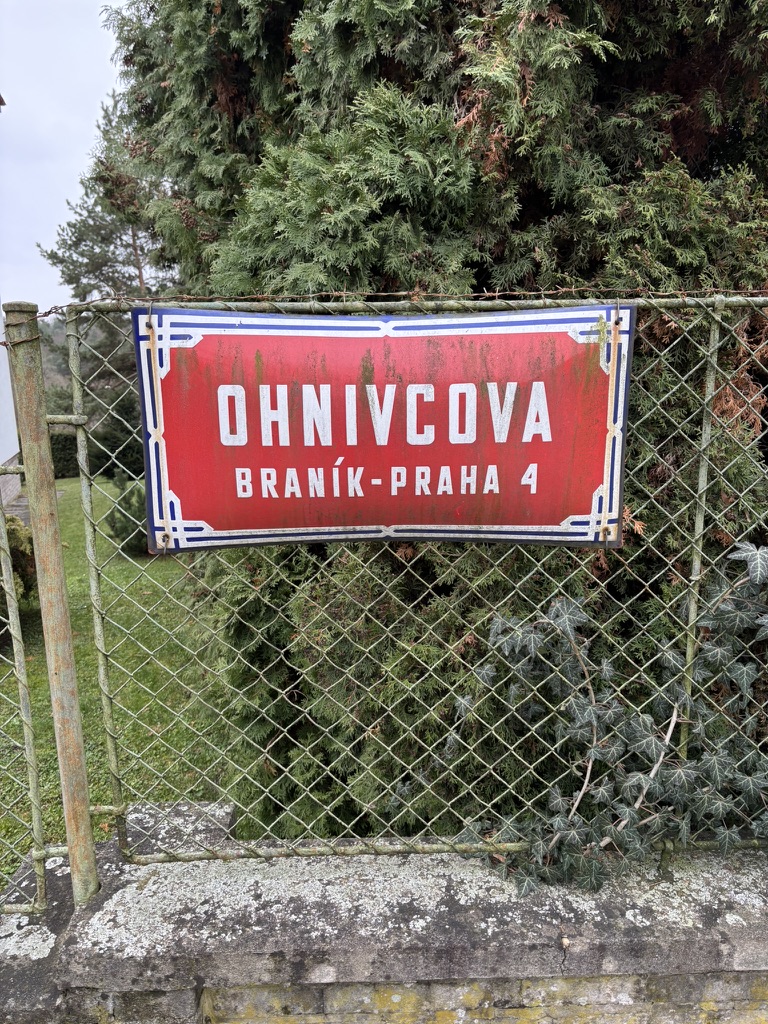
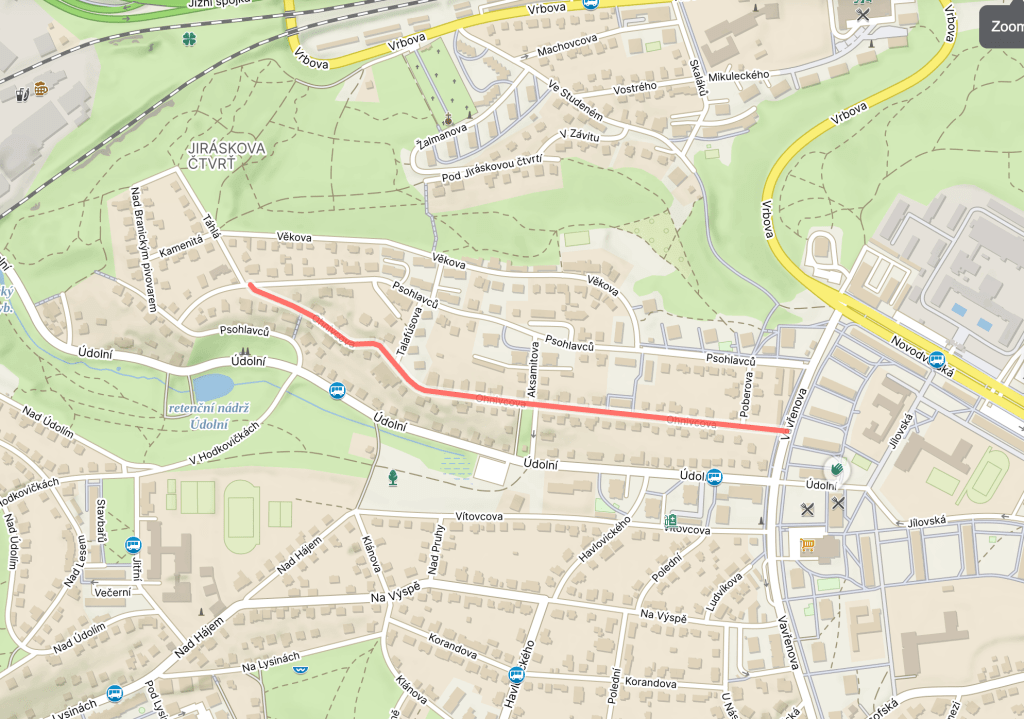
Ohnivcova was built in 1933.
We’re still in ‘novels by Alois Jirásek’ territory: between 1887 and 1890, Jirásek published a trilogy called Mezi proudy (Between the Currents), based on real events which occurred between 1381 and 1409.
Those real events concerned Czech resistance against German oppression during the reign of Wenceslas IV. As this was the era that saw the rise of Jan Hus (who began teaching at the University of Prague in 1398), the trilogy also gives a lot of attention to the immorality of the Church at the time.
The first of the novels, Dvojí dvůr (Double Courtyard), ends with the king granting Czech speakers of Prague greater rights in further education.
Volume two, Syn ohnivcův, would most easily be translated as ‘The Fireman’s Son’. This is because the main character, Jan Ohnivec, is the son of Šíp, who was once asked to be a royal fireman.
He was asked by Jan Jenštejn – a real-life archbishop of Prague who is discussed on https://whatsinapraguestreetname.com/2024/09/01/prague-day-151-jenstejnska/ – and, in the novel, this was because Jenštejn was in love with Šíp’s wife (Šíp’s second, and the stepmother of Jan Not Janštejn).
By volume three – Do tří hlasů (In Three Voices) – Jan Ohnivec is a royal courtier. This novel is focused on the rivalry between two noble families – the Trocnovs and the Rosenbergs, who don’t get on (to put it mildly).
At the start of the novel, Jan Žižka meets Ohnivec, who has been injured by thieves while on a journey, and takes him in. Meanwhile, the Rosenbergs capture King Wenceslas and try to get him to improve their standing in the state.
While public opinion in Prague is largely on the side of the Rosenbergs, the king’s brother, who, like 117% of the people in these three novels, is called Jan, manages to turn the tide. They build an army – including Žižka – which forces the Rosenbergs to give in.
The king was ultimately freed; despite being captured and tortured, Ohnivec remained faithful to him.
Later on in the novel, the Rosenbergs are trying to capture Jan Žižka, but the king, with Ohnivec’s help, manages to prevent this.
Other things happen in the novels too, of course, but I’m saving those in case there’s another Mezi proudy-related street coming up. The novels were successful, despite Catholic commentators not appreciating the portrayal of Jan Jenštejn.

 What's in a Prague street name
Leave a comment