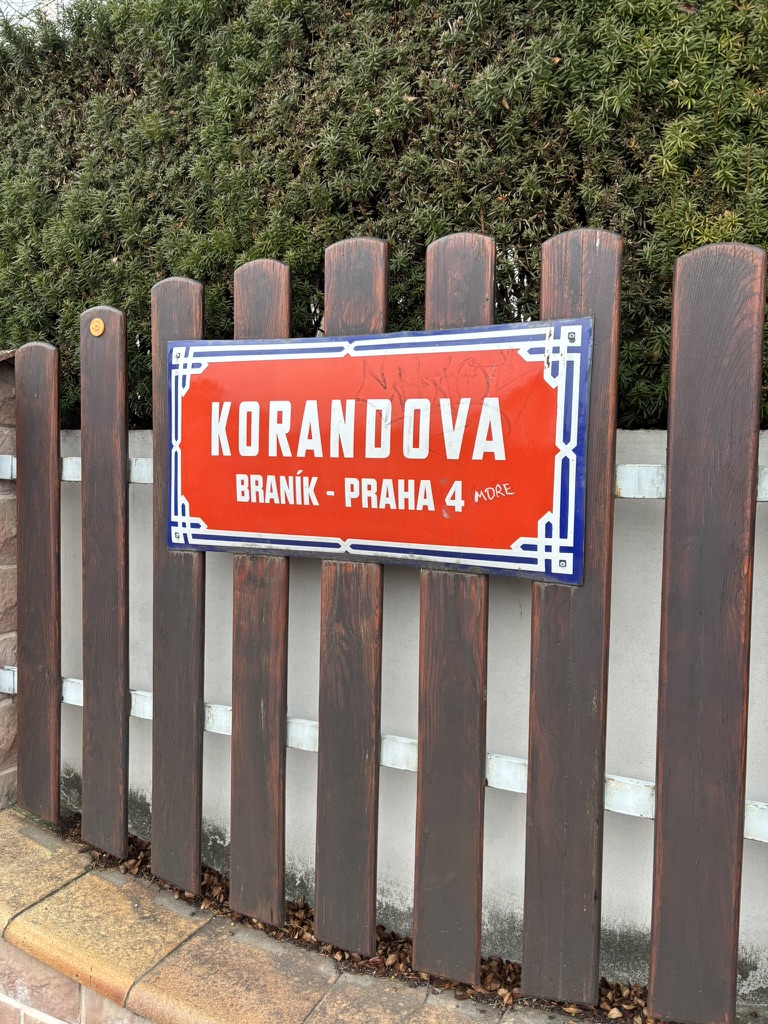
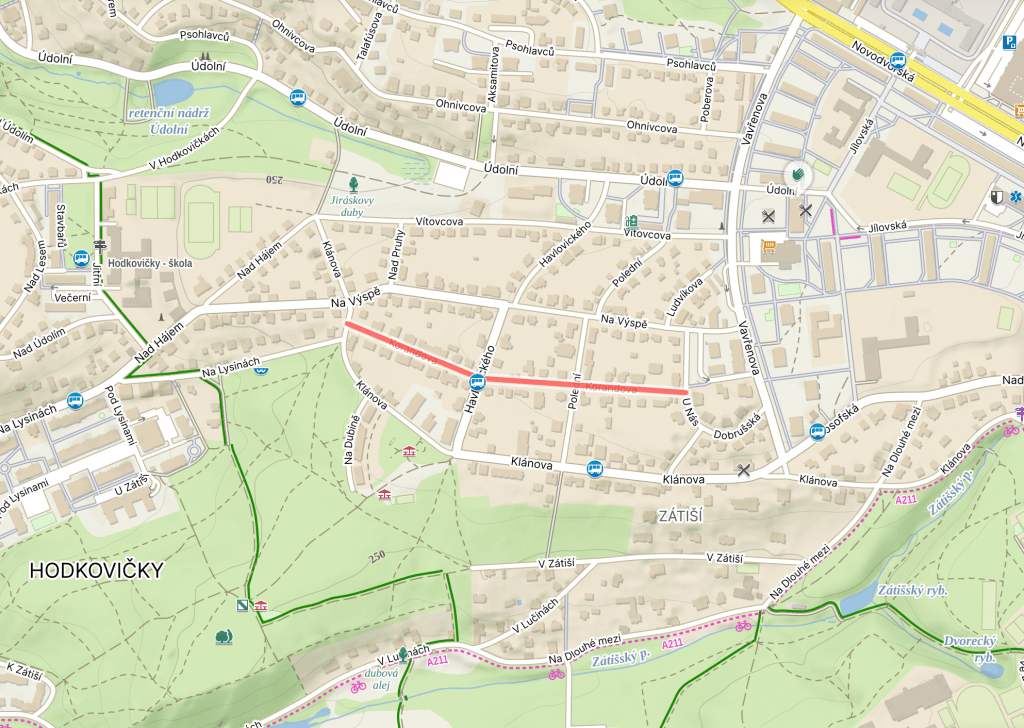
Korandova was built in 1925.
We don’t know when Václav Koranda was born, but we do know that, by 1414, he had founded a Hussite community in Plzeň, taking part in and often leading pilgrimages to the mountains.
Leaving Plzeň in 1419, he joined Jan Žižka’s forces, and took part in the Battle of Sudoměř (https://whatsinapraguestreetname.com/2023/02/26/prague-3-day-156-sudomerska/).
In 1420, Koranda, Žižka and a whole lot of followers then went to the newly-founded Tábor (https://whatsinapraguestreetname.com/2025/02/06/prague-4-day-26-taborska/), where he became one of the most radical priests.
Koranda took part in the battle of Vítkov Hill ((https://whatsinapraguestreetname.com/2022/12/04/prague-3-day-111-pod-vitkovem/) in the same year; two months later, he was part of the group who attacked Zbraslav and, not very nobly, destroyed its monastery.
A month after that (we’re on September 1420 by now), Koranda was captured and imprisoned at Přiběnice Castle (https://whatsinapraguestreetname.com/2022/12/04/prague-3-day-112-pribenicka/).
He managed to escape; by 1422, the Hussites would manage to take over the entire castle.
Jumping forward a few years, Koranda took part in the Battle of Lipany in 1434 (https://whatsinapraguestreetname.com/2022/12/23/prague-3-day-120-lipanska/); shortly afterwards, he was involved in the negotiations with King Sigismund that would finally see the end of the Hussite Wars.
This shouldn’t be taken to mean that Sigismund ever became a fan, though – by 1437, he had ordered Koranda to either stay in Tábor at all times or be punished by drowning.
Fifteen years later, Koranda had a dispute with the administrator of Bohemia – one George of Poděbrady (https://whatsinapraguestreetname.com/2023/12/23/prague-3-day-189-namesti-jiriho-z-podebrad/).
In 1451, George had him imprisoned in the Old Town Hall (one of many places discussed on https://whatsinapraguestreetname.com/2024/10/12/prague-1-day-190-staromestske-namesti-old-town-square/).
Koranda died about two years later at Litice Castle.
In 1879 – you might have guessed where this was going already – Alois Jirásek wrote a historical novel called Konec a počátek (The End and the Beginning), in which Koranda, imprisoned in Litice, is the main character.
The novel describes the demise of the Hussites (Tábor Version), which led to the emergence of the Unitas Fratrum (https://whatsinapraguestreetname.com/2022/11/26/prague-3-day-83-ceskobratrska/).

 What's in a Prague street name
Leave a comment