Toušeňská was built in 1980.
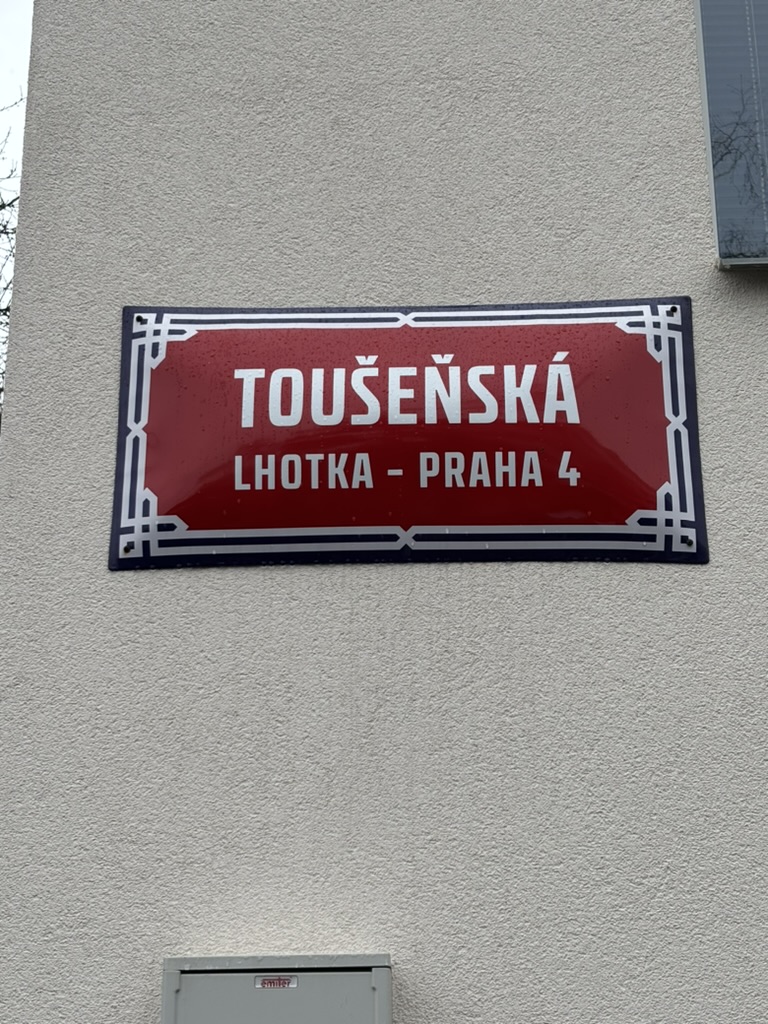
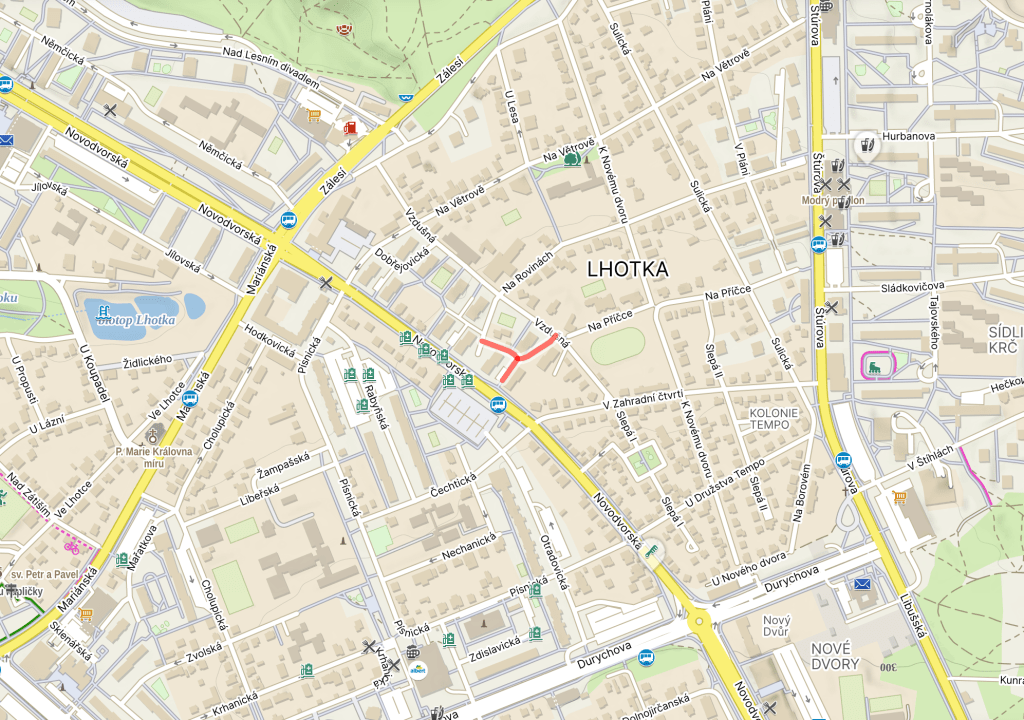
Lázně Toušeň is a town in the current-day Prague East district, with a population of 1,500.
The oldest gold object ever found in Central Europe – an earring from the Řivnáč culture, dating from about BCE 3,000 – was discovered here.
Its name means ‘Toušen’s hillfort’, and it’s feminine – for a little bit on such names (and also an opportunity to find out why we don’t say Mladý Boleslav), take a look at https://whatsinapraguestreetname.com/2023/12/23/prague-3-day-180-boleslavska/.
In the 13th century, Toušeň Castle was built to the west of the original settlement; the ‘new’ Toušeň was first mentioned in writing (that we know of) in 1293.
In 1338, Toušeň was visited by the future Charles IV, and present Margrave of Moravia (https://whatsinapraguestreetname.com/2024/10/15/prague-1-day-196-karlova/). He sketched out what would later become three chapters of his autobiography here.
Charles clearly took a shine to Toušeň; in 1370, he bought it for his brother (and then Margrave of Moravia), Jan Jindřich, and freed it from the obligation to pay taxes or duties.
Jan Jindřich’s son, Jošt Moravský, later inherited Toušeň, but, uninterested in any property that wasn’t in Moravia, sold it to two buyers: Jan Starší of Michalovice and Boček of Poděbrady, the latter the uncle of another future king of above-average importance: https://whatsinapraguestreetname.com/2023/12/23/prague-3-day-189-namesti-jiriho-z-podebrad/.
George would end up purchasing Toušeň in 1468; in the early 1500s, it was purchased by an important politician, Jan Pašek, who rebuilt the Toušeň Castle into a Renaissance chateau.
Eventually, Ferdinand I would confiscate Toušeň in 1547, and it gradually lost its importance. About a century later, it would be burnt down by the Swedes during the Thirty Years’ War.
Jumping forward two hundred years from that, a spa (lázně) was built in Toušeň in 1868. The healing effects of the water, and the proximity to Prague, meant it soon gained popularity. Mud baths were added in 1899.
Surviving both World Wars and the onset of communism, the spa was, from 1968, mainly used to treat Czechoslovakia’s top athletes. Those benefiting from its services included Ludvík Daněk, Jan Železný and Roman Šebrle.
Emil Zátopek and Dana Zátopková, working with the local mayor, Miroslava Jirák, were instrumental in developing the spa’s role in this capacity; they were named honorary citizens of Toušeň as thanks for their work.
Other famous visitors over the years include Archduke Charles (in August 1918, three months before he would no longer have an empire to rule over), Leoš Janáček and Bohumil Hrabal.
Toušeň was renamed to Lázně Toušeň in 1991. The spa itself has been run by Prague’s Bulovka Hospital since 2006.

 What's in a Prague street name
Leave a comment