Růženínská was built in 1981.
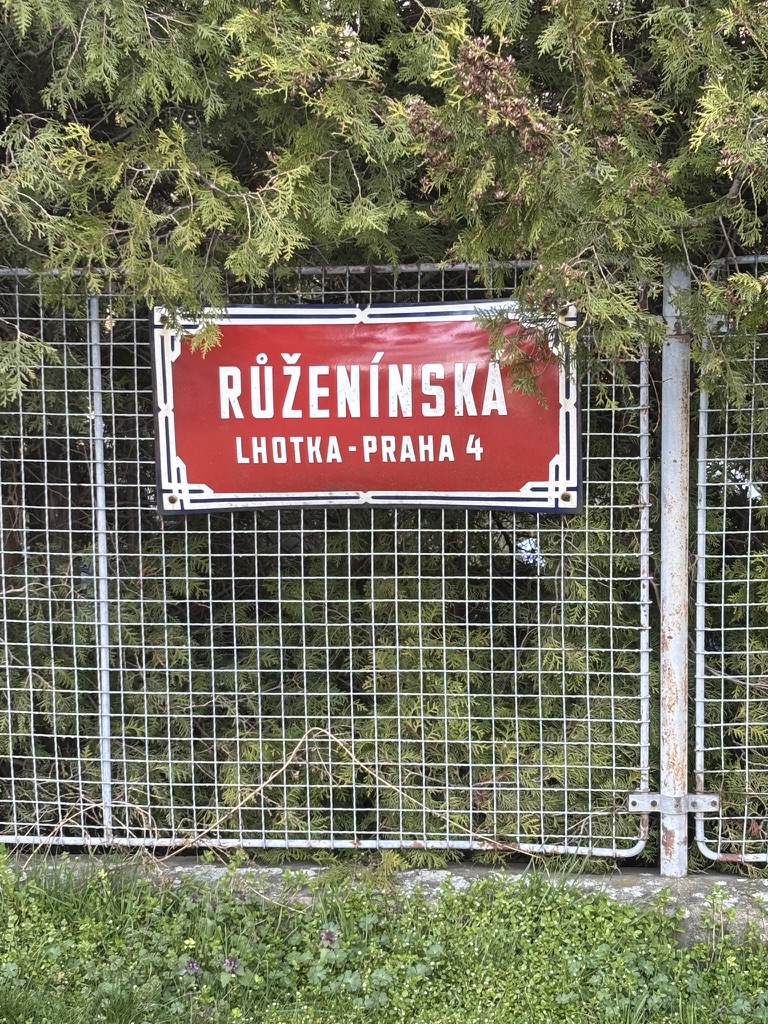
We start this story in Chocerady, a town of about 1,400 people, 27 kilometres southeast of Prague.
Chocerady has five municipal parts; the second-largest of these is called Vlkovec (with 169 inhabitants, it’s a lot smaller than the largest, also called Chocerady, and which has 863 inhabitants).
Vlkovec was once known for its glass industry, with the first known glassworks dating from 1855. This passed through several owners, until, in the early 20th century, it was purchased by one Arnošt Pryl.
As the glassworks was dilapidated, Pryl renovated and expanded it. He also had it named ‘Rosahütte’, (or, in Czech, Růženín, also meaning for ‘rose quartz’) after his wife, Růžena, who would also be the co-owner.
The renovations did the trick; Růženín made glass that was exported to Britain, France, Spain and the US. The number of employees peaked at almost 300 in 1929.
The settlement – where employees of the glassworks lived – developed around it, and shared its name.
After World War II, the glassworks was nationalised and merged with the Kavalier glassworks in Sázava (which gets a mention on https://whatsinapraguestreetname.com/2024/02/18/prague-2-day-31-sazavska/).
Glass production ceased in Růženín in 1993, but Kavalier still uses the buildings as warehouses (photo by Juan de Vojníkov): https://commons.wikimedia.org/wiki/Category:Glassworks_R%C5%AF%C5%BEen%C3%ADn#/media/File:Tov%C3%A1rna_Kavalier_v_R%C5%AF%C5%BEen%C3%ADn%C4%9B_(001).JPG/2.

 What's in a Prague street name
.JPG/2)
Leave a comment