Durychova was built in 1976.
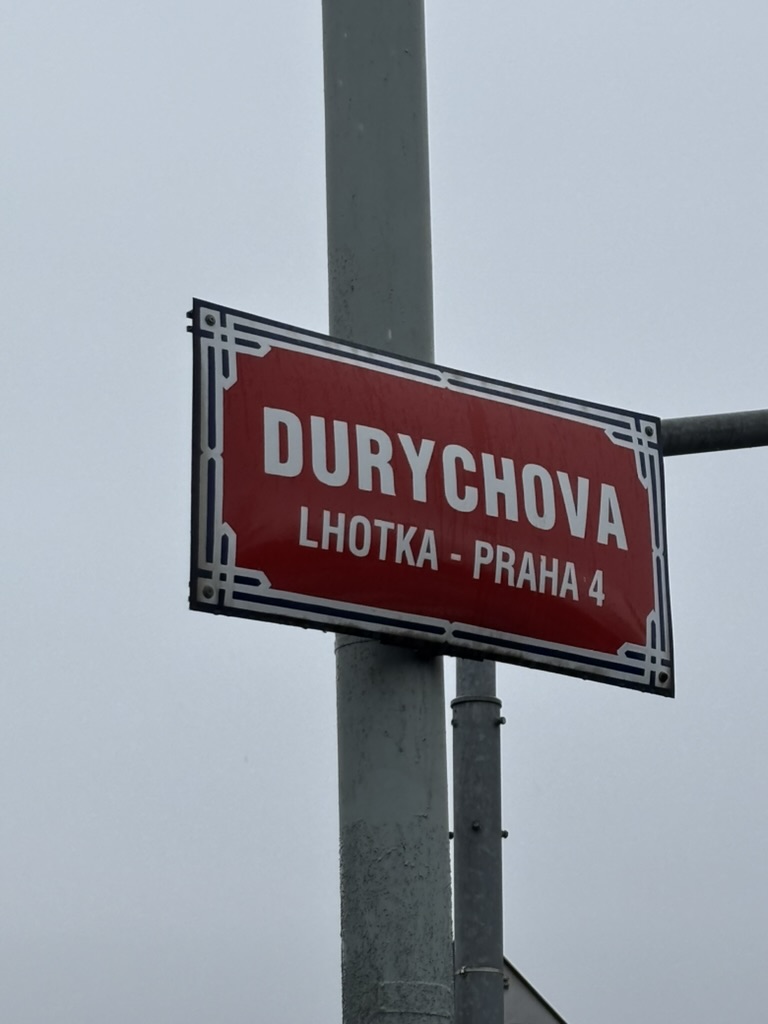
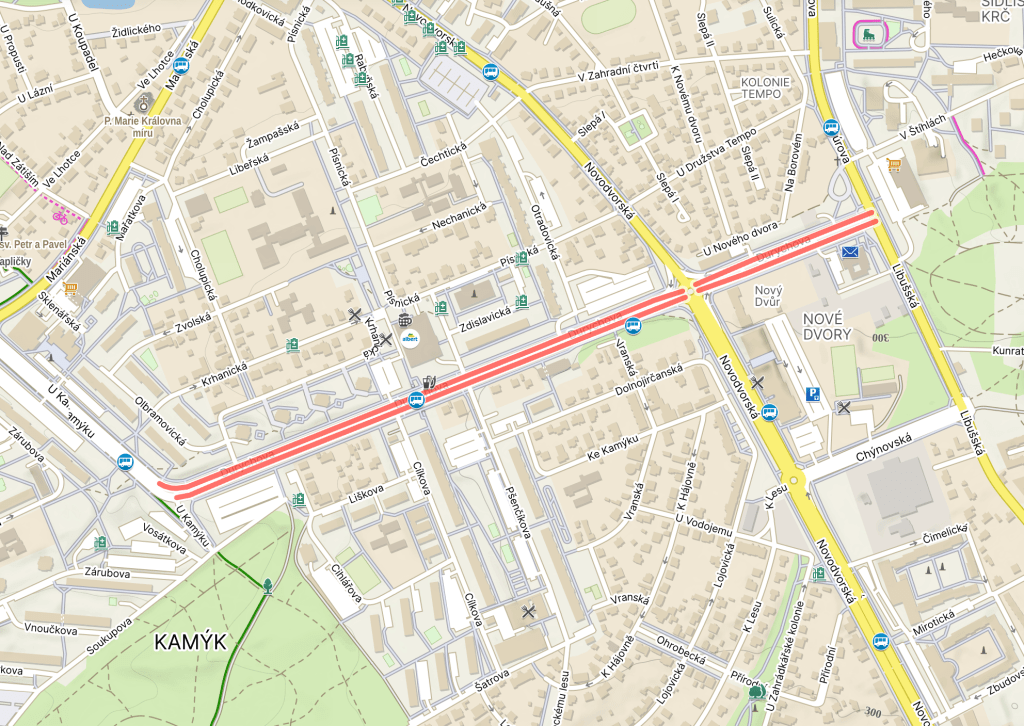
Until 1995, the street was called Dolejšího, after Vojtěch Dolejší (1903-1972), a Communist journalist who worked for Rudé právo, among other publications, and was chairman of the Czechoslovak Union of Journalists from 1957 to 1963.
Jaroslav Durych was born in Hradec Králové (https://whatsinapraguestreetname.com/2023/06/24/prague-3-day-176-hradecka/).
He graduated from the Faculty of Medicine in Prague in 1913; having studied on a military scholarship, he ended up serving as a military doctor in Galicia during World War One.
He started a private practice after the war, but soon returned to the army, serving as a military doctor in Uzhhorod (then in Czechoslovakia, now in Ukraine) before becoming head of the military hospital in Hradisko, near Olomouc, in 1923, where he stayed until 1930.
Parallel to this military career (he ultimately reached the rank of colonel), Durych built on his career as a writer, although this was not new: he had had poems published in 1908, wrote his first play in 1915, and had his first prose piece published in 1916.
Durych’s works were largely based around his Christianity, and he took a particular interest in the post-Bílá Hora (i.e. (post-1620) period of Czech history.
His masterpiece was the trilogy called Bloudění (Wanderings; published in 1929), in which the main figure was Albrecht von Wallenstein (https://whatsinapraguestreetname.com/2024/09/08/prague-1-day-46-valdstejnske-namesti/).
A second Wallenstein trilogy – Rekviem – would follow in 1930.
A year later, his short novel, Masopust came out, set in 1611, the year that a brutal attack on a monastery in Prague (specifically on https://whatsinapraguestreetname.com/2024/09/15/prague-1-day-112-jungmannovo-namesti/) let 15 Franciscan monks dead.
When the Nazis occupied the Czech Lands, Durych lived in isolation and his works were no longer published. The communist era would leave him in much the same situation.
Durych died in 1962 and is buried in Bubeneč. Some more of his works would be published posthumously. These included Služebníci neužiteční, written between 1940 and 1961, but not published until 1969.
That novel – translating as ‘Useless servants’ – concerned a Jesuit mission to Japan, culminating in the execution of 55 Christians in Nagasaki in September 1622.

 What's in a Prague street name
Leave a comment