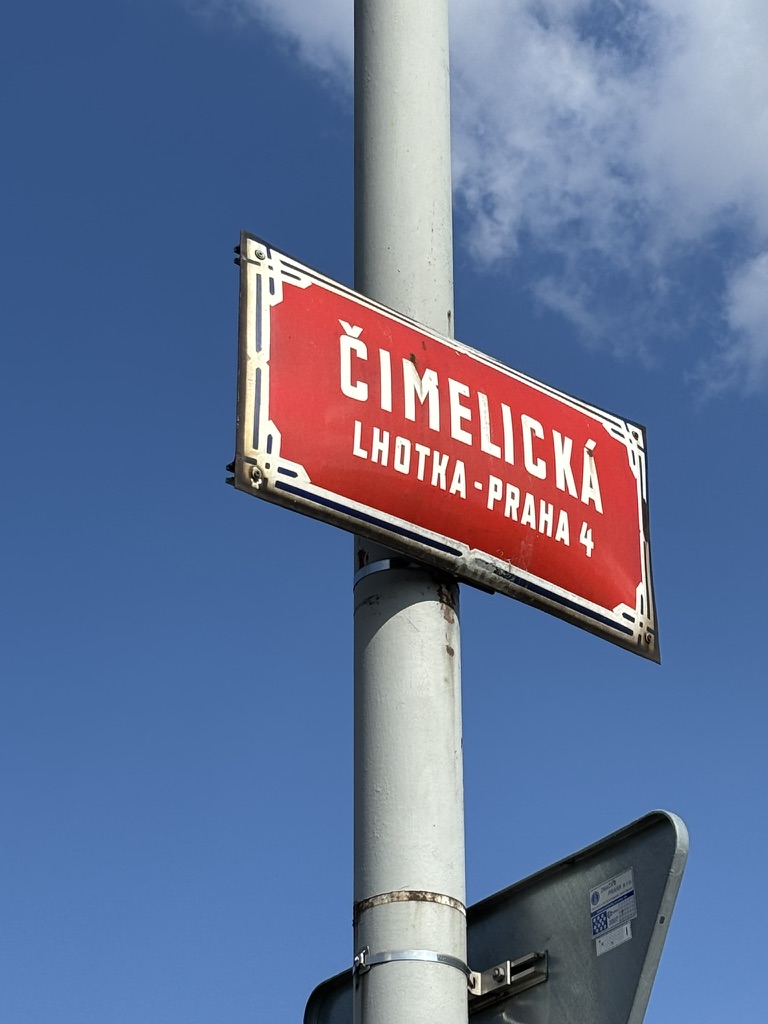
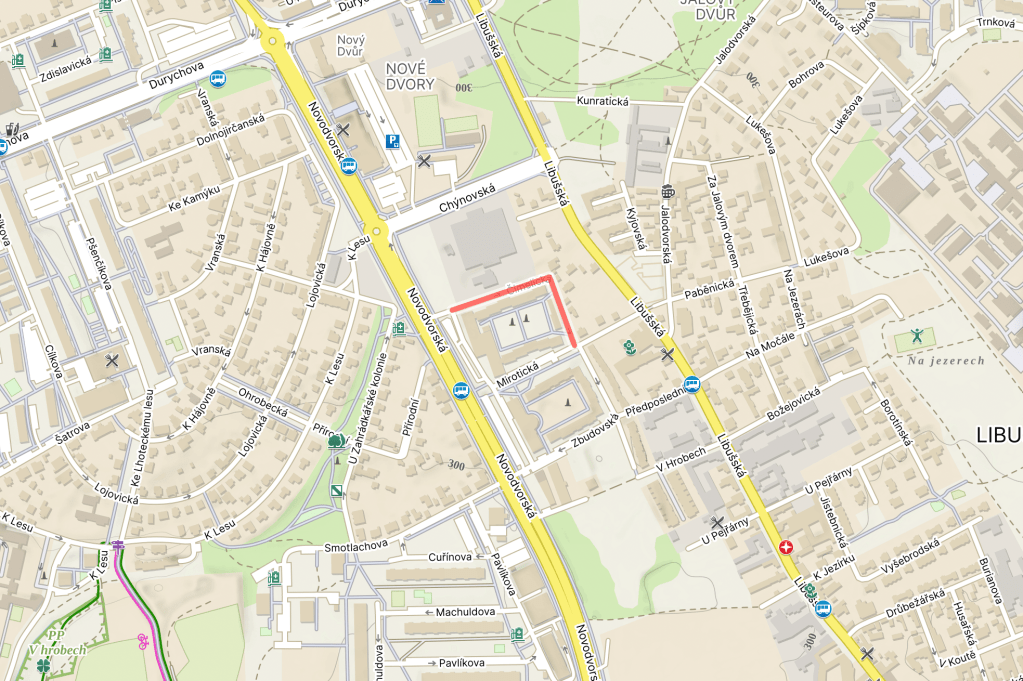
Čimelická was built in 1988.
Čimelice is a village of about 1,000 inhabitants in Písek District, about 25 kilometres south-east of Písek (https://whatsinapraguestreetname.com/2023/03/19/prague-3-day-175-pisecka/) and about 87 km south of Prague.
The earliest written mention we have is from the 1400s; it is literally the village of Čmel’s people, although we’re not sure who this Čmel was. The area is proven to have been settled by 10,000 BC, so he could be very ancient indeed (and very mythological).
Jumping a long way forward to May 1945 – actually, to 11 May, so, three days after the Germans officially surrendered and WW2 officially ended in Europe – some German units had refused to lay down their arms.
SS General Carl von Pückler-Burghauss, who had commanded SS units during the PRague Uprising a week before (https://whatsinapraguestreetname.com/2025/02/05/prague-4-day-25-5-kvetna-5-may/), moved his forces west to avoid both the Soviets and the Americans.
He and 6,000 men withdrew to a spot between Čimelice and Slivice, about 20 km to the north. They treated the local population with about as much respect as the last six years had suggested they would.
However, they were ultimately surounded by the Red Army, American troops and Czechoslovak resistance units. On May 12, von Pückler apparently signed a surrender document at a mill in Čimelice. He shot himself, and some of his staff, later that day.
Fifty years and one day later on 13 May 1995, Václav Havel unveiled a memorial in Čimelice to this last surrender: https://pisecky.denik.cz/volny-cas/dokumenty-o-dvou-piseckych-navstevach-vaclava-havla-20161004.html.
Čimelice is also the home of a Baroque castle of the same name with English gardens, belonging to the Schwarzenbergs:

 What's in a Prague street name
Leave a comment