What's in a Prague street name

Every street in Prague, one by one.

  • U nás was built in 1935.

    U nás is a novel by Alois Jirásek, discussed on both https://whatsinapraguestreetname.com/2026/01/10/prague-4-day-275-ludvikova/ and https://whatsinapraguestreetname.com/2026/01/12/prague-4-day-277-havlovickeho/.

    ‘U nás’ is a simple phrase that can be translated in multiple ways in English, because we don’t have an equivalent of ‘u’ / ‘chez’ / ‘bei’ / ‘hos’, and so on. You could say ‘at our place’, ‘where we live’, ’round ours’, etc.

    The whole Jirásek district thing is an excellent and fascinating idea, but, if there were a street called ‘Round ours’ simply because somebody thought that would sound all homely and wholesome, I think that would have been my favourite street name ever.

  • Filosofská was built in 1941.

    You know what philosophy is. You know what a philosopher is. But we’re not here because of Socrates, Plato, and whichever person on your feed has declared that he (it’s always a he) too is a philosopher and should therefore be listened to.

    We’re here because of Alois Jirásek, and his 1878, Litomyšl-set novel Filosofská historie, which you can read a fair bit about on https://whatsinapraguestreetname.com/2026/01/07/prague-4-day-273-vavrenova/.

  • Korandova was built in 1925.

    We don’t know when Václav Koranda was born, but we do know that, by 1414, he had founded a Hussite community in Plzeň, taking part in and often leading pilgrimages to the mountains.

    Leaving Plzeň in 1419, he joined Jan Žižka’s forces, and took part in the Battle of Sudoměř (https://whatsinapraguestreetname.com/2023/02/26/prague-3-day-156-sudomerska/).

    In 1420, Koranda, Žižka and a whole lot of followers then went to the newly-founded Tábor (https://whatsinapraguestreetname.com/2025/02/06/prague-4-day-26-taborska/), where he became one of the most radical priests.

    Koranda took part in the battle of Vítkov Hill ((https://whatsinapraguestreetname.com/2022/12/04/prague-3-day-111-pod-vitkovem/) in the same year; two months later, he was part of the group who attacked Zbraslav and, not very nobly, destroyed its monastery.

    A month after that (we’re on September 1420 by now), Koranda was captured and imprisoned at Přiběnice Castle (https://whatsinapraguestreetname.com/2022/12/04/prague-3-day-112-pribenicka/).

    He managed to escape; by 1422, the Hussites would manage to take over the entire castle.

    Jumping forward a few years, Koranda took part in the Battle of Lipany in 1434 (https://whatsinapraguestreetname.com/2022/12/23/prague-3-day-120-lipanska/); shortly afterwards, he was involved in the negotiations with King Sigismund that would finally see the end of the Hussite Wars.

    This shouldn’t be taken to mean that Sigismund ever became a fan, though – by 1437, he had ordered Koranda to either stay in Tábor at all times or be punished by drowning.

    Fifteen years later, Koranda had a dispute with the administrator of Bohemia – one George of Poděbrady (https://whatsinapraguestreetname.com/2023/12/23/prague-3-day-189-namesti-jiriho-z-podebrad/).

    In 1451, George had him imprisoned in the Old Town Hall (one of many places discussed on https://whatsinapraguestreetname.com/2024/10/12/prague-1-day-190-staromestske-namesti-old-town-square/).

    Koranda died about two years later at Litice Castle.

    In 1879 – you might have guessed where this was going already – Alois Jirásek wrote a historical novel called Konec a počátek (The End and the Beginning), in which Koranda, imprisoned in Litice, is the main character.

    The novel describes the demise of the Hussites (Tábor Version), which led to the emergence of the Unitas Fratrum (https://whatsinapraguestreetname.com/2022/11/26/prague-3-day-83-ceskobratrska/).


  • Polední was built in 1925.

    ‘Polední’ is the adjective from ‘poledne’, midday or noon. You might be reading this on your ‘polední přestávka’ (lunch break).
    In Polish (but not in Czech), ‘południe’ means not only ‘noon’ but ‘south’ (and, yes, the word for ‘midnight’, ‘północ’ also means ‘north’).

    This is the first in a series of four streets, although the other three are entirely in Hodkovičky, and we’ve got *counts* another nine Braník streets to get through first.

    Needing that ice to go away so I can go and take pics.

  • Na výspě was built in 1930.

    No historical novels today: a ‘výspa’ is a promontory, outpost or headland, and the street is located on one.

  • Havlovického was built in 1935.

    Josef Regner was born in Havlovice, near Trutnov, in 1794, the son of a miller (his mill, Regnerův mlýn, is still standing) and fervent Czech patriot.

    He studied philosophy at Charles Ferdinand University in Prague, and then theology at the seminary in Hradec Králové. He first served as a priest in Náchod in 1817.

    In 1820, he and his friend, Josef Myslimír Ludvík (https://whatsinapraguestreetname.com/2026/01/10/prague-4-day-275-ludvikova/) founded a fruit tree nursery and a flower garden.

    Regner (also known as Havlovický) devoted himself to noble courses throughout his clerical career: for example, he worked as a teacher, a farmer, a carer for the sick during a cholera epidemic in the 1830s, and as the owner of a mine which provided employment to those most in need of it.

    Josef Regner Havlovický died in 1852. He then appeared in Alois Jirásek’s four-part novel U nás. Jirásek had been born in 1851 in Hronov, and so, while he was less than a year old when Havlovický died, he would have heard tales about him throughout his childhood.

    There’s a memorial to Regner in Havlovice: https://commons.wikimedia.org/wiki/Category:Monument_to_Josef_Regner_in_Havlovice#/media/File:Havlovice_Regner.jpg/2.


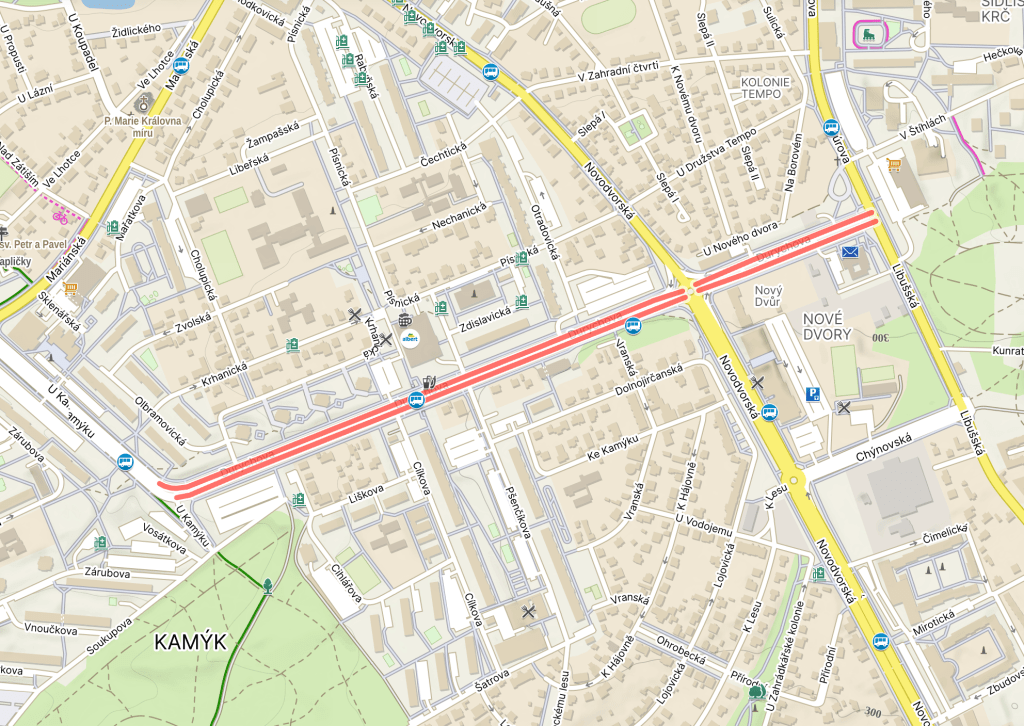
  • Novodvorská was created in 1935 through the merger of two streets: Hlavní (Main) and Vozová (which is related to ‘vůz’, meaning wagon).

    Once upon a time, there was a farmstead (in present-day Lhotka, also in Prague 4). Its name was Nový dvůr (New Court). It later became a monastery.

    After that, it served, at different times, as a poorhouse, apartments for rent and a crafts centre.

    In the late 18th century, the entire area became knows as Nové dvory (New Courts). The original building itself survives, and a proposal to demolish it was rejected in 2019.

    The building got some unwelcome publicity in January 2006, when František Mrázek, known as the “Godfather of Czech Organized Crime”, was shot dead by an unknown assailant outside the building, where one of his companies was registered.

    Almost exactly two months later (and unconnectedly, insofar as one can say that with confidence when a murder is unsolved), Novodvorská gained a shopping centre, Novo Plaza. It also had a cinema until 2008, although that was closed due to low attendance.

    Novo Plaza is located in the Novodvorská housing estate, built between 1964 and 1969. That, too, made the news for the wrong reasons in 2009, when a man held two women hostage at the Komerční banka. Thankfully, they were released: https://www.idnes.cz/zpravy/cerna-kronika/lupic-drzel-v-bance-hodiny-rukojmi-pak-ho-policie-vylakala.A091216_110957_praha_cen.

    Nové Dvory lacks a metro service, but this will change once the long-promised D line is finally up and running: https://www.dpp.cz/metro-d/stanice/stanice-nove-dvory.

  • Ludvíkova was built in 1935.

    Josef Myslimír Ludvík was born in Dolany, near Náchod, in 1796. After studying theology at the seminary in Hradec Králové, he was ordained as a priest in 1819.

    A year later, he became chaplain of Náchod Castle, staying in that role until 1832. He devoted much of his time to writing historical studies of both the city and the castle.

    His writings were published in magazines which supported the Czech Nationalist Revival; in 1831, he co-founded Matice česká, a publishing house which was hugely influential in its dissemination of the Czech language.

    Matice česká’s main founder was František Palacký (https://whatsinapraguestreetname.com/2024/08/31/prague-2-day-145-palackeho-namesti/).

    By 1846, Ludvík was serving in Boušín; he was attacked by a gang of thieves in that year. When the local authorities did very little to investigate this crime, the local inhabitants hunted the attackers down and killed some of them.

    Ludvík retired in 1848, and started work on Památky hradu, města a panství Náchoda, i vlastníkův jeho (Monuments of the Castle, City and Manor of Náchod, and its Owners). He died of a stroke in 1856, not living to see his work’s publication later that year.

    The reason this street is named after Ludvík is, once again, thanks to Alois Jirásek (https://whatsinapraguestreetname.com/2024/09/01/prague-2-day-154-jiraskovo-namesti/).

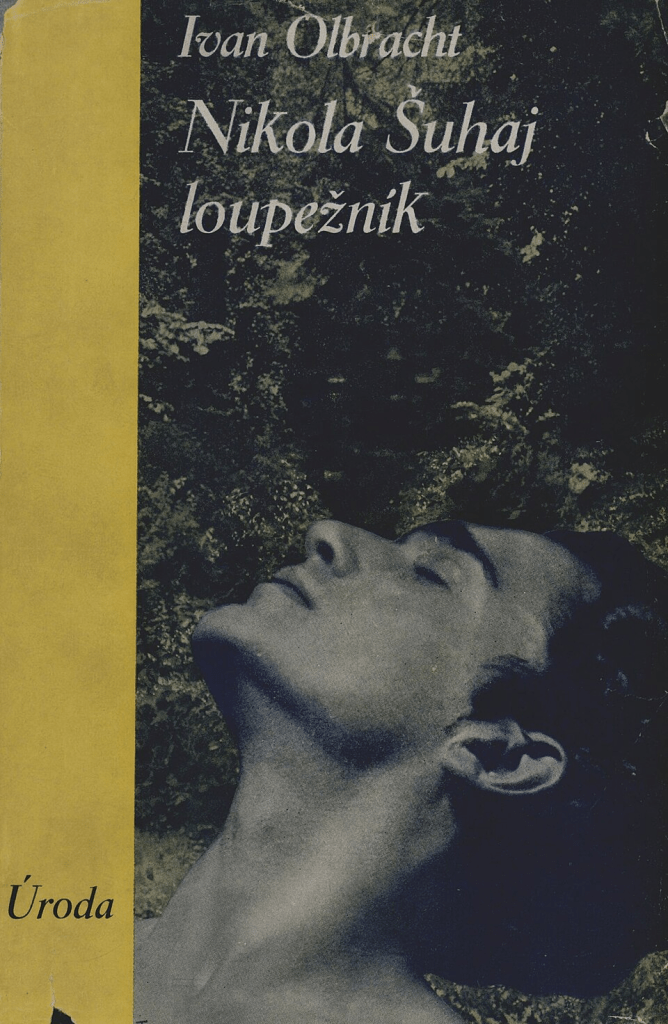
    Between 1896 and 1903, Jirásek published U nás (approximately ‘Where we live’, shall we say), a four-part chronicle taking place to a large extend in Náchod, and covering the Czech National Revival. The work includes Ludvík as one of its characters.

  • Vítovcova was named in 1973.

    From 1927 to 1935, the street was called U rybníka, after a nearby and erstwhile pond.

    From 1935 to 1973, it was called V Hodkovičkách, which presumably caused confusion, as it’s not directly connected to the other street in the area called that. More on that name when we get on to Hodkovičky (which is our next district after another two weeks of Braník streets).

    Alois Jirásek – he who is the man behind the story behind most of the streets around here – published a novel in 1883 called V cizích službách (In Foreign Service), which includes a character called Vítovec.

    It’s set in the 1500s, and doesn’t sound too jolly: it discusses the unhappy fate of the descendants of the Táborites (see https://whatsinapraguestreetname.com/2023/01/13/prague-3-day-124-taboritska/), reduced to the status of mercenaries serving foreign interests.


  • Vavřenova was built in 1968.

    In 1878, Alois Jirásek (https://whatsinapraguestreetname.com/2024/09/01/prague-2-day-154-jiraskovo-namesti/) published a novel called Filosofská historie (Philosophical History).

    It’s set in Litomyšl, where Jirásek was living and working as a teacher at the time, and a key theme is the use of Czech and German in everyday life.

    Tellingly, it is set in 1847 (the novel starts with the banning of a student festival for May Day) and 1848, when rebellion erupted in Prague.

    The students in the novel have a real love for their mother tongue, and read classic Czech literature, and yet, when they’re in public, they often end up choosing to speak German instead.

    The principal male character in the novel is called Vavřena (hence the street name). He’s a serious, kind and gentle student who goes to teach in a family (the Roubíneks), and falls in love with their daughter, Lenka.

    He admits his love for her during the May Day festival, which the students went through with despite the ban, displeasing the authorities.

    In 1848, he goes to Prague to join the uprising; at the end of the novel, he marries Lenka and becomes a doctor.

    Filosofská historie was made into a film in 1937, directed by Otakar Vávra.

    A musical based on the novel also ran at the Rokoko Theatre (mentioned someway down on https://whatsinapraguestreetname.com/2024/09/17/prague-1-day-123-vaclavske-namesti/) from 1968 to 1969, with music by Zdeněk Petr and lyrics by Ivo Fischer.

    It had what you can only describe as one heck of a cast: Václav Neckář, Marta Kubišová, Helena Vondráčková, Waldemar Matuška, and Jiří Štědry. Coincidentally (or not?), it opened in the same year that this street first did.

  • Jílovská was built in 1947.

    The earliest mention we have of Jílová is from the 1200s, when it was a mining settlement (the writer wanted us to think the document was from 1045, but it turns out that it’s a forgery).

    In the 1320s, it was described as a ‘royal gold-mining town’; around 1350, Charles IV (https://whatsinapraguestreetname.com/2024/10/15/prague-1-day-196-karlova/) confirmed its status as a royal town.

    As happens too often in these stories, economic activity was dealt a heavy blow in 1422, when the Hussites conquered and burned Jílová. The mines were restored, but reports from the 1500s suggests they weren’t nearly as successful as in the past.

    Here’s an account showing the purchase of gold and operations of a mill in Jílová in 1506 / 1507.

    Larger-scale mining started in 1689, and lasted until 1968, when the last mine was closed due to its lack of profitability.

    The painter Joann Venuto painted Jílová in 1821.

    And here’s a 19th-century engraving by an unknown artist.

    And a photo of the town hall and main square, taken around 1908.

    These days, the town is known as Jílové u Prahy and is in Prague-West district. It lies on the Sázava (https://whatsinapraguestreetname.com/2024/02/18/prague-2-day-31-sazavska/) and has a population of just over 5,000.

    The people with a connection to Jílová that you’re most likely to have heard of include the Renaissance occultist Edward Kelley (1555-1597 or thereabouts), who purchased a mine here.

    And František Chvalkovský, who had the task of being Czechoslovak Foreign Minister from October 1938 to March 1939. Chvalkovský was born in Jílová in 1885.

  • Němčická was built at some point between 1973 and 1982 (warning: today’s post is going to remain about this vague).

    The street is likely to be named after a village called Němčice (whose name, in turn, I assume comes from the fact that its inhabitants were once predominantly German).

    Unfortunately, there are at least nine villages in Czechia with that name, as well as five former villages which are now parts of larger municipalities.

    On top of that, there’s a Dolní (Lower) Němčice, two Horní (Upper) Němčices, a Velké (Great) Němčice and a Němčice nad Hanou (on the Haná river).

    And none of these places is particularly near Prague, so the jury’s out.


  • Nad lesním divadlem was built in 1968.

    Behind this street, you’ve got Velký háj (‘The big grove’), a forested area with parkland. Only a small portion is owned by the City of Prague; the rest is in the hands of various private individuals.

    In 1913, Jan Šimsa, a local doctor, established a ‘lesní divadlo’ – a ‘forest theatre’ – here. It was run by the Krč Sokol (https://whatsinapraguestreetname.com/2024/08/26/prague-2-day-114-sokolska/ has the story of those) and showed plays by both professional and amateur troupes.

    It showed plays between May and September each year; personally, I can think of nothing more delightful than watching a play in a forest on a moonlit summer evening.

    In 1935, though, most of the theatre was destroyed in a fire. Once repaired, the theatre also held performances by the Nusle-based Fidlovačka (https://whatsinapraguestreetname.com/2025/01/26/prague-4-day-15-na-fidlovacce/), and, in 1944, it gained a separate pavilion for puppet theatre.

    The theatre had almost 600 performances up until 1951, and could welcome audiences of over 5,000 (although seating was limited to 500 people). However, by the time of the last performance, it was running at a loss, and, in 1958, the buildings were demolished.

    That could have been quite a downbeat ending – but, according to https://lesnidivadlokrc.cz/, the theatre should be opened again in the summer of 2026. Somehow, this has made me as happy as someone old enough to remember the theatre as it once was would be.

  • Ohnivcova was built in 1933.

    We’re still in ‘novels by Alois Jirásek’ territory: between 1887 and 1890, Jirásek published a trilogy called Mezi proudy (Between the Currents), based on real events which occurred between 1381 and 1409.

    Those real events concerned Czech resistance against German oppression during the reign of Wenceslas IV. As this was the era that saw the rise of Jan Hus (who began teaching at the University of Prague in 1398), the trilogy also gives a lot of attention to the immorality of the Church at the time.

    The first of the novels, Dvojí dvůr (Double Courtyard), ends with the king granting Czech speakers of Prague greater rights in further education.
    Volume two, Syn ohnivcův, would most easily be translated as ‘The Fireman’s Son’. This is because the main character, Jan Ohnivec, is the son of Šíp, who was once asked to be a royal fireman.
    He was asked by Jan Jenštejn – a real-life archbishop of Prague who is discussed on https://whatsinapraguestreetname.com/2024/09/01/prague-day-151-jenstejnska/ – and, in the novel, this was because Jenštejn was in love with Šíp’s wife (Šíp’s second, and the stepmother of Jan Not Janštejn).
    By volume three – Do tří hlasů (In Three Voices) – Jan Ohnivec is a royal courtier. This novel is focused on the rivalry between two noble families – the Trocnovs and the Rosenbergs, who don’t get on (to put it mildly).

    At the start of the novel, Jan Žižka meets Ohnivec, who has been injured by thieves while on a journey, and takes him in. Meanwhile, the Rosenbergs capture King Wenceslas and try to get him to improve their standing in the state.

    While public opinion in Prague is largely on the side of the Rosenbergs, the king’s brother, who, like 117% of the people in these three novels, is called Jan, manages to turn the tide. They build an army – including Žižka – which forces the Rosenbergs to give in.

    The king was ultimately freed; despite being captured and tortured, Ohnivec remained faithful to him.

    Later on in the novel, the Rosenbergs are trying to capture Jan Žižka, but the king, with Ohnivec’s help, manages to prevent this.

    Other things happen in the novels too, of course, but I’m saving those in case there’s another Mezi proudy-related street coming up. The novels were successful, despite Catholic commentators not appreciating the portrayal of Jan Jenštejn.

  • Poberova was built in 1935.

    We’ve been on a bit of a break, so let’s recap some key information.

    Alois Jirásek was a writer of historical novels and plays; these were written at a time when the Czech nation was seriously (re-)discovering itself. He has a square named after him in Prague 2: https://whatsinapraguestreetname.com/2024/09/01/prague-2-day-154-jiraskovo-namesti/.

    As well as a bridge: https://whatsinapraguestreetname.com/2024/09/01/prague-2-day-155-jiraskuv-most/.

    Making our way south to Braník, the streets around here are mainly named after characters from Jirásek’s novels. Fittingly, the district is therefore called Jiráskova čtvrť (Jirásek’s Quarter).

    One of these novels – or, more accurately, a trilogy of three novels – was called Bratrstvo (Brotherhood), and concerns Hussite exploits in Slovakia around the 1450s (spoiler: the Hussites’ finest military exploits had been and gone by this stage).

    Bratrstvo is quite well represented in Braník – we’ve already discussed it on https://whatsinapraguestreetname.com/2025/12/19/prague-4-day-264-talafusova/.

    And some of the real events underpinning the trilogy are discussed in more detail on https://whatsinapraguestreetname.com/2025/11/15/prague-4-day-230-jiskrova/, also in Braník.

    Another character in the story is Pobera z Lomu, a fighter whom we first see when he’s (only just) escaped death at the hands of the Germans.

    Pobera, while staying just outside Žilina with his army, meets a local, Bodorovský, who decides to settle his considerable debts by selling his wife, Mária to, yes, Pobera.

    Pobera tries to win Mária’s heart, but she makes arrangements with Jan Talafús – he of Day 264 fame – who secretly takes her away. At the end of the first novel, Pobera and Talafús commit to a duel to the death once the war is over.

    When this duel eventually happens, Pobera manages to seriously injure Talafús.

    Ultimately, Pobera falls in the same battle that Petr Aksamit (https://whatsinapraguestreetname.com/2025/12/21/prague-4-day-266-aksamitova/) did (the real-life battle took place in May 1458).


  • Údolní was built in 1925.

    At one end of this street, you’ve got a hill with Braník Brewery (no longer brewing) on top of it (https://whatsinapraguestreetname.com/2025/12/13/prague-4-day-258-nad-branickym-pivovarem/).

    At the other end, I’m going to assume we’re also on a hill, but will confirm that when we get to the streets around there.

    Hills or not, the street is located in a valley, i.e. an ‘údolí’.

  • Aksamitova was built in 1932.

    We don’t know anything about Petr Aksamit’s life before 1440, when he was put in command of the Brotherhood / bratříci troops in Upper Hungary (present-day Slovakia).

    These bratříci were former Hussite fighters, operating as independent units, from 1445 to 1467, not only in today’s Slovakia but in its neighbouring regions.

    Originally, he served under Jan Jiskra z Brandýsa (https://whatsinapraguestreetname.com/2025/11/15/prague-4-day-230-jiskrova/), but struck out and formed his own army in 1448, while continuing to profess support for Jiskra until the latter fell in 1453.

    After that, Aksamit’s army controlled what is now eastern Slovakia and north-eastern Hungary, with a castle at Plaveč (renovated and partially rebuilt in 2014).

    It seems that Aksamit’s name came from the fact that he was partial to expensive clothing – aksamit translates as ‘velour’.

    However, in January 1458, Matthias Corvinus (Czech: Matyáš Korvín; Hungarian: Hunyadi Mátyás) became King of both Hungary and Croatia, and decided it was time to restore royal power.

    In a battle at Sárospatak in present-day Hungary, on 21 May of that year, Aksamit was killed and his forces were defeated.

    As you might have guessed from recent posts, this street is called Aksamitova because of his presence in a novel by Alois Jirásek, or, rather a trilogy of them – Bratrsvto, as discussed very recently (https://whatsinapraguestreetname.com/2025/12/19/prague-4-day-264-talafusova/).


  • Zálesí was built in 1925.

    Zalesí is behind (za) a forest (les).

    If you want to know what to call that forest, you’re kind of spoiled for choice: you can call it Kunratický les (colloquially: Kunraťák), Krčský les (colloquially: Krčák) or, in its northwest, Michelský les.

    As we’ll be going through Krč, Michle and Kunratice eventually in this series, there will surely be some forest-related stories then.


  • Talafúsova was built in 1935.

    Jan Talafús was born around 1410 in Ostrov, near Chrudim (https://whatsinapraguestreetname.com/2023/06/24/prague-3-day-177-chrudimska/).

    Early records of his life are limited, but he is thought to have participated in the Battle of Lipany in 1434 (https://whatsinapraguestreetname.com/2022/12/23/prague-3-day-120-lipanska/).

    Within little over a decade, Talafús would be in charge of Ostrov, as well as having inherited six villages and three towns.

    In 1440, he left for Upper Hungary (present-day Slovakia), where he joined the army of Jan Jiskra (https://whatsinapraguestreetname.com/2025/11/15/prague-4-day-230-jiskrova/), who was protecting the rights ofLadislav Pohrobek (Ladislav the Posthumous).

    His feats included the liberation of Košice (1441) and capturing the Hungarian town of Eger in 1442. However, he was subsequently captured and imprisoned for six months, promptly returning to military action upon his release.

    In 1445, Talafús became hetman of Chmeľov Castle and, in 1448, of Rychnava. In 1451, he helped Jiskra defeat 20,000 Hungarians at the battle Lučenec.

    In 1457, the newly crowned Matthias Corvinus decided it was time to get rid of the Hussite forces. Talafús – at times allied with Jiskra, at times not – continued to fight, but lost more than he won.

    In 1463 he returned, destitute, to the Czech lands (hence the Slovak expression ‘biedny ako Talafús’ – wretched as Talafús), where he entered the direct service of George of Poděbrady (https://whatsinapraguestreetname.com/2023/12/23/prague-3-day-189-namesti-jiriho-z-podebrad/).

    Talafús is last mentioned in writing in 1475. Well, that’s the last non-fiction reference during his lifetime: the street is named after him because of the Alois Jirásek trilogy Bratrstvo (The Brotherhood; 1900 to 1909), which is set in Slovakia and where Jiskra and Talafús are the main characters.

    Completely irrelevant to the story, but, as Eger has been mentioned, I have to point out that I went there last year and visited Egri Road, a frankly incredible museum dedicated to the Beatles. I could share photos of it all day.

  • Na výstupu was built in 1925.

    Anybody who’s ever taken the Prague Metro will know that ‘výstup’ is one of the two things that you have to complete when the doors are closing (or, ideally, slightly before), the other one being ‘nástup’.

    Anybody who’s ever taken public transport to or from Braník will also know that we are nowhere near a metro station.

    As well as the process of getting off a train, ‘výstup’ can be translated as ‘climb’, or ‘ascent’, and ascend is exactly what this street does.

    Braník isn’t going to have a metro line running through it when the D Line is finally opened, either, although a fair chunk of it will go through nearby Krč, so that’s something.