Originally published on X on 8 February 2023.
It’s not clear when K Rotundě was built.

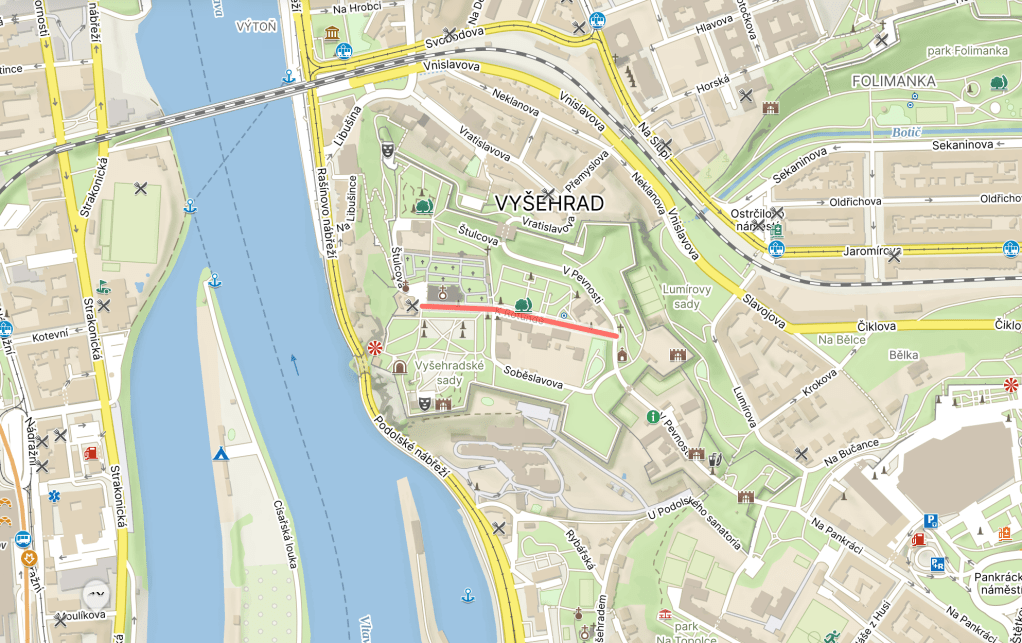
Our Vyšehrad stories have all been legend-based so far. So now it’s time for some stuff that we can be confident actually happened.
By the year 1000, Vyšehrad had started to be mentioned in writing. We know that, around this time (i.e. in the reigns of Boleslavs II & III, as well as Jaromír), a mint existed here – coins with the name of Boleslav II on them are for sale quite often.
In 1070, Duke (and later first Czech king) Vratislav II had a dispute with his brother, Gebhart, and decided to move his seat from Prague Castle to Vyšehrad.
He also founded the Basilica of St. Peter and St. Paul there. The version you see today is somewhat more modern (built between 1887 and 1903 in the Gothic style), because the original was destroyed in a fire in 1249.

There was also a royal palace (no longer present), a stone bridge (traces remain), several other churches, and – giving today’s street its name – the Rotunda of Saint Martin, probably built between 1060 and 1090.

Rotundas are the main feature of Roman architecture in the Czech Republic, and this one is both the oldest rotunda in Prague, and the only building surviving from Vyšehrad’s days as a royal residence. It’s likely that the rotunda served as the Vyšehrad parish church.
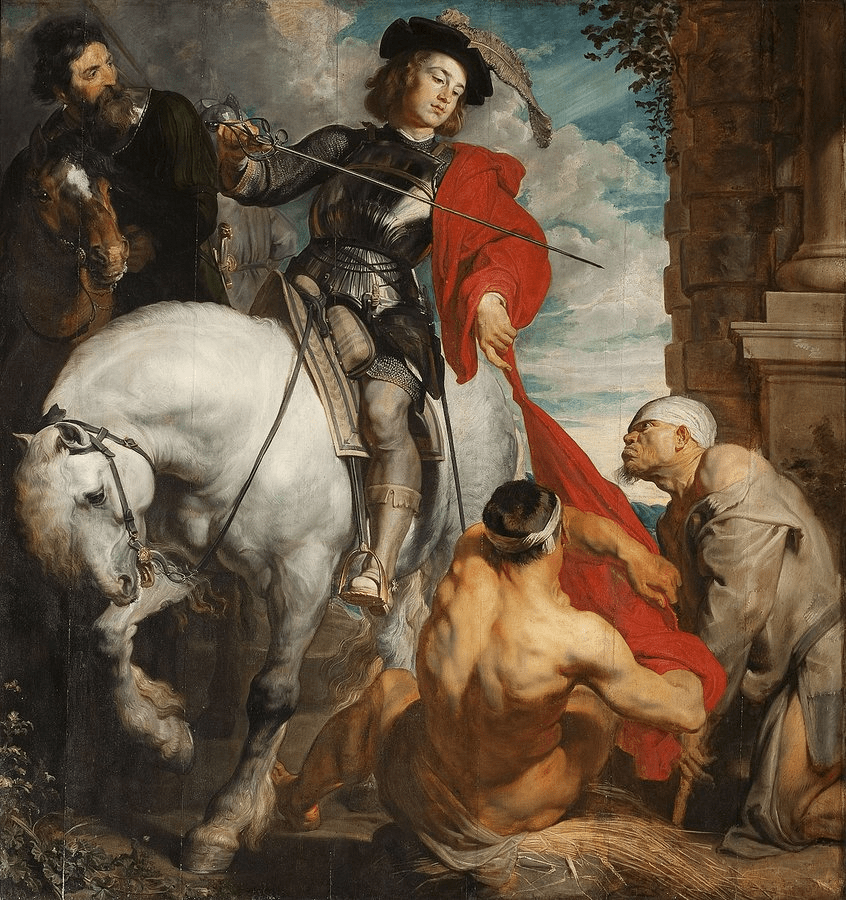
St Martin is Martin of Tours (died 367), who, according to legend, cut his cloak in two to give half of it to a beggar, and then dreamed of Jesus wearing the half he had given away. Martin was also a patron saint of France during the Third Republic.
The rotunda was badly damaged by Hussite raids in 1420 (but what wasn’t?), and also by a fire in 1528. Although the chapel was restored, it then got damaged by Prussian fighters in 1757, and Joseph II later decommissioned it as a place of worship.
While it was meant to be destroyed in the 1840s to make way for a road, this didn’t happen, largely thanks to the intervention of Karel Chotek of sady fame.
In 1875, the Vyšehrad Chapter (which is located at the church of Peter and Paul, pictured above) purchased the rotunda, which led to its full restoration. In a nice little two-fingers-up to the Prussians, its interior includes a walled-up cannon ball.


Leave a reply to Prague 4, day 117: Na Klaudiance – What's in a Prague street name Cancel reply