Originally published on X on 12 October 2023.

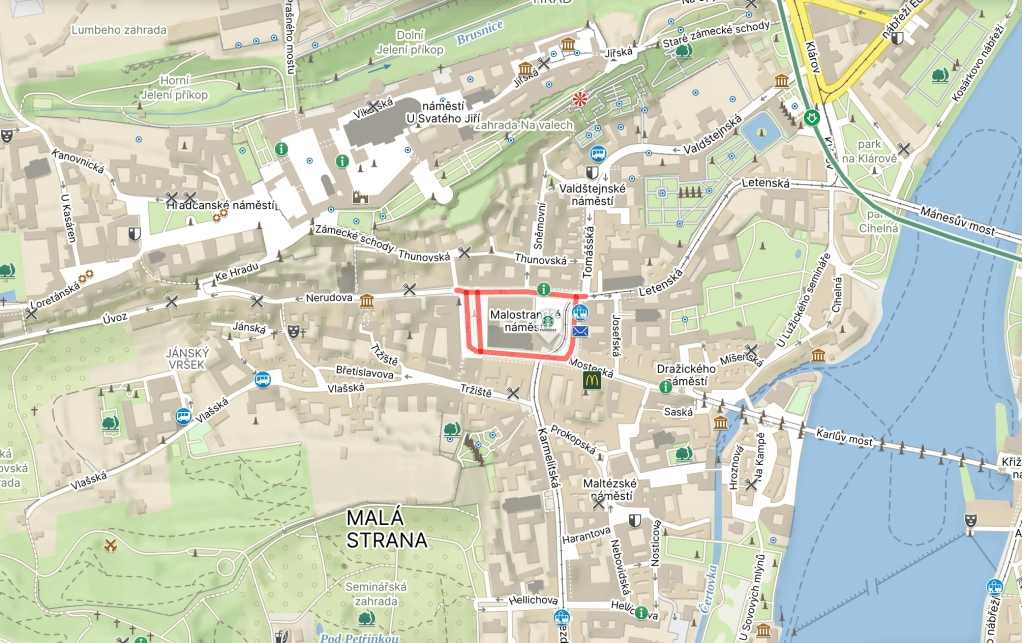
In 1257, Přemysl Otakar II founded a town here, just below the castle, and gave it the Latin name of Nova civitas sub castro Pragensi (New City under Prague Castle), or just Nova civitas, or – and this is where you may get confused if you’re a Praguer – Nové Město.
The district (actually its own town until 1784) was later known as the Menší Město pražské (Lesser Prague Town), before gaining its current name, presumably to avoid confusion with the Nové Město which had sprung up across the river in 1348.
The Square, meanwhile, has upper and lower parts which you’ve be forgiven for thinking were entirely separate streets. And even after all this time in Prague, I still find it mind-blowing how much there is to see here.
The western front of the square is taken up by the Liechtenstein Palace, the expropriation of which (in 1945) is one of the reasons why Liechtenstein didn’t establish diplomatic relations with the Czech Republic (or Slovakia) until 2009.

Formerly the headquarters of the Political Centre of the Communist Party of the Czech Republic, it’s now the Music and Dance Faculty of the Academy of Performing Arts.

Hartig Palace – which was purchased by one Terezie Hartigová in 1735, seemingly no relation to Josef Hartig of Koněv Gets Kancelled fame – hosts the Academy’s rectorate.
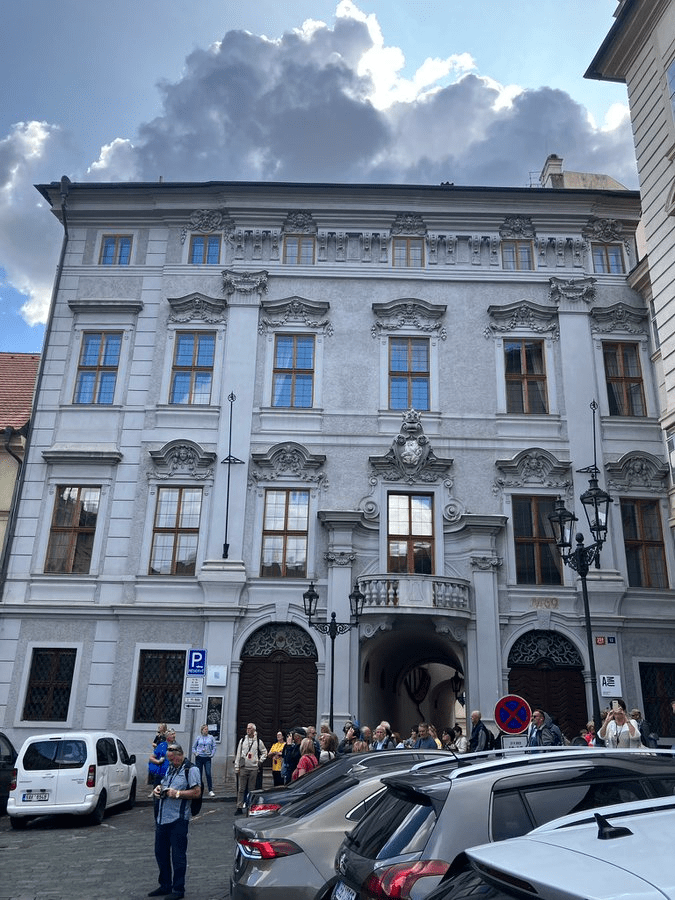
The Holy Trinity Column (Sloup Nejsvětější Trojice) was built out of gratitude to whoever is up there above us for helping to avert the plague in 1713.
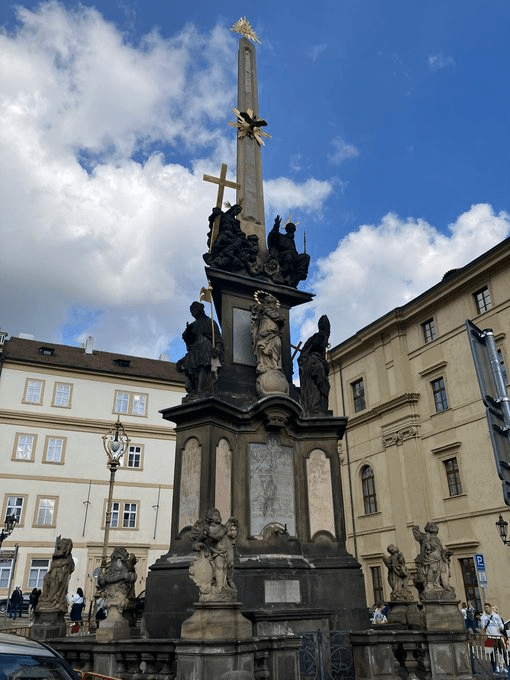
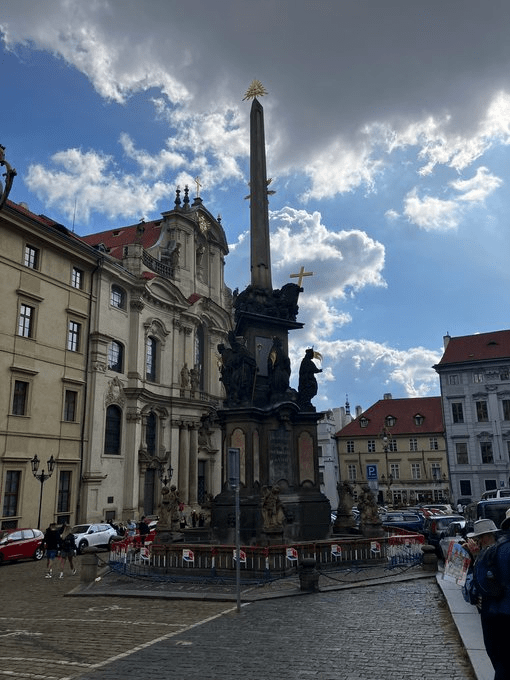
Those railings around it could be to do with the lightning damage it suffered a few months ago: https://www.idnes.cz/praha/zpravy/praha-mala-strana-morovy-sloup-poskozeni-boure.A230818_082511_praha-zpravy_vich
Separating the two parts of the square is St. Nicholas Church (1740-55), built on the decision of the Jesuits on the site of a former Gothic parish church.
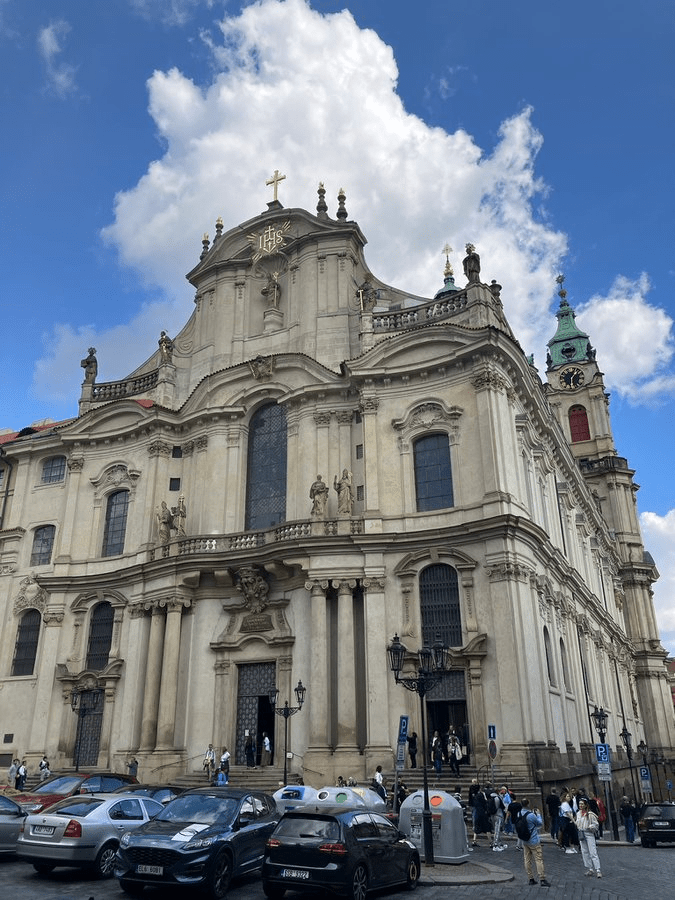
Its proximity to the US, West German and Yugoslavian embassies meant that the communists used it as an observatory.
Moving on to the Lower Square, Grömling Palace used to be the site of Cafe Radetzky, a favourite of the intellectuals of Prague (including Jan Neruda). If they were to go there now, they’d be faced with the first ever Czech Starbucks (opened in 2008).
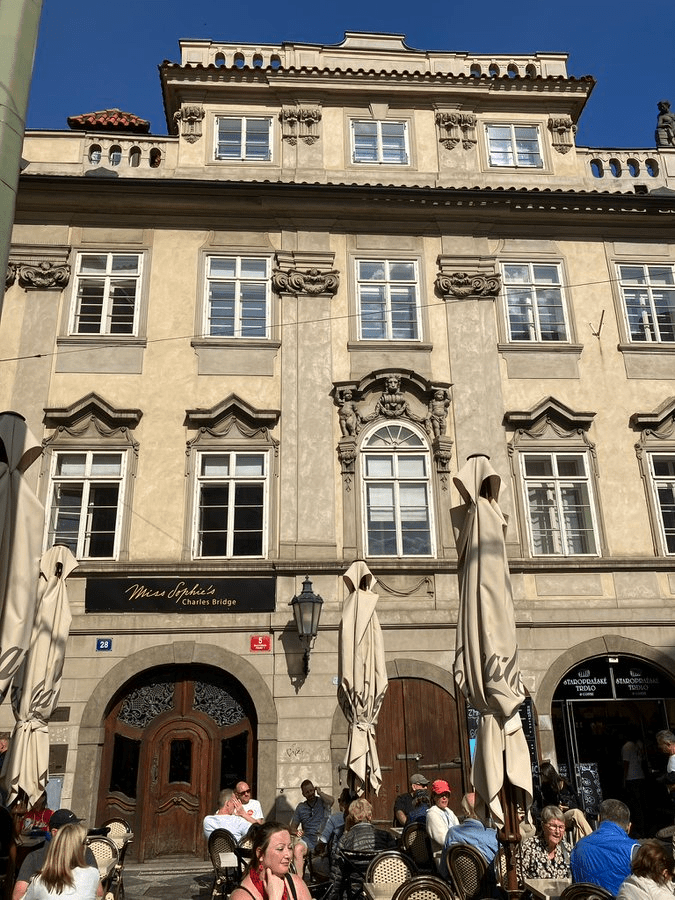
Smiřický Palace is where, in 1618, Albrecht Smiřický convened a secret meeting of anti-Habsburg Czechs (we know how well that went). It’s now part of the Chamber of Deputies. And is a stunner.

Parliament also makes use of Šternberk Palace (which you can see a tiny part of in this picture) and Velikovský House (which you can see much more of).
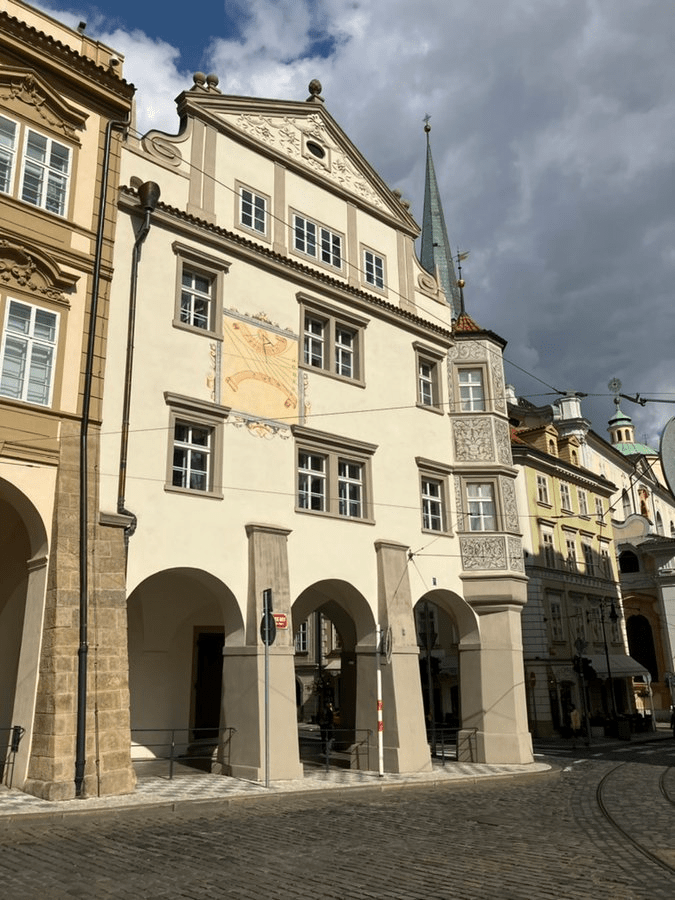
Kaiserštejn Palace, acquired by Česká spořitelna in 1840, became the seat of the Czechoslovak Chamber of Commerce and Industry, and then its Czech-only equivalent, before being reacquired by the bank. It’s used for conferences and weddings and the like.

In the same block is Malostranská beseda, which served as the Town Hall until 1784. One of the cultural centres of Malá Strana, it has a pub, a restaurant and club. It was also where the Jára Cimrman Theatre first operated (in 1867).

Any of these buildings – and others I haven’t even mentioned – could form their own thread. As this one’s already quite long, here are some brilliant pics of the square (I especially love the 1950s/60s-looking ones seemingly taken by a Hungarian): https://commons.wikimedia.org/wiki/Category:Malostransk%C3%A9_n%C3%A1m%C4%9Bst%C3%AD_(Prague)

 What's in a Prague street name
Leave a comment