Originally published on X on 21 November 2023.
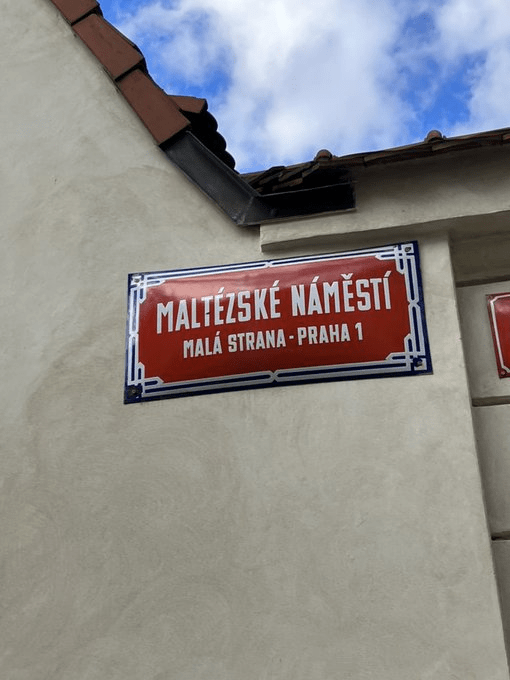

For brief bits and pieces about the Knights of Malta in the Czech Lands, see https://whatsinapraguestreetname.com/2024/09/10/prague-1-day-71-velkoprevorske-namesti/.
The Knights Hospitaller arrived in Bohemia in the 12th century (when their headquarters were still in Jerusalem). The Grand Priory was created in 1626, and they moved into their palace here in 1694.
During WW2, the Order effectively stopped, not starting again until 1989. From 1948 to 1981, one Karel VI. Schwarzenberg worked from exile in Vienna to revive the Grand Priory’s activities. You will be familiar with his recently-deceased son: https://english.radio.cz/tributes-pour-death-karel-schwarzenberg-8799843
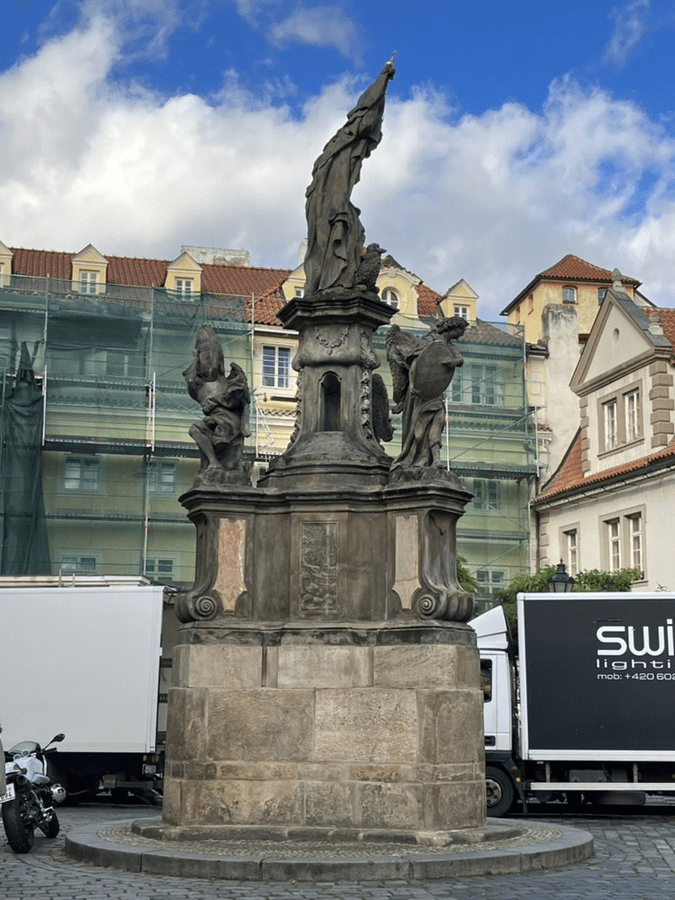
Maltézské náměstí has other things going for it, too. The one you may notice first is this Statue of John the Baptist by Ferdinand Brokoff, who was also responsible for a lot of the works on Charles Bridge (https://whatsinapraguestreetname.com/2024/09/09/prague-1-day-68-karluv-most-charles-bridge/).
The Straků z Nedabylic Palace – also known as U sedmi čertů (The Seven Devils) or U bílého koníčka (The White Horse) – is now home to the Jan Deyl Conservatory and Secondary School, which focuses on a musical education for the visually impaired: https://jandeylconservatory.cz/index.php/cs/
It’s also the house involved in the legend of how Čertovka (https://whatsinapraguestreetname.com/2024/09/09/prague-1-day-67-certovka/) got its name.
There’s also the Turbů Palace, in Rococo style, which hosts the Japanese Embassy.

Next door, we have the Danish Embassy, apparently one of the very first to be opened in the Czech Republic, as Denmark was one of the first countries to recognise both the Czech and Slovak Republics in 1993. They have quite a likeable Instagram page: https://www.instagram.com/denmarkinczechia/

Finally, you might think that this is just a pair of benches, although, if you look closer, the red hearts may make you think of a certain Czech.
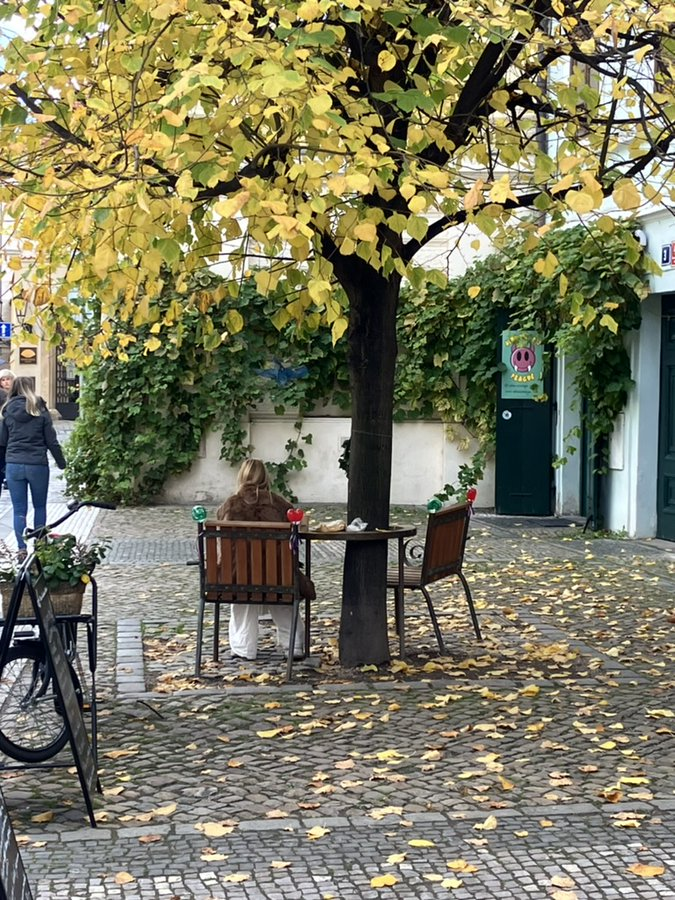
These are part of a series of memorials to Václav Havel, all of which have the same style (round table, two chairs, usually a tree in the middle). The project is called Václav Havel’s Place; the idea came from Havel’s long-time friend, Bořek Šípek.
Added on 1 May 2014, this was the fourth such ‘Place’ to exist, after the first three were inaugurated in Washington DC (October 2013), Dublin (December 2013) and Barcelona (February 2014).
The 31st ‘Place’ in the Czech Republic – and fiftieth overall – was inaugurated in Ostrava this year: https://www.ostravainfo.cz/cz/info/aktuality/1525-ostrava-ma-lavicku-vaclava-havla.html

 What's in a Prague street name
Leave a comment