Originally published on X on 8 February 2024.

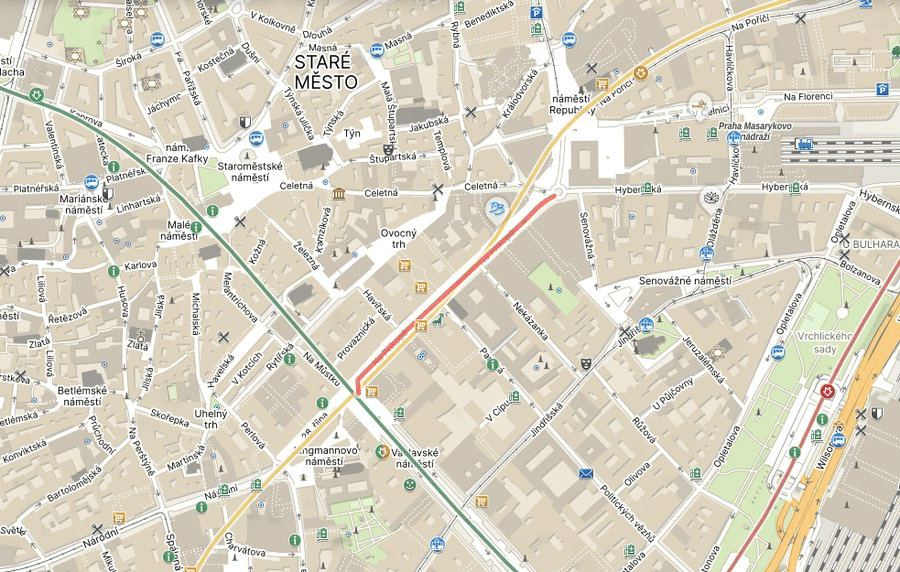
A příkop is a ‘ditch’ or a ‘moat’. Way back in the 1230s, work was underway to create the walls of the Old Town, and, during the process, a moat was excavated here.
The moat wouldn’t be filled in until 1760, when the street was created.
Originally known under its current name, it soon became known as Ve Starých alejích (In the Old Avenues), as opposed to the New Avenues, which you may be familiar with: https://whatsinapraguestreetname.com/2024/09/14/prague-1-day-106-narodni-national/.
(Stop press: it seems the Starých was added in 1781 to distinguish between the two, and that, while the New Avenues had linden trees, the Old Avenues were all about the chestnuts)
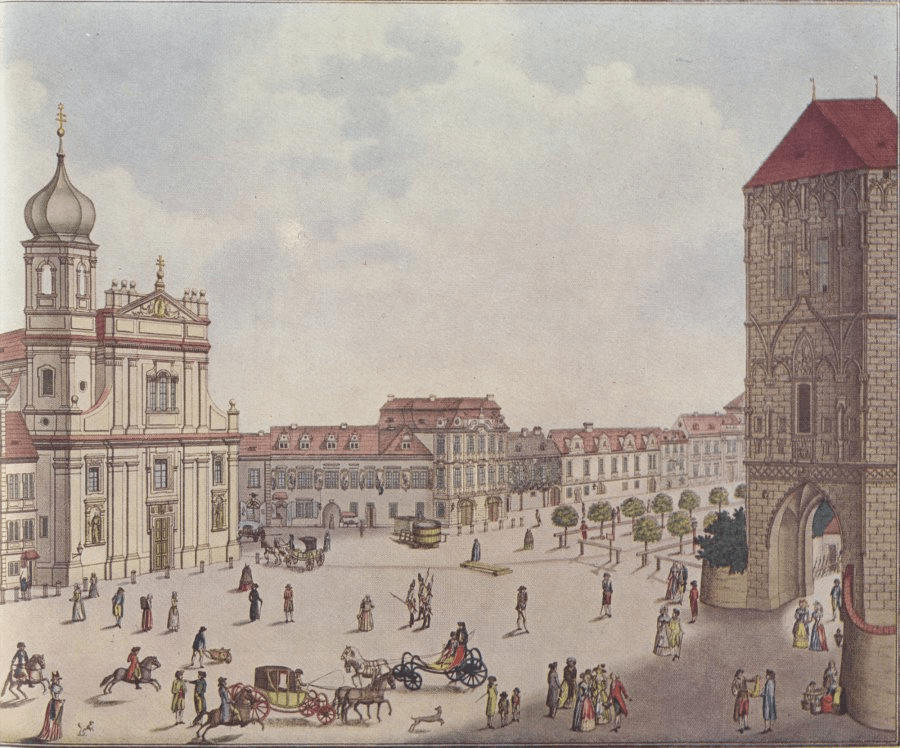
From 1830 to 1870, the street was called Kolowratská třída, after Count František Antonín Kolovrat (1778-1861), Burgrave of Prague, Prime Minister of Austria and member of a family that owned a lot of properties that have come up in these threads. Including number 17 here.
While half of Na Příkopě is pedestrianised these days (and you wish the other half would be), it used to be traffic jam hell and had trams going along it until 1985: https://www.impuls.cz/regiony/praha/konec-tramvaji-na-prikopech.A150707_191023_imp-praha_kov/
Na Příkopě is the 18th most-expensive shopping street in the world, or it was in 2019. So it may not surprise you that there’s a lot of fine buildings on it. Let’s go for a walk.


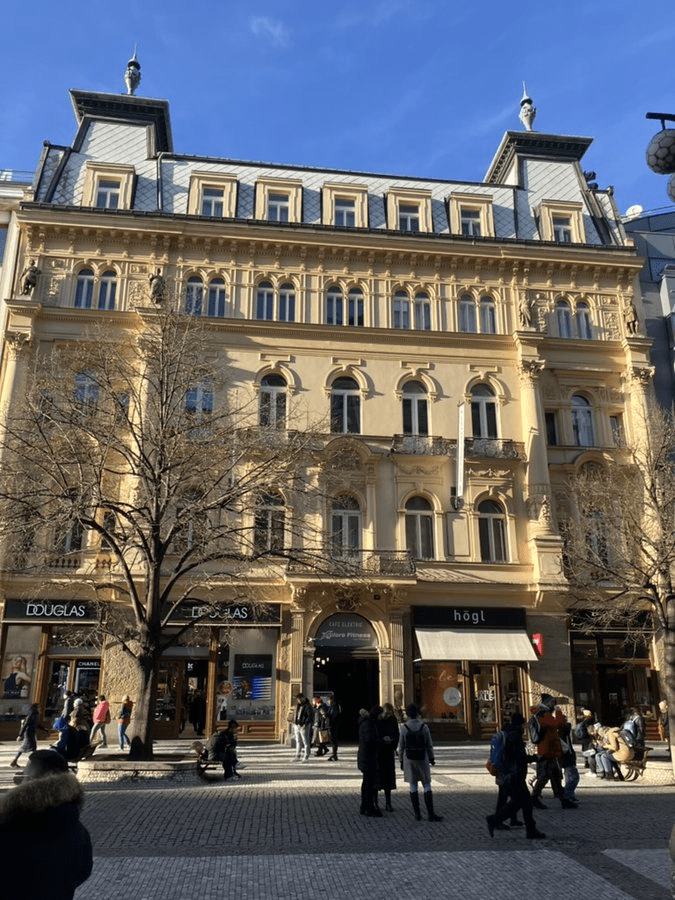
Start on the corner with Václavák, and you’ve got Palác Koruna, as discussed here: https://whatsinapraguestreetname.com/2024/09/17/prague-1-day-123-vaclavske-namesti/.

Next door, the Haas Carpet House, built between 1869 and 1871, was Prague’s first modern department store.
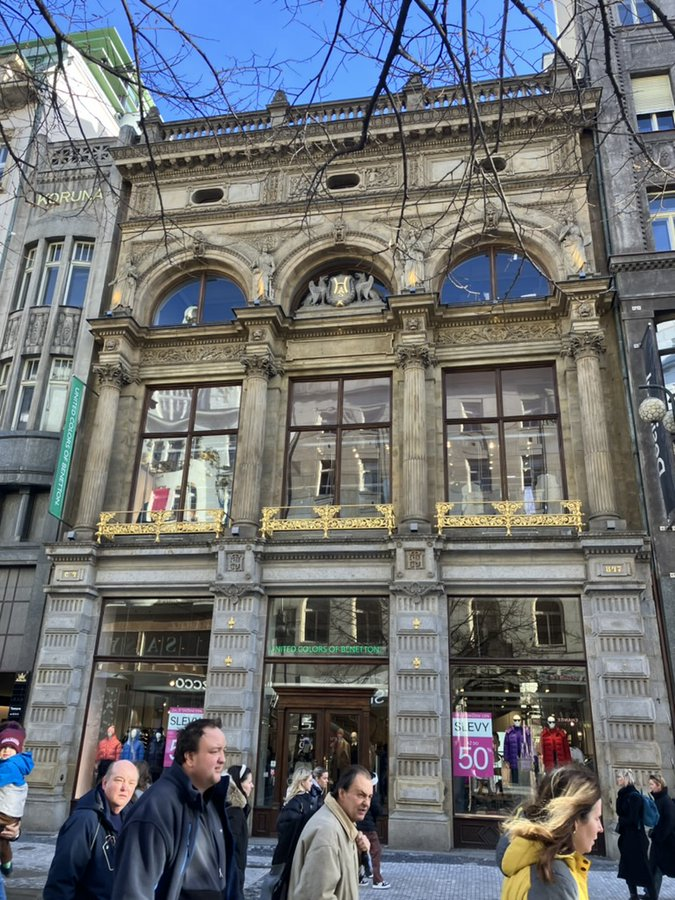
And next to *that* is an entrance to the part of Koruna that is one of Prague’s shopping arcades (and not the only one in this thread). You might not go shopping in these, but they certainly make for good photos.


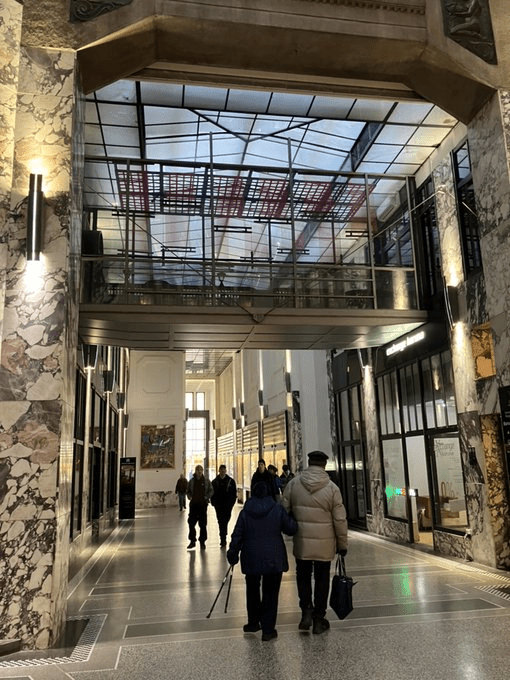
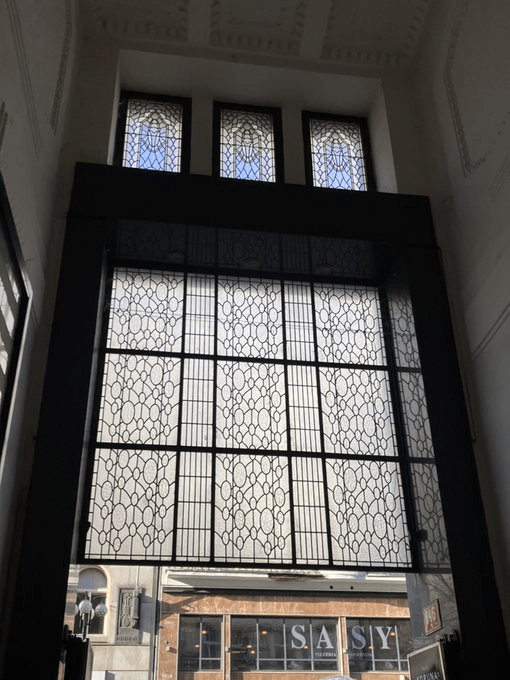
The late Baroque Sylva-Taroucca Palace used to host many things, including one of the very first places I ever went in Prague – the Museum of Communism.
It’s under major reconstruction and is meant to open as a completely new public space in 2026.

Next door is U černé růže (Black Rose), originally founded by a group of Jan Hus-supporting German refugees. The current building dates from 1847.


And it has a shopping arcade inside, built in 1932, which I’m somehow quite mesmerised by – it’s old-looking but new-looking, in the centre of town but empty, and with an array of Asian restaurants. I could’ve stood here and taken photos all day.

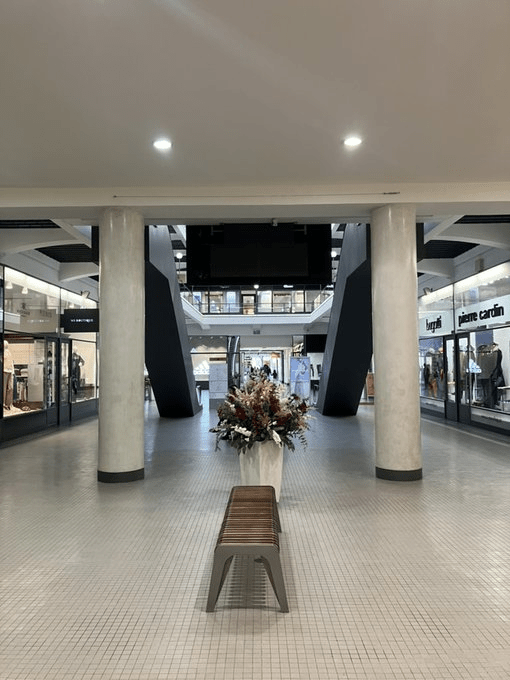
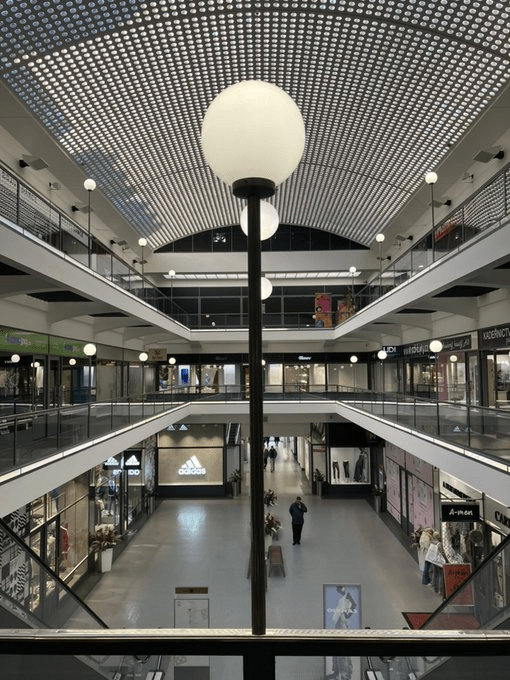

Next door’s Bankovní palác stands on the spot of the house in which Božena Němcová died in 1862.
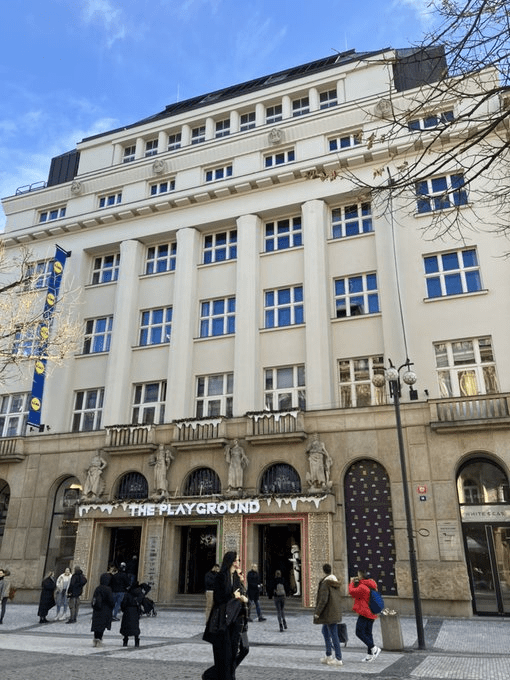
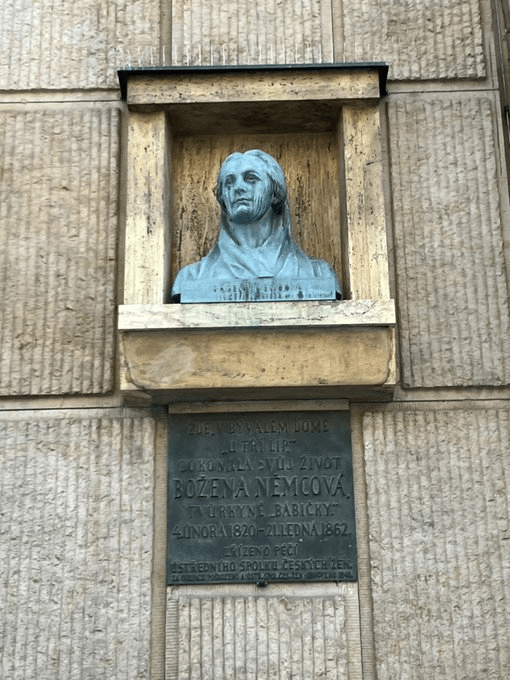
Want to go to the Hamley’s in this building? As of 2024, you can’t: https://www.expats.cz/czech-news/article/british-toy-retailer-hamleys-is-leaving-the-czech-market.
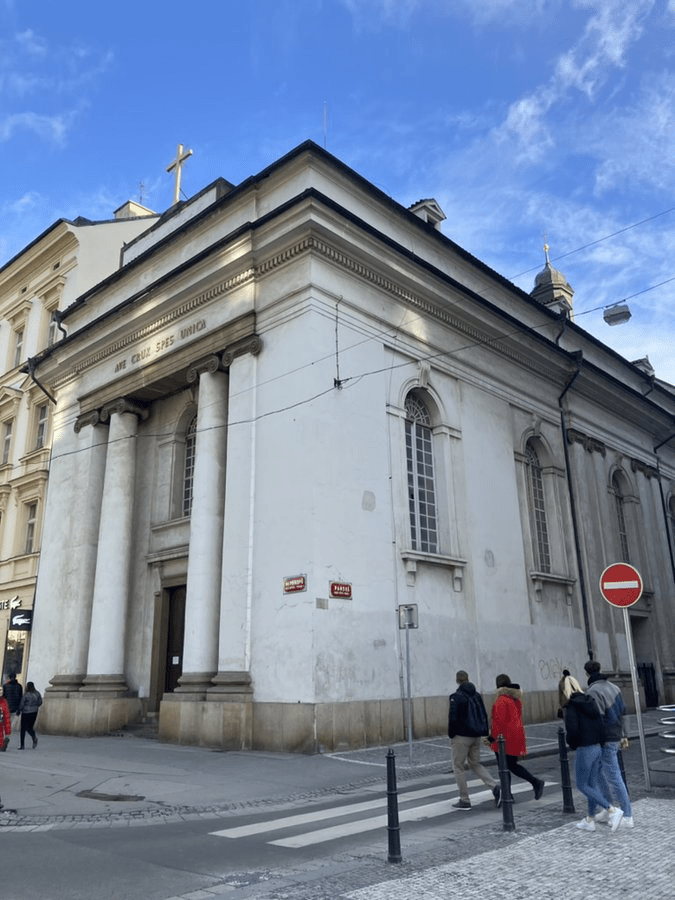
The church on the corner will be discussed a bit/lot more on day 139.
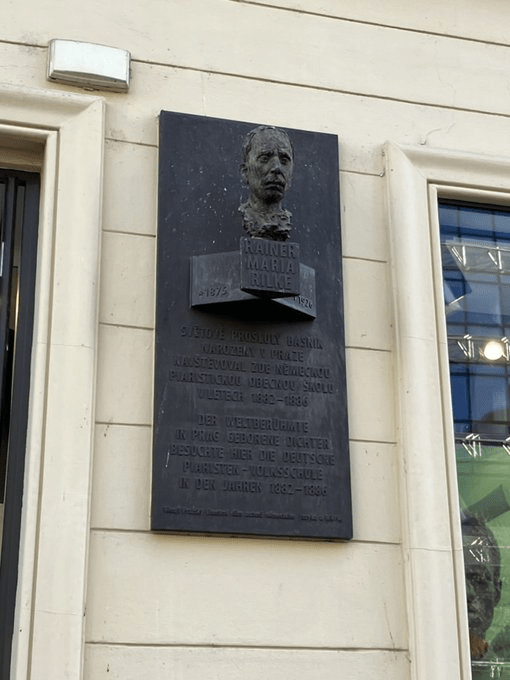
Whereas number 16, the former Piarist Gymnasium (built 1760-5) had pupils including Rainer Maria Rilke.

Number 18, Second Palace of the State Bank (1909-11) has some excellent mosaic action going on; the First Palace is just next door, at number 20.


Slovanský dům might be the ‘Slavic House’ now, but it was once the Deutsche Casino, a major cultural centre for the city’s German-speaking population from 1875 to 1945. It has a well-known cinema, a shopping arcade, and a nice little courtyard.
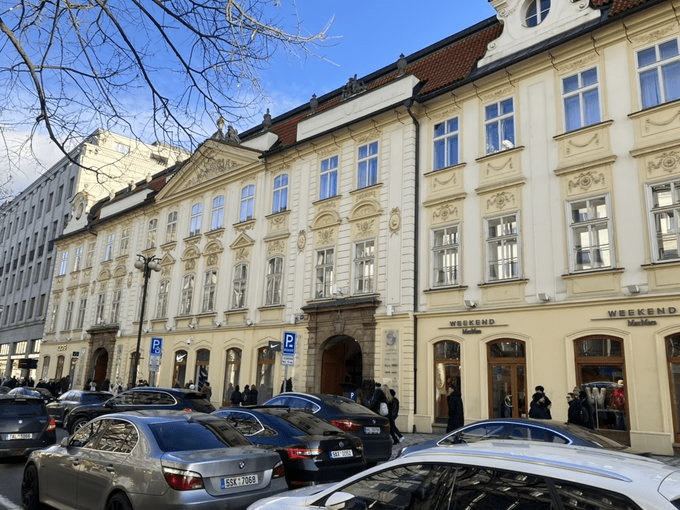
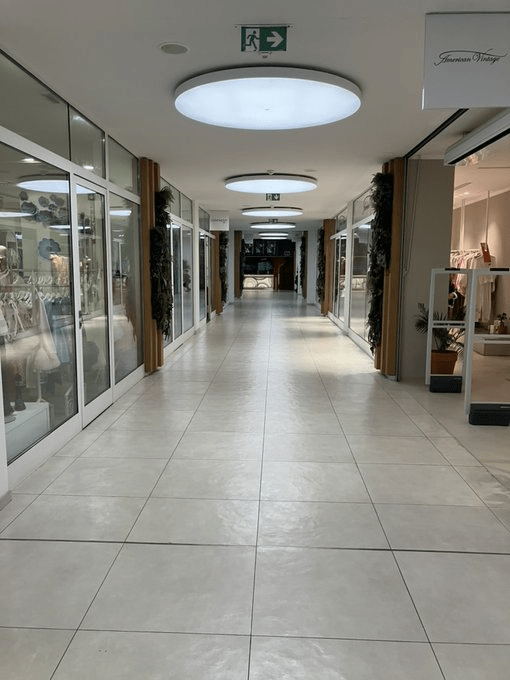


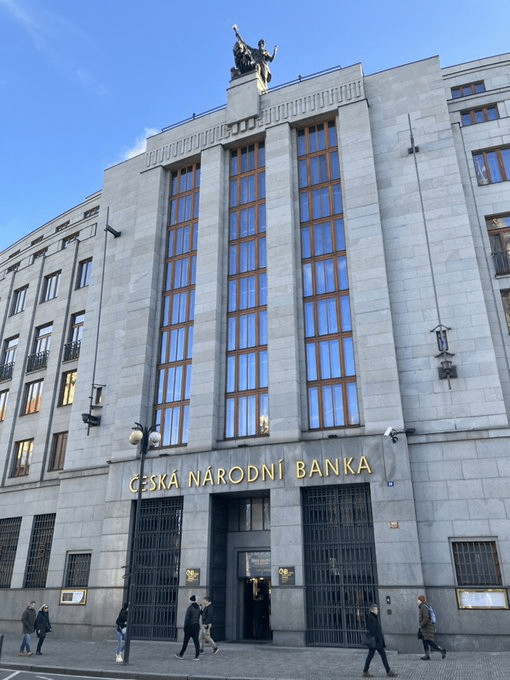
Reach the end of the street, and you’re at the Czech National Bank headquarters, built between 1935 and 1942. The shopping passage here is called ‘Pasáž českého designu’, and is, expectedly, quite stylish.
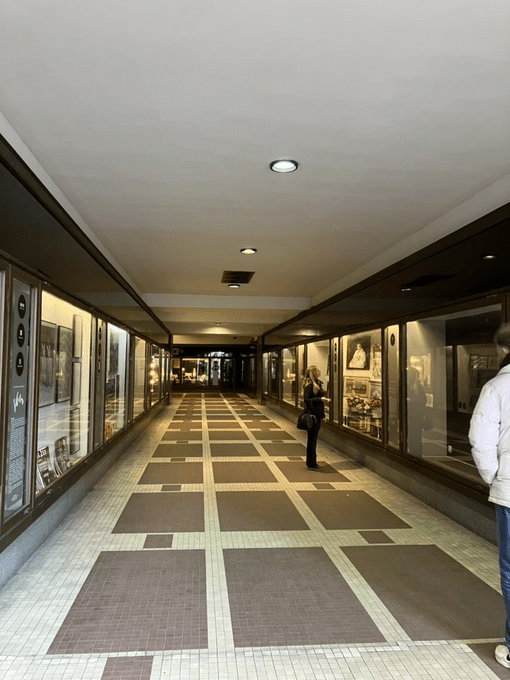

Crossing the road – I told you this one would take some time – we have the headquarters of the Komerční banka, formerly the Café Français, frequented by František Palacký and Ferenc Liszt, and also once the Central Committee of the Communist Party’s home (1945-60).

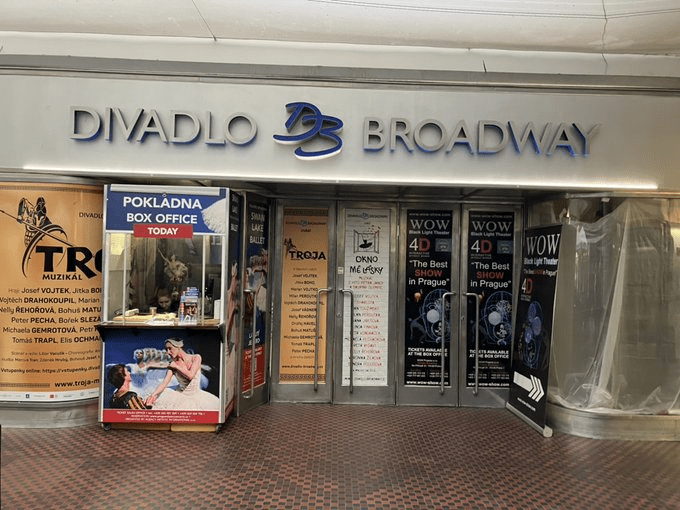
Palác Broadway (1936-8) used to host the eponymous cinema – renamed Viktoria by the Nazis, and Sevastopol by the Communists. Reverting to its original name, it closed in 1998 and there’s a theatre here instead now.


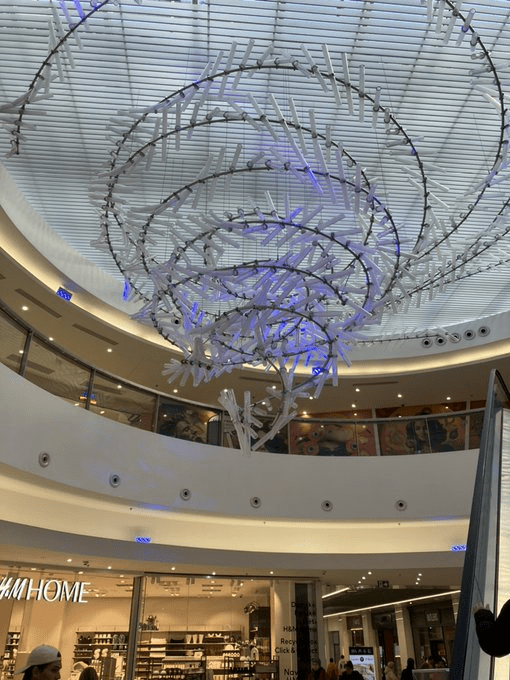
Palác Myslbek is much newer – it was built in 1996.


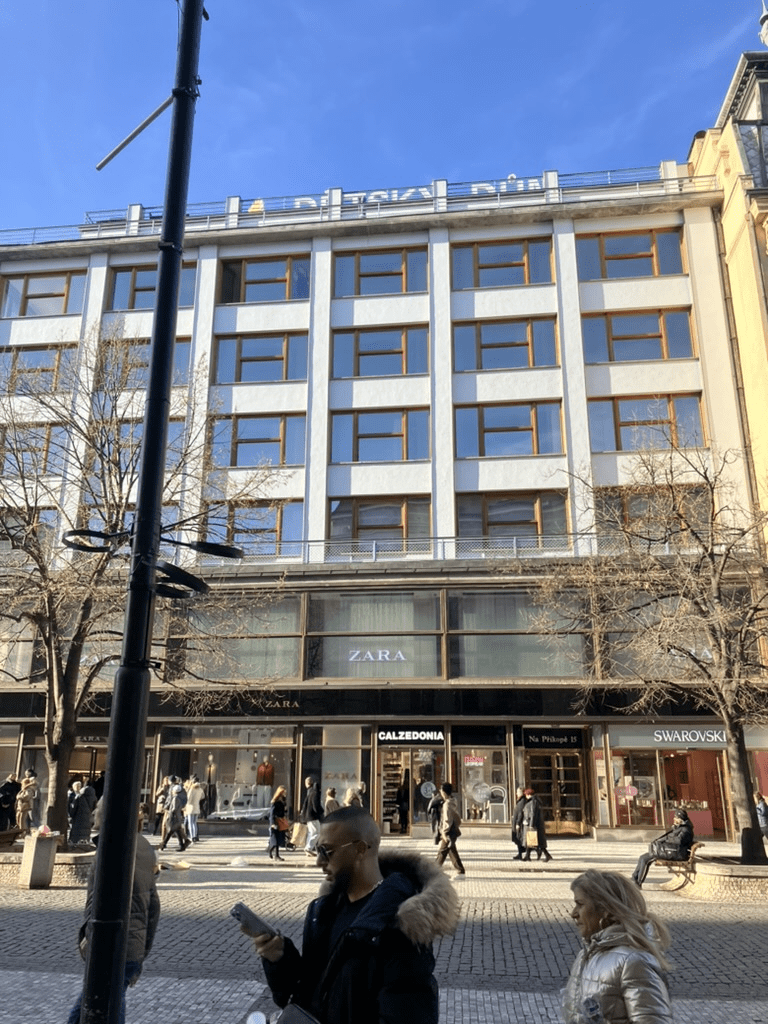
While the Dětský dům (1925-9) – Children’s House – still maintains its original name despite no longer specialising in goods for children. Unless your kids *really* like Zara.
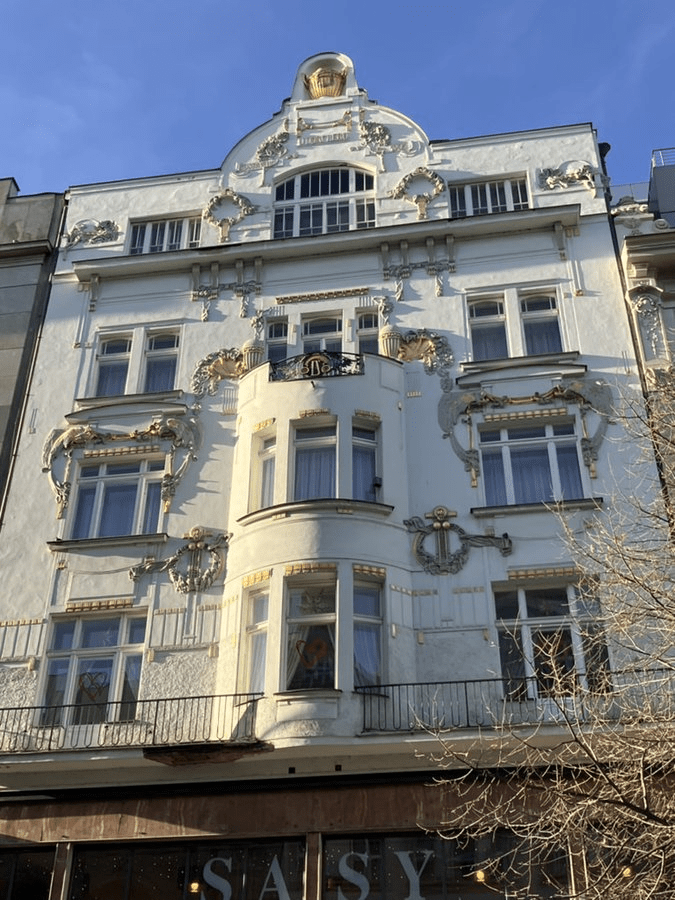
And number 7 – U Dörflerů – gets a pic because it’s a pleasing contrast to the more modern buildings on this side of the street.
And then we end with Dům Na Můstku, built between 1976 and 1983. It was built for the General Direction of ČKD, the now defunct (since 2000) tram company, most famous for the Tatra T3, still the world’s most widely-used make.
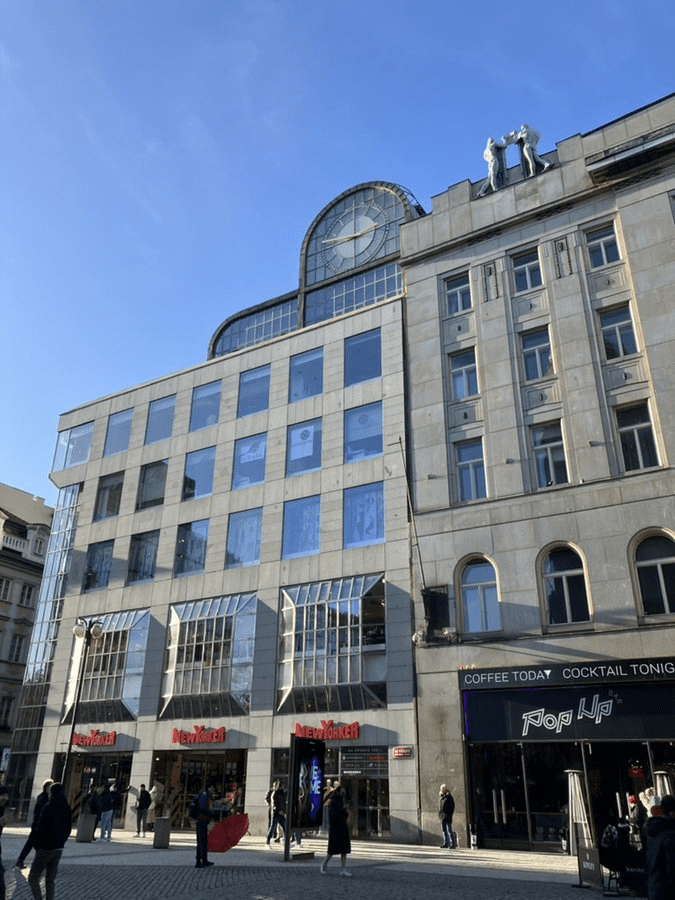
This spot looked rather different once (this building was destroyed in 1901), as did the corner with Václavák.
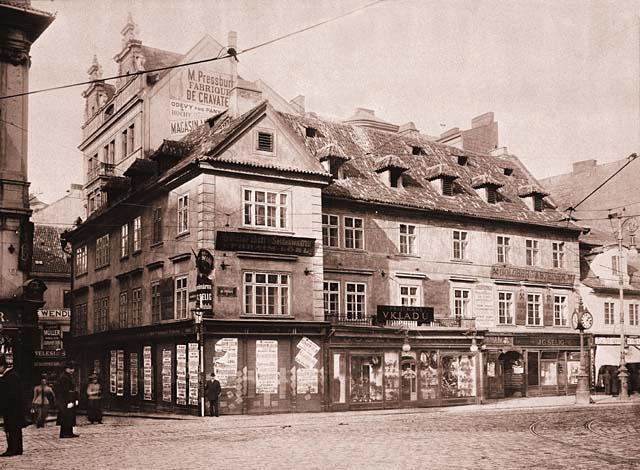
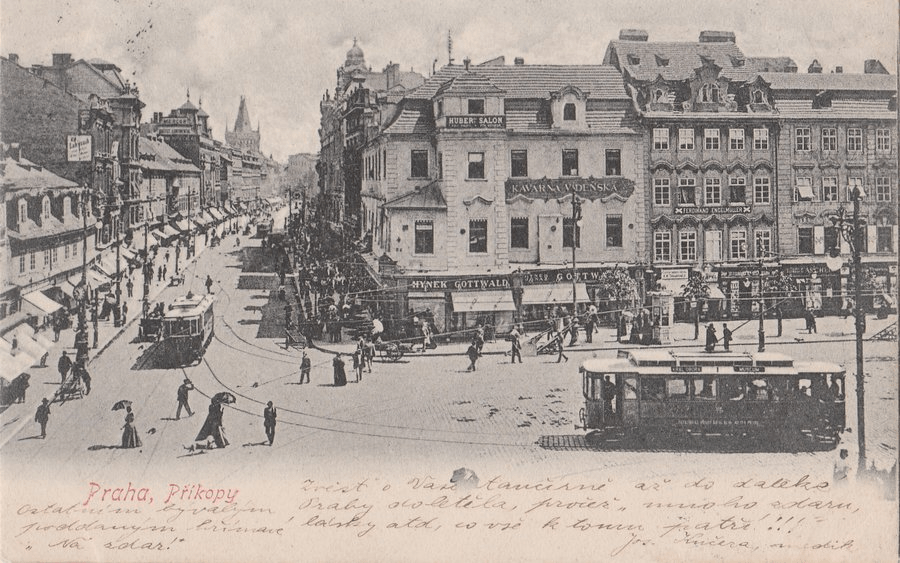
Finally, I’m not one for ending threads on a downer, but I went home just after taking all these pics and the first thing that I saw made me a bit sad.


 What's in a Prague street name
Leave a comment