Originally published on X on 11 April 2024.
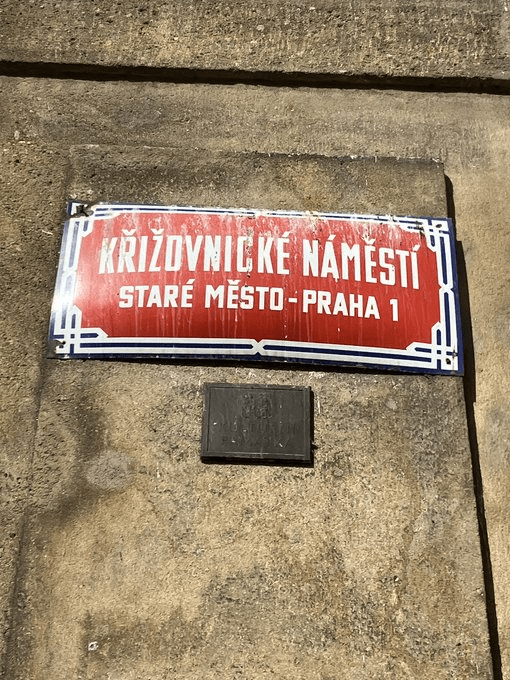
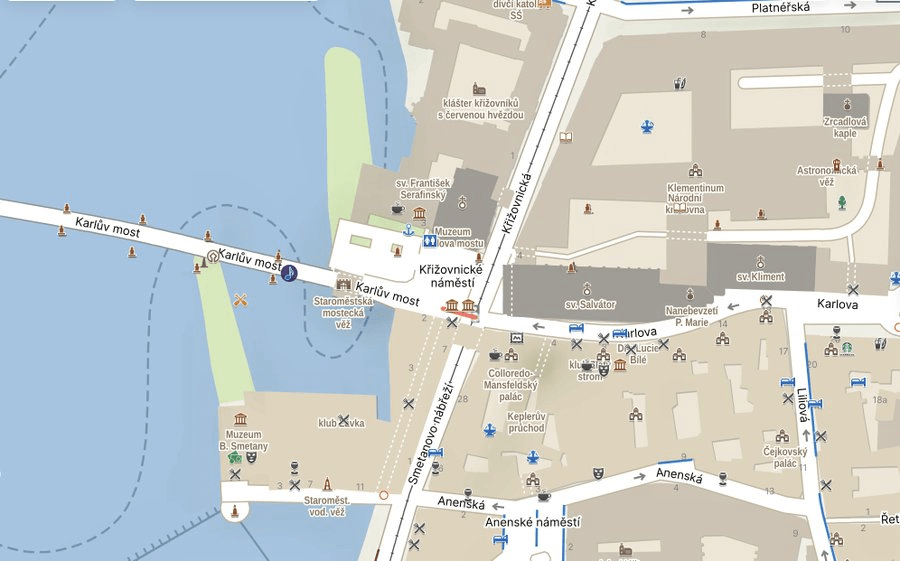
If you’ve got a vague memory of standing somewhere and thinking it must be the most crowded place in Prague, you may have been in this spot.
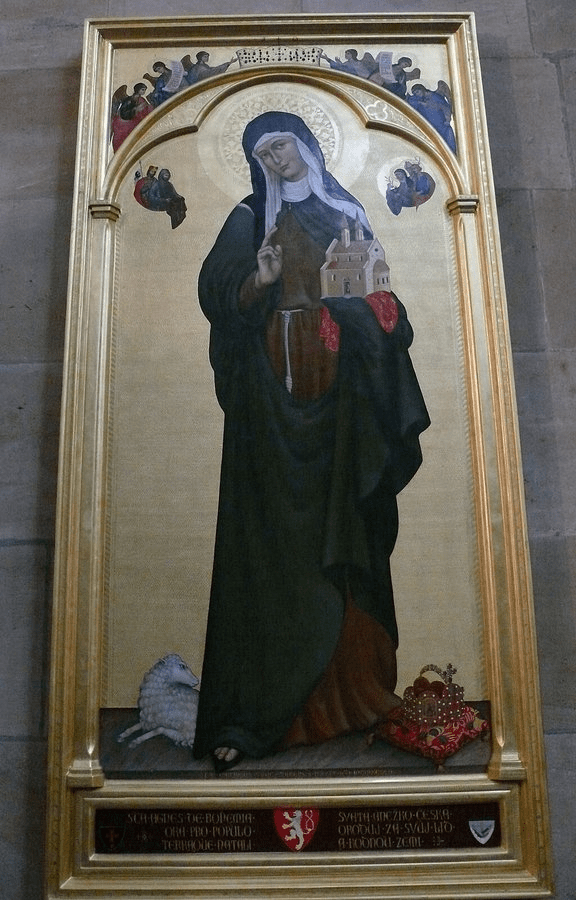
In 1233, the Knights of the Cross with the Red Star / Rytířský řád Křižovníků s červenou hvězdou – Bohemia’s only home-grown religious order, and the only religious order led by a woman (St Agnes, getting her own post soon) – was founded.
Four years later, they were formally constituted by Pope Gregory IX.
Their original home was on Na Františku (also coming up as a post soon-ish), but, by 1252, they wanted something bigger, so they started building a new monastery by the Judith Bridge (the predecessor to https://whatsinapraguestreetname.com/2024/09/09/prague-1-day-68-karluv-most-charles-bridge/).
The foundation devoted itself to looking after pilgrims and the sick – so this very central location was ideal. And doesn’t ‘Crusader Square’ sound awesome?
The monastery had to be rebuilt after a fire in 1378; it didn’t suffer so much in the Hussite Wars, but the Swedish siege of Prague at the end of the Thirty Years’ War (in 1648) was a different story.
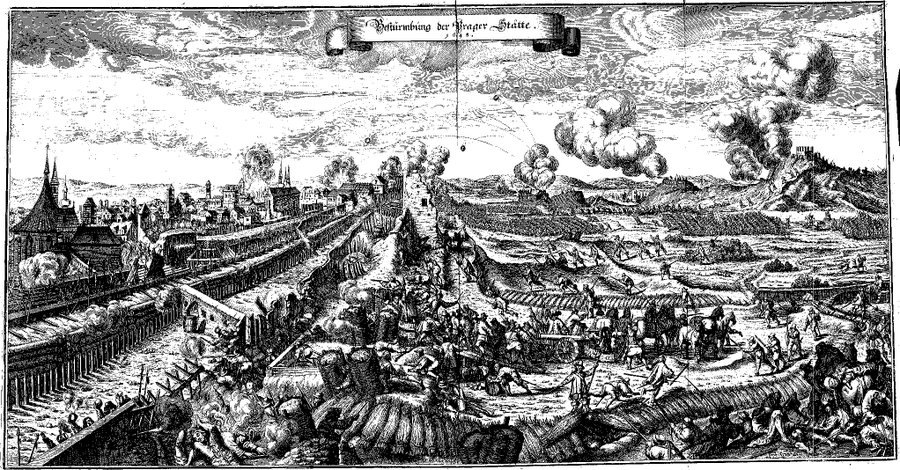
The area didn’t get reconstructed until 1664; the Baroque reconstruction of the monastery church got going in 1679.
This painting by Franz Josef Sandmann is from 1840.
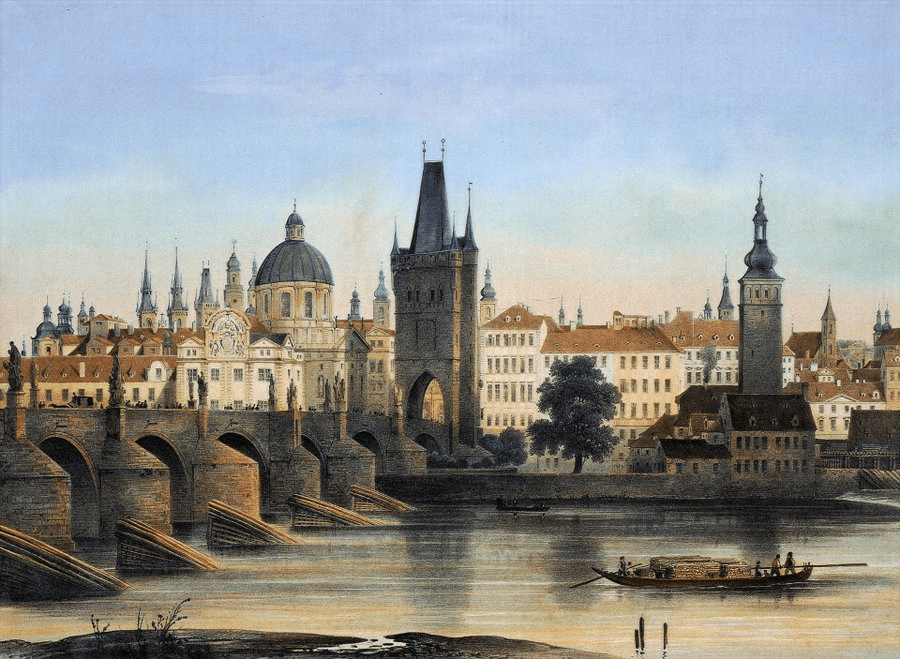
Further construction (1908-12) was even further-reaching: many of the early monastery buildings were disposed of entirely, with the church of St. Francis of Assisi being one of the few survivors.
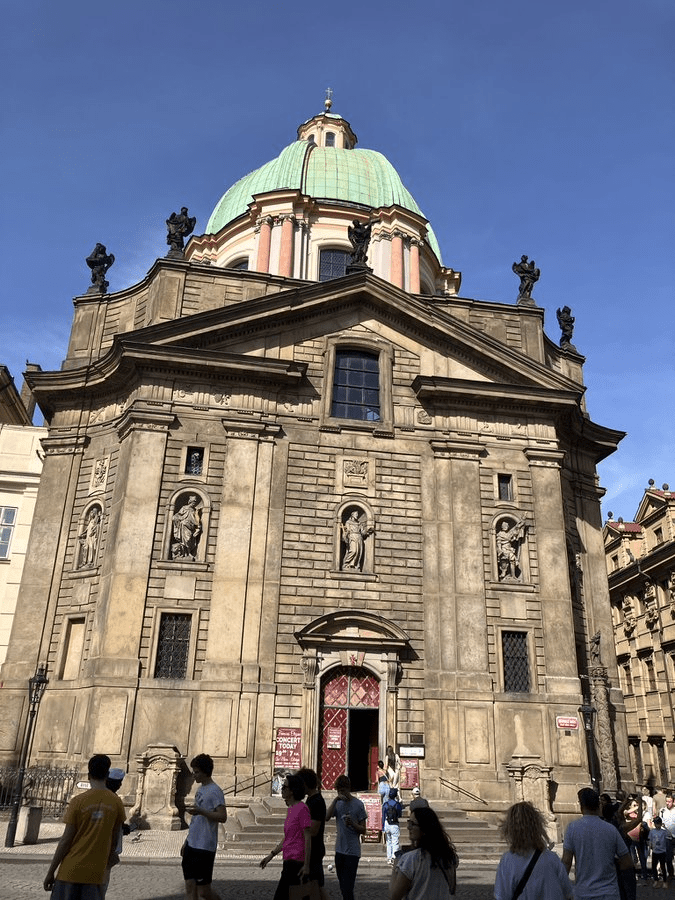
The order itself stayed in the monastery until 1942, when the Nazis forced them out; they returned after the Prague Uprising in May 1945, but only lasted there for five years before the communist regime, as part of Action K, forced them out again.
The premises were then used by the Czechoslovak Ministry of Health. The order was allowed to return in 1990.
There’s also an island here – Křižovnický ostrov – which you think I’d have managed to get a photo of, but here’s 26 minutes of ČT stuff about the island from 2014 instead: https://www.ceskatelevize.cz/porady/10116288835-z-metropole/214411058230032/cast/344469/.
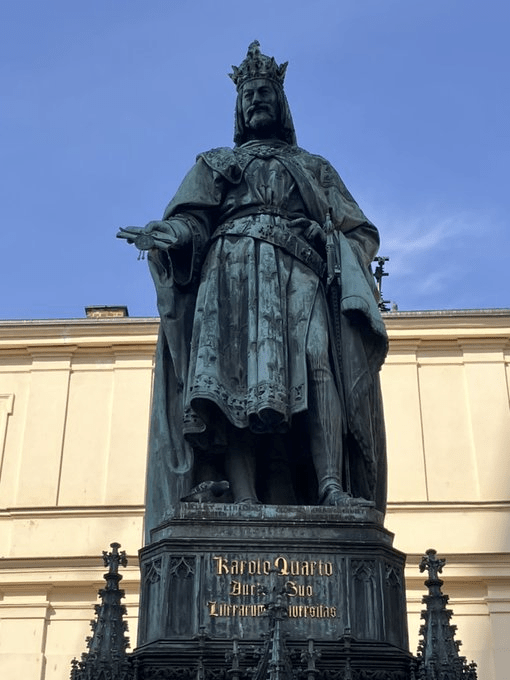
Just in front of the church, there’s a Neo-Gothic monument to Charles IV (https://whatsinapraguestreetname.com/2024/10/15/prague-1-day-196-karlova/), built by Jacob Daniel Burgschmiet.
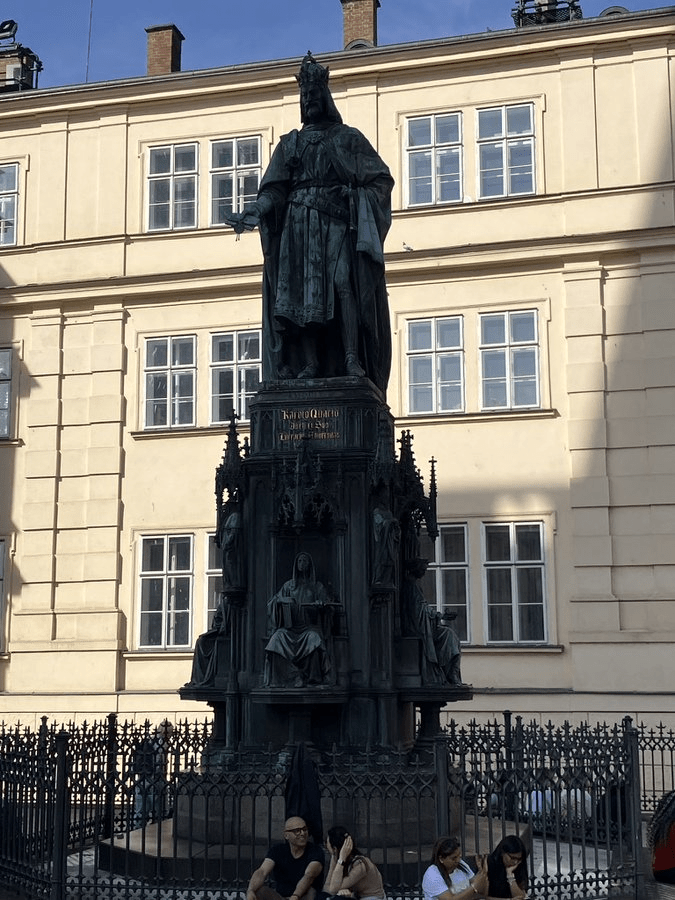
It was unveiled in 1851 – the intended unveiling on the 500th anniversary of the founding of Charles University, i.e. in 1848, became unfeasible due to all the revolutionary stuff going on in that year.
He’s holding the University’s charter in his hand.
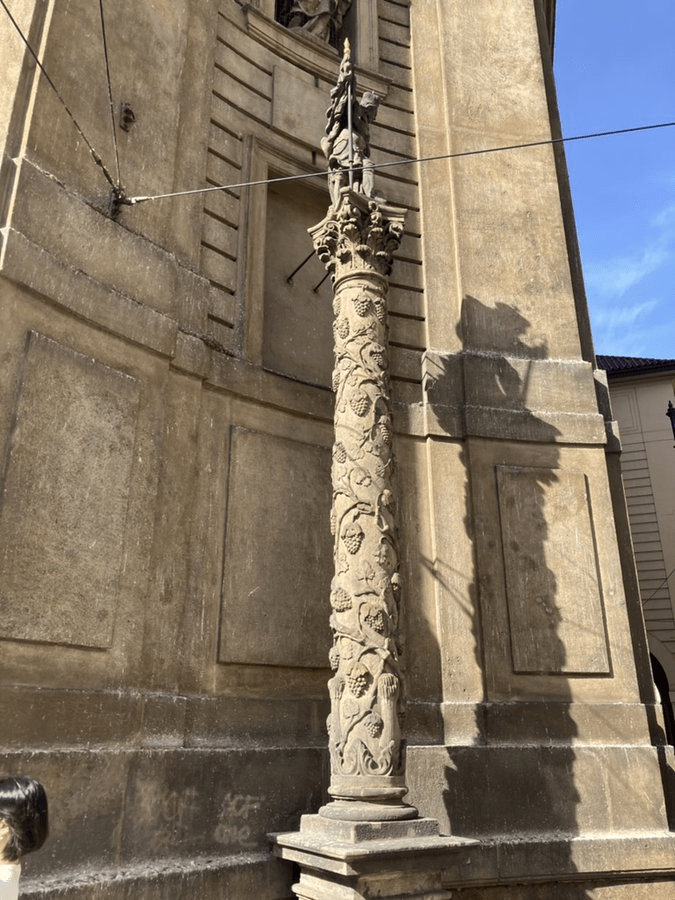
Also in front of the church, there’s the Wine Column, consecrated in 1676, because, apparently, St Wenceslas is the patron saint of winemakers; the Prague Vineyard Office (which ‘supervised winemakers and bartenders’) operated just by the tower until 1783.
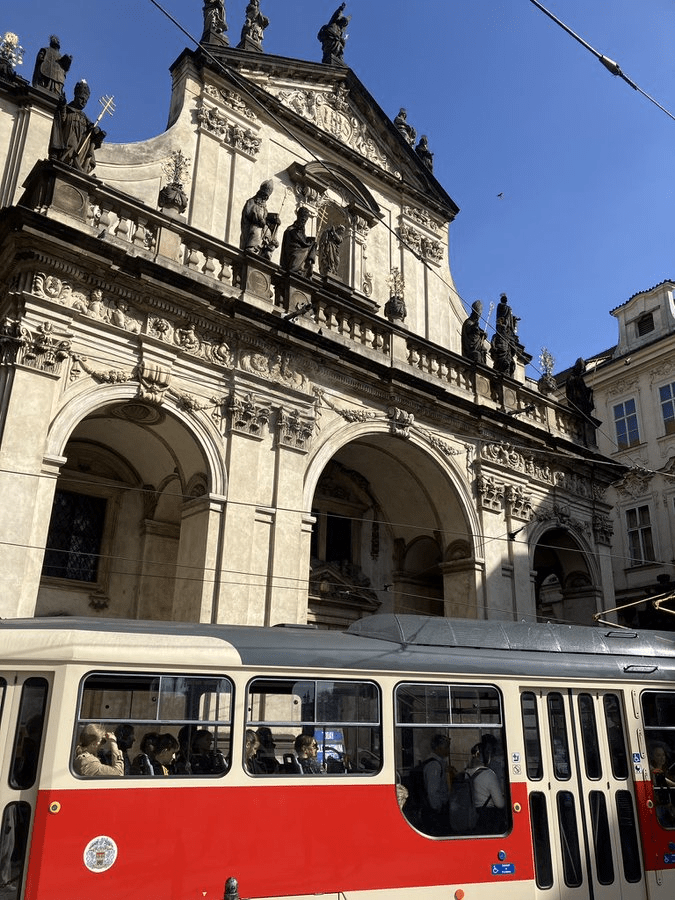
Turn away from the bridge, and you’ve got St Salvator’s Church, discussed in the Karlova thread (and pictured here with tram).
Turn back towards their bridge, and you’ve got the Old Town Bridge Tower. It’s been repaired several times over the centuries – some repairs have been more thoughtful than others – and a comprehensive survey is being carried out with a view to the next one.
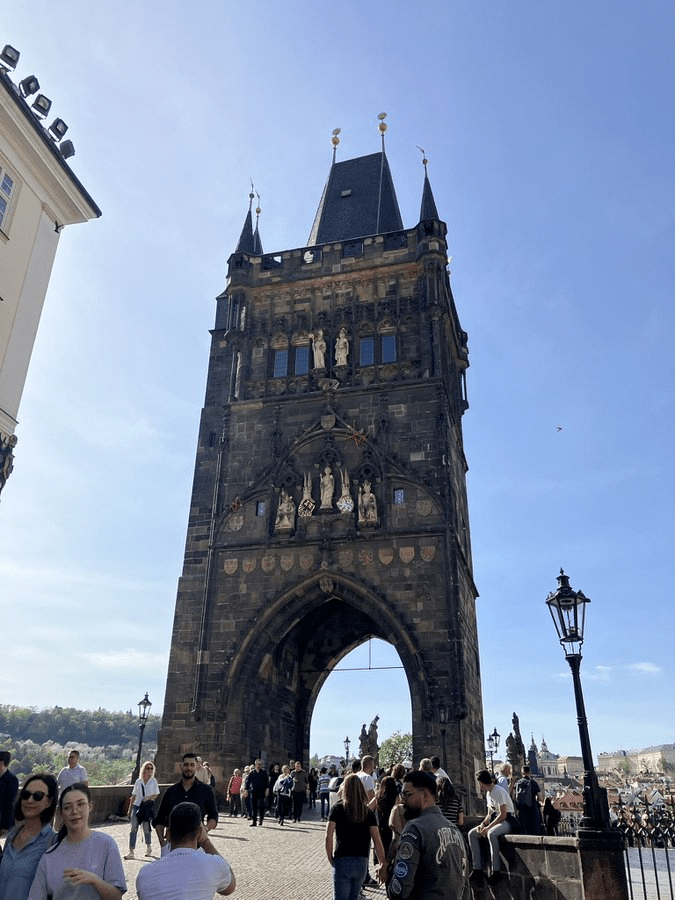
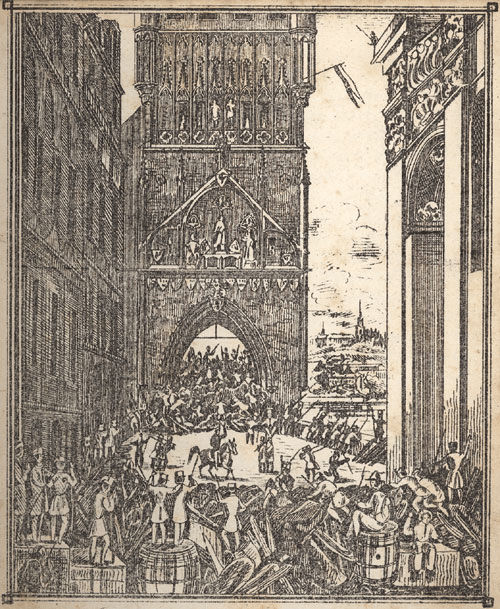
In 1621, the heads of those anti-Habsburg rebels who had been executed on Old Town Square (https://whatsinapraguestreetname.com/2024/10/12/prague-1-day-190-staromestske-namesti-old-town-square/) were displayed here.
Please consider these two photos to be a special mention for spring.
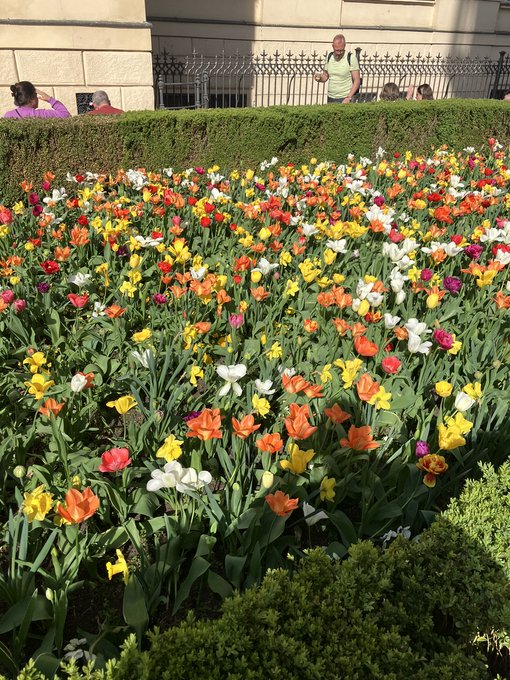
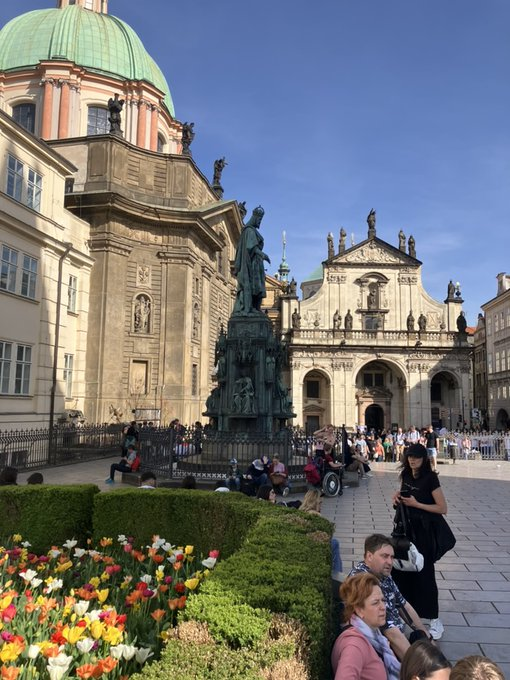
And, crowded as the square can be, you can still move a little to the right and get photos like this, even on a Saturday afternoon. I’m so incredibly lucky to live here.


 What's in a Prague street name
Leave a comment