Originally published on X on 16 April 2024.

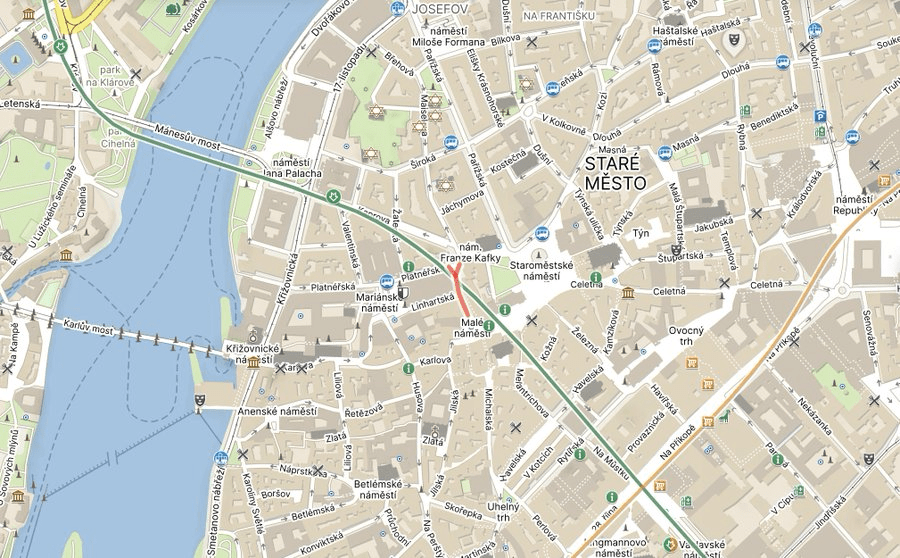
In the 14th century, this street became part of the marketplace that we now know as Old Town Square (https://whatsinapraguestreetname.com/2024/10/12/prague-1-day-190-staromestske-namesti-old-town-square/).
Sellers of bridles (Czech: uzdy) operated here, and the street became known as V uzdářích or Pod uzdáři for a couple of hundred years.
Back on current-day Old Town Square, a town hall (Czech: radnice) was gradually built from 1338 onwards, and V uzdářích (which wasn’t identical in scope to the current street) became known as Radnická from 1870.

However, come 1900, Prague was growing, and the city administration needed a bit more space than Old Town Hall could offer on its own.
From 1908 to 1911, the Nová radnice (typically translated as New City Hall, mainly to avoid confusion with the New Town Hall, which is not new, but is in the New Town: https://whatsinapraguestreetname.com/2024/09/01/prague-2-day-164-karlovo-namesti/) was built.
The competition for the design of the building was won by Osvald Polívka (also responsible for many other great buildings in Prague, but most famously Municipal House: https://whatsinapraguestreetname.com/2024/10/10/prague-1-day-182-u-obecniho-domu/).
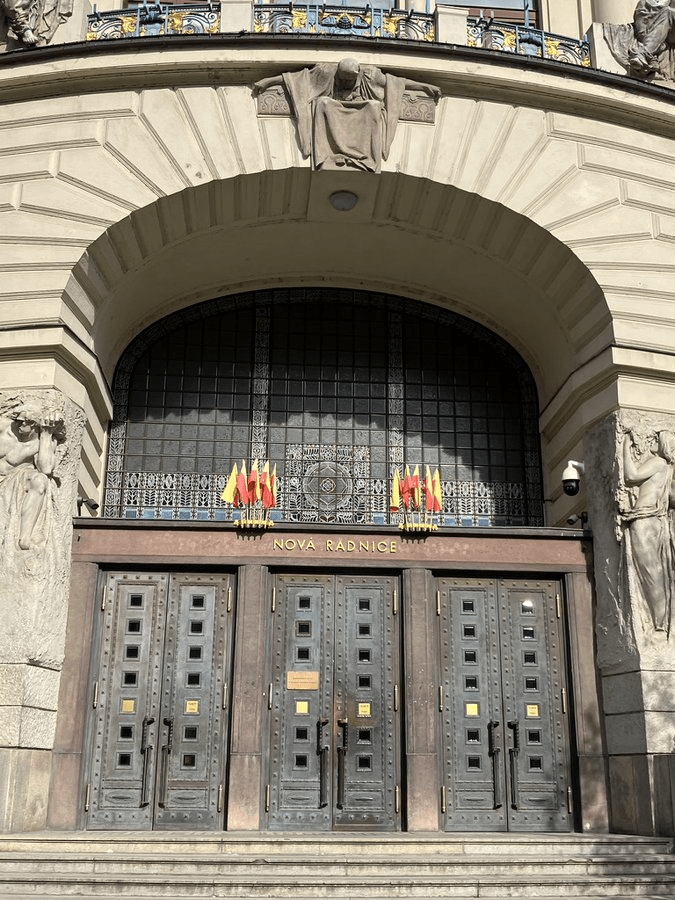
In 1914, the street was renamed U Radnice.
Interior features included Prague’s first two paternosters; exterior features included fine statues and sculptures, such as Ladislav Šaloun’s sculpture of Judah Loew ben Bezalel, supposed creator of the Golem of Prague.
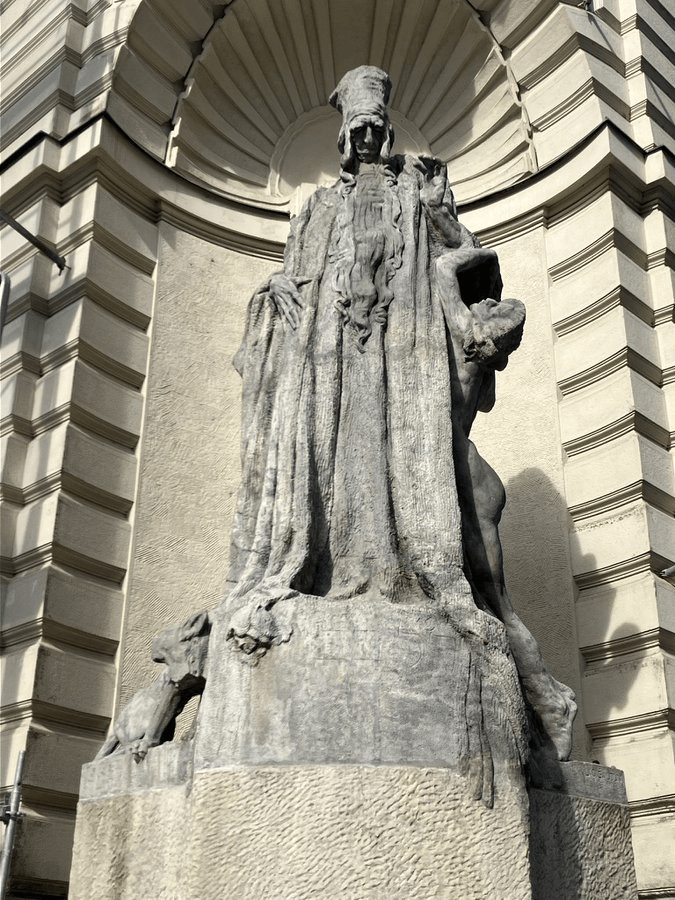
As well as Šaloun’s statue of the Iron Knight, the spirit of a knight who can’t find peace following the suicides of his fiancée and her father, the death of his wife, and his own suicide.

The relief sculptures at the entrance are by Stanislav Sucharda; they represent ‘Citizenship jointly bearing the burden’ and ‘The common benefit flowing to citizenship’.


Initially, New City Hall hosted the city treasury, accounting office and collection offices; after the Prague Uprising in May 1945, parts of the Old Town Hall were burned down, and the city administration moved here.
It’s been the seat of Prague’s mayor ever since, and also hosts the Prague City Council. This is a picture of its slightly more low-key entrance on U Radnice itself.
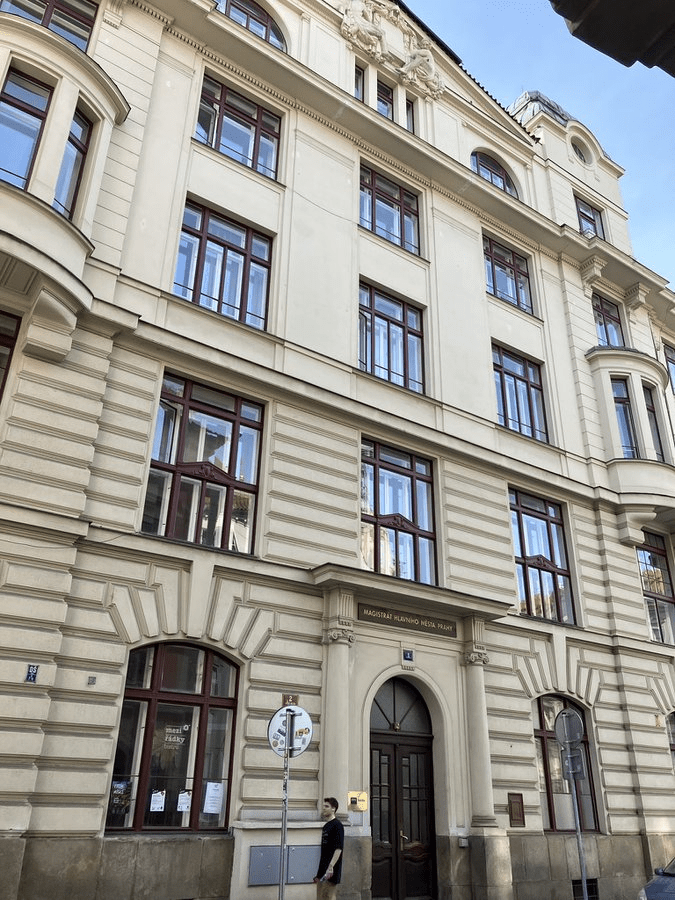
Other houses on U Radnice definitely indicate a common theme – you’ve got U Zlatého bažanta (The Golden Pheasant) at number 2 (left-hand part of the first pic), U Zlatého zvonku (The Golden Bell) at number 4, and U Zlatotepců (The Goldsmiths) at number 6.
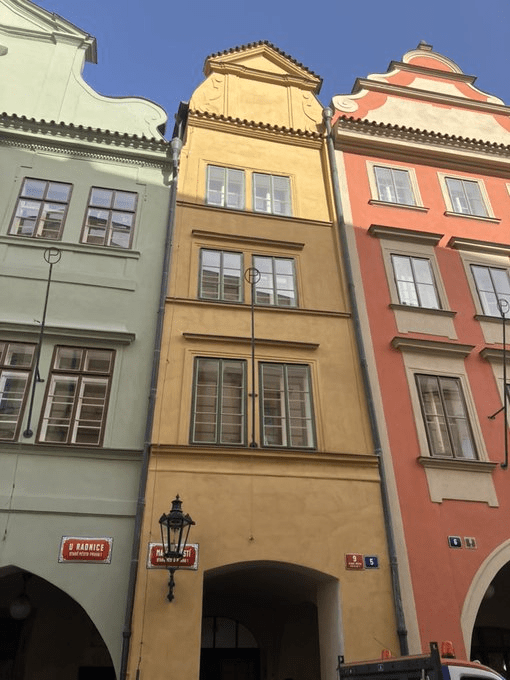
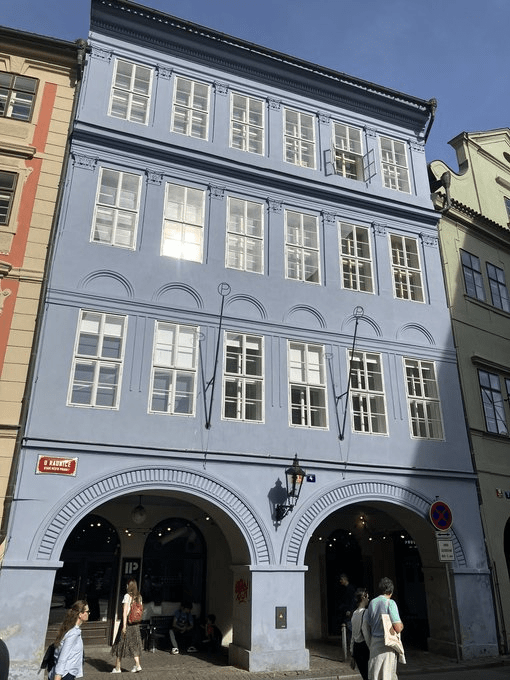

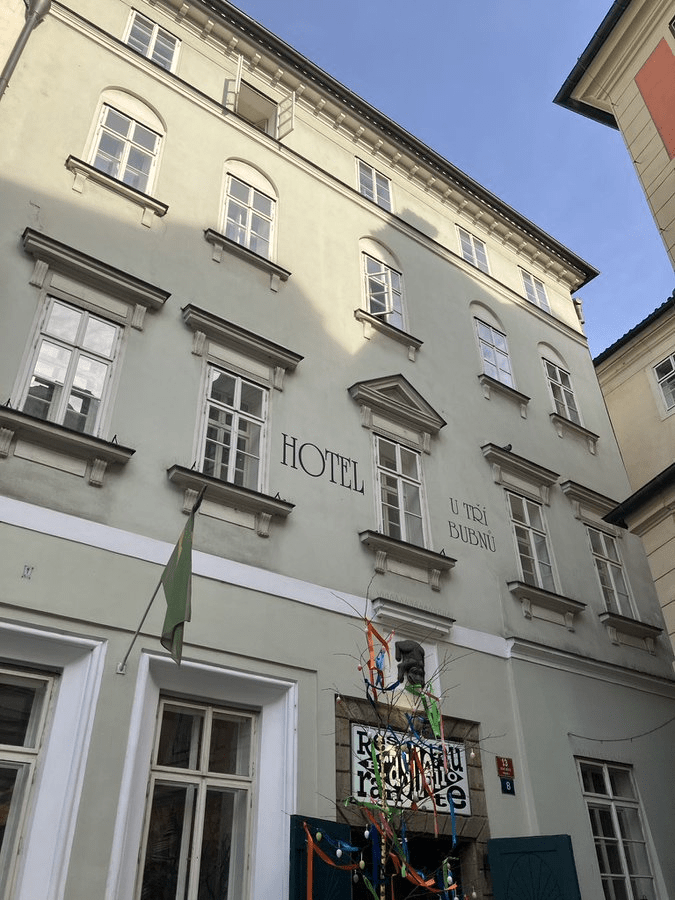
Number 8 spoils the consistency somewhat, but I also think U Zelené žáby (The Green Frog) is a great name (which dates back to at least 1428); zoom in above the entrance, and you’ve got a frog welcoming you in.

 What's in a Prague street name
Leave a comment