Originally published on X on 25 March 2024.
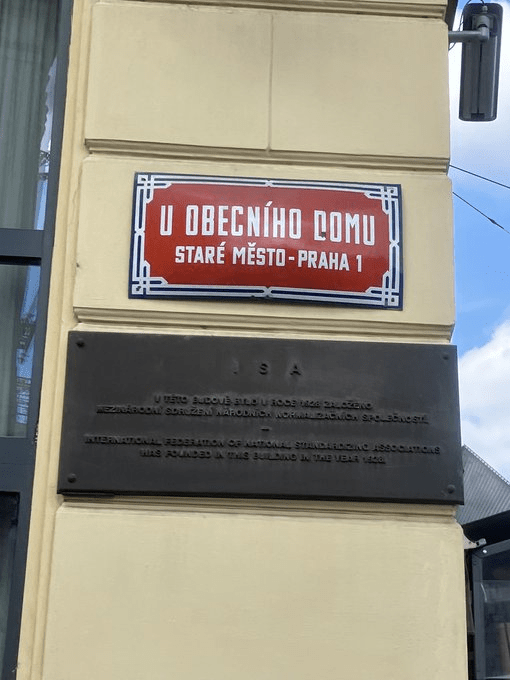
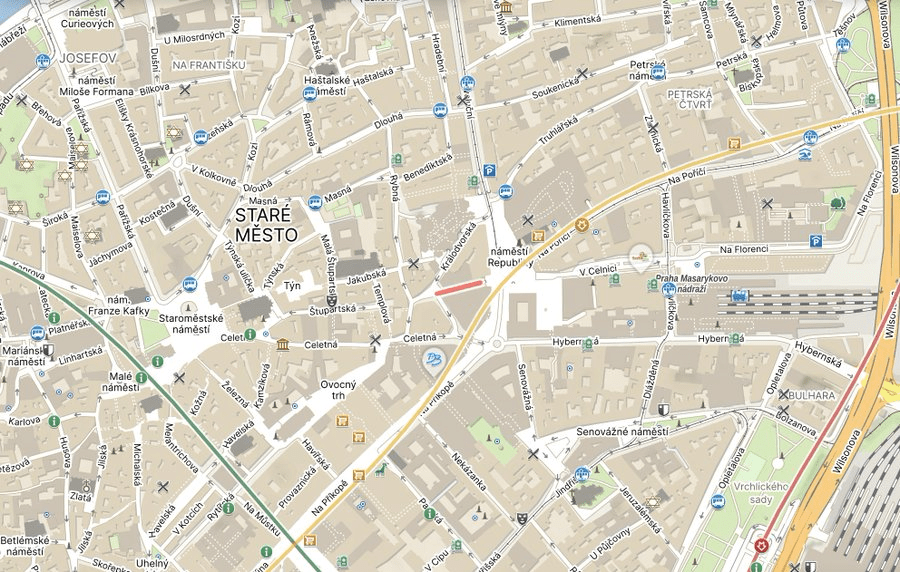
From 1383 onwards, the Royal Court, which stood here, was the residence of all Czech kings. This state of affairs lasted for a century, until Vladislav II decided that Prague Castle was a nicer location (see https://whatsinapraguestreetname.com/2024/10/10/prague-1-day-181-u-prasne-brany/).
The buildings were used for various purposes after that*, at least until 1902, when they were demolished; three years later, construction started on their replacement, led by Osvald Polívka and Antonín Balšánek.
* More details tomorrow.
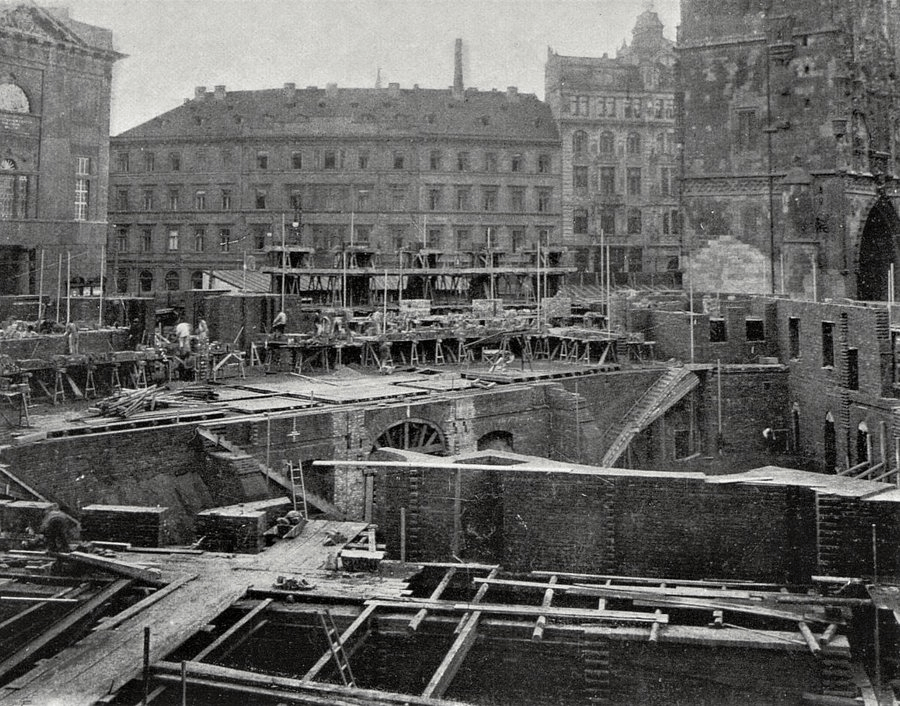
After significant overruns – both in terms of time and cost – Obecní dům, AKA Municipal House, opened on 16 December 1912.
There are some incredible pictures of the interior as it looked about a year before this on https://www.digitalniknihovna.cz/mzk/view/uuid:ddb420c0-722a-11e4-85f4-5ef3fc9ae867?page=uuid:e3f1d6d0-7243-11e4-85f4-5ef3fc9ae867.
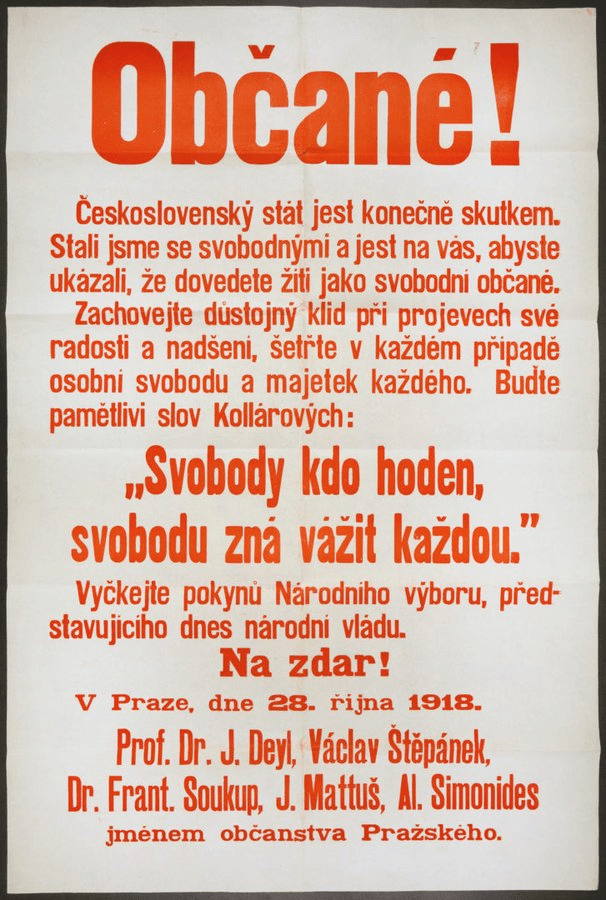
Just under six years later, on 28 October 1918, an independent Czechoslovakia would be declared here (https://whatsinapraguestreetname.com/2024/09/25/prague-1-day-144-28-rijna/).
Then, on 26 November 1989, Ladislav Adamec, the final communist Prime Minister of Czechoslovakia, had his first meeting with Václav Havel here. Communist rule would officially end two days later.
Once he was in power himself, Havel attached major importance to the renovation of Obecní dum – the works, taking place between 1994 and 1997, ultimately cost CZK 2 billion.
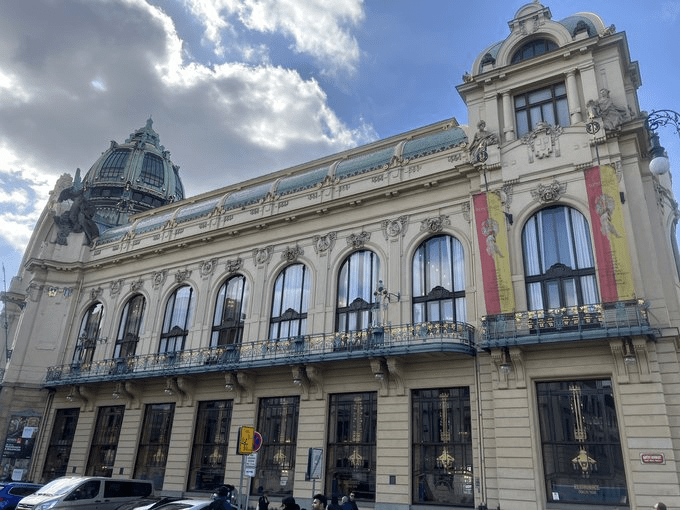
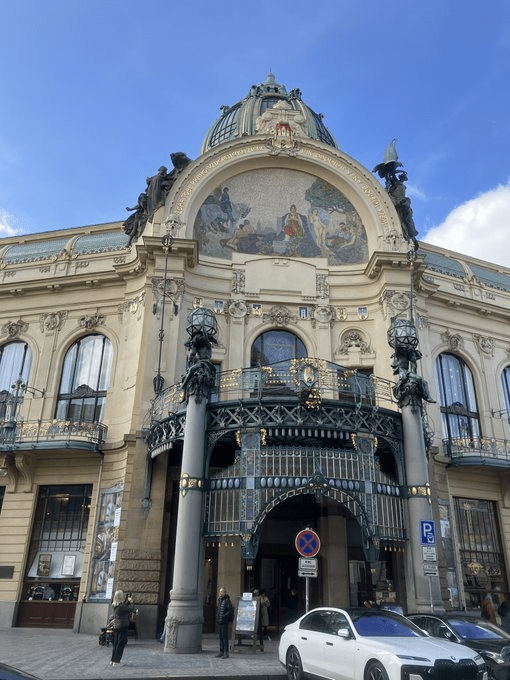
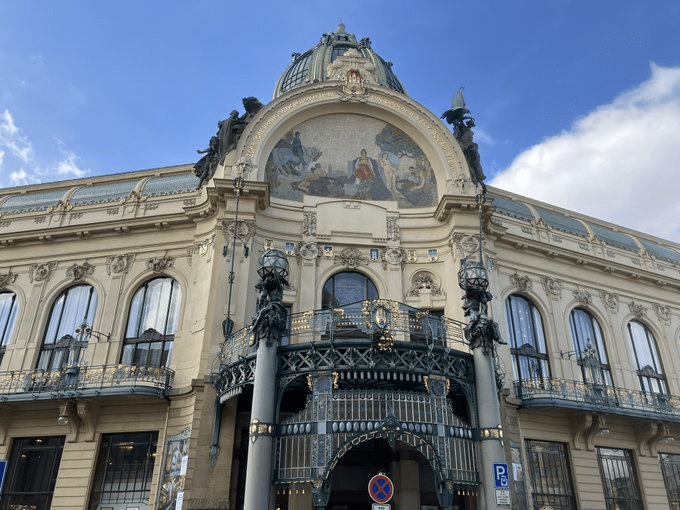
The most famous part of the building’s interior is the Smetana Hall (Smetanova síň), the main concert hall of Prague’s Symphony Orchestra. This is how it looked during the opening of the Prague Spring festival of 1990:
That was before the renovation work, of course, so here’s the equivalent concert from 2021:
While you can see the cafe inside the building in this video by Radio Prague:
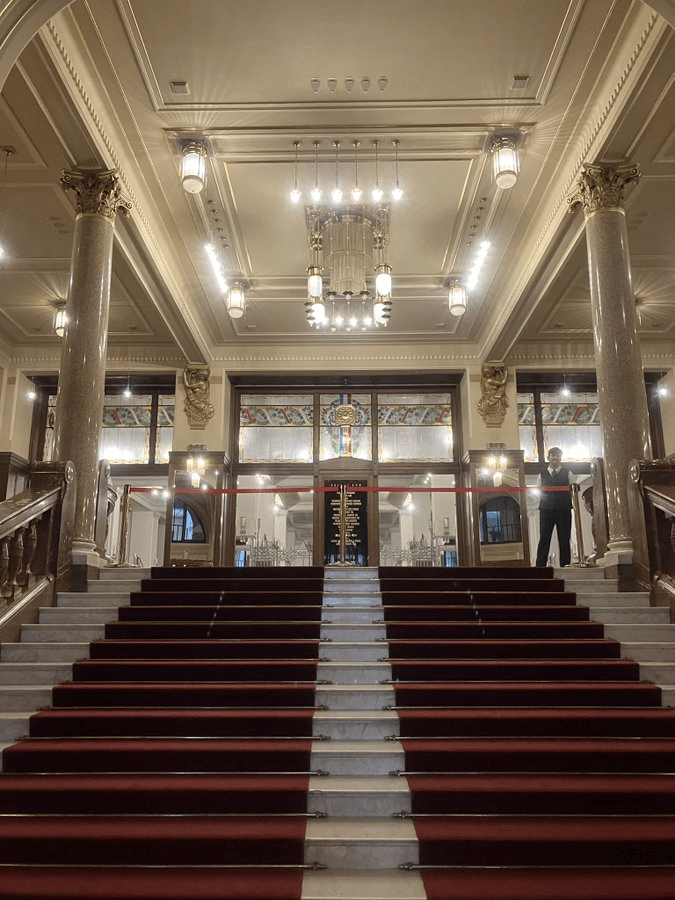
I only got as far as the entrance and assumed I wasn’t able to get any further than that, so here you go:
Whereas, in 1987, INXS got a lot further than I did, and we can be very grateful for that:
 What's in a Prague street name
Leave a comment