Originally published on X on 21 May 2024.
Dlouhá is also popularly known as Dlouhá třída, and there’s still at least one street sign with that variant.
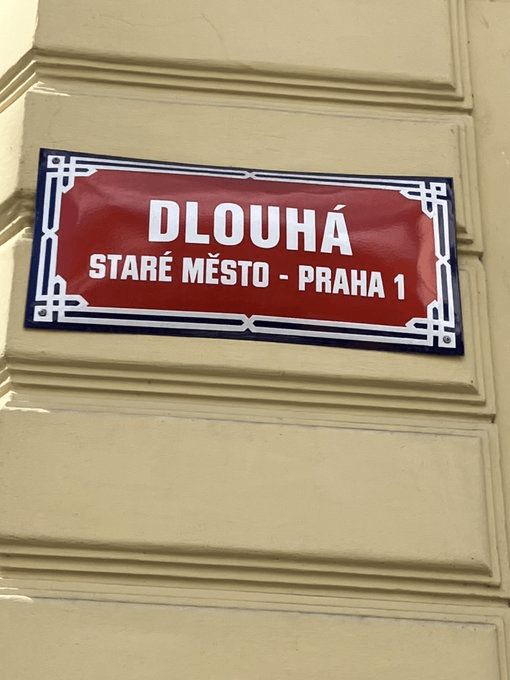
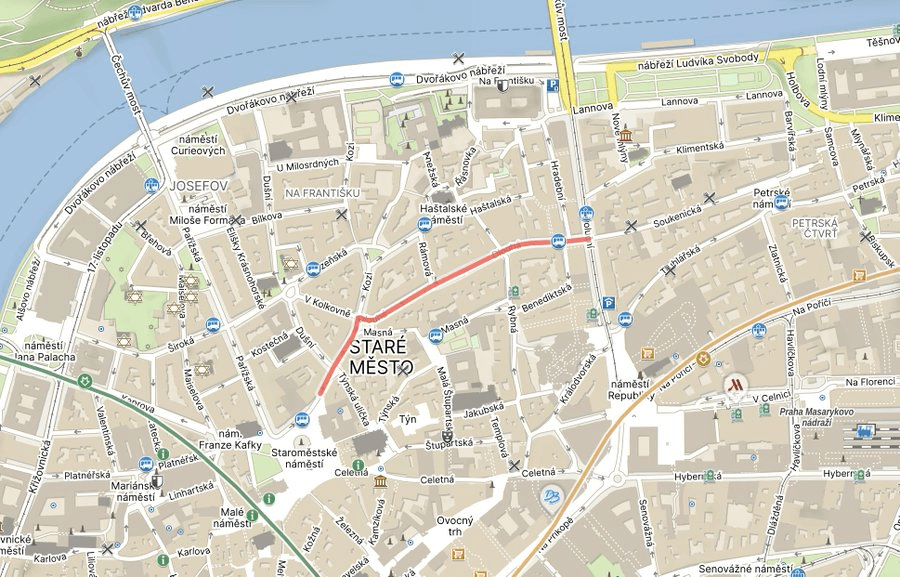
‘Dlouhá’ means long, and the map in the previous post confirms that this name is appropriate. The street is first mentioned in writing in 1310.
It understandably became a key thoroughfare, leading from Prague’s main market (https://whatsinapraguestreetname.com/2024/10/12/prague-1-day-189-tynska/) to Petrská čtvrť, a district of the New Town which was mainly inhabited by German-speaking merchants.
And which will be the focus of the last few posts in this series (for those keeping count, I think we’ve got exactly fifty streets left now).
It then led to the area around Štvanice (https://whatsinapraguestreetname.com/2024/10/23/prague-1-day-214-siroka/), from which it was possible to reach Eastern Bohemia.
If you compare Dlouhá to other long-ish streets in the Prague 1 series, it’s – let’s not beat around the bush – not especially packed with historical anecdotes. But it’s not devoid of buildings worth mentioning, either.
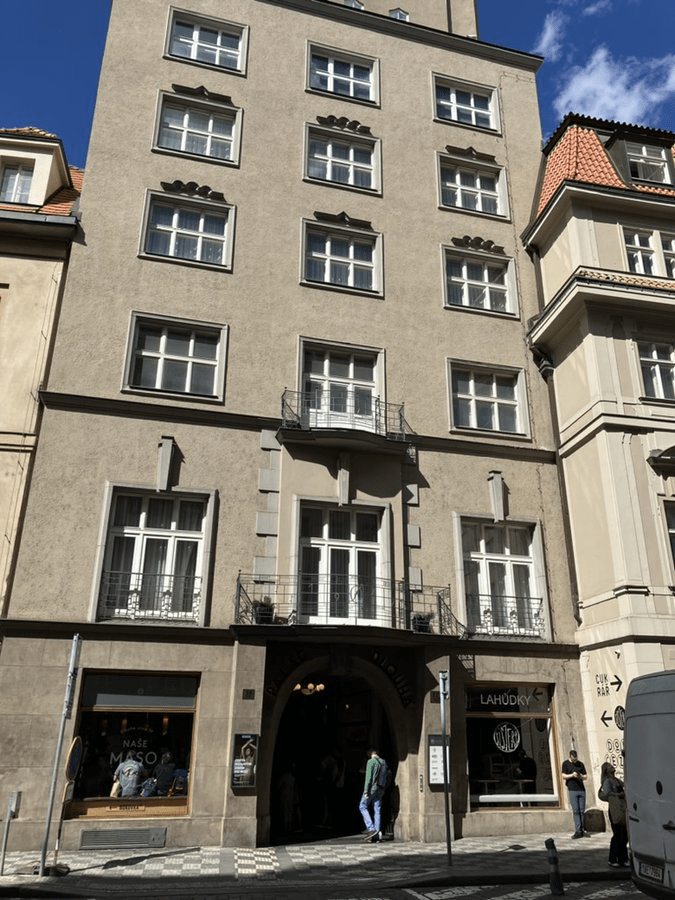
Divadlo v Dlouhé, founded in 1996, is a municipality-run repertory theatre which prides itself on its diverse repertoire and its 80,000 annual visitors: https://divadlovdlouhe.cz/o-nas/
It’s particularly renowned for two festivals – Dítě v Dlouhé, which is aimed at younger children (and took place last month), and 13+, which is aimed at teenagers (and took place in January).
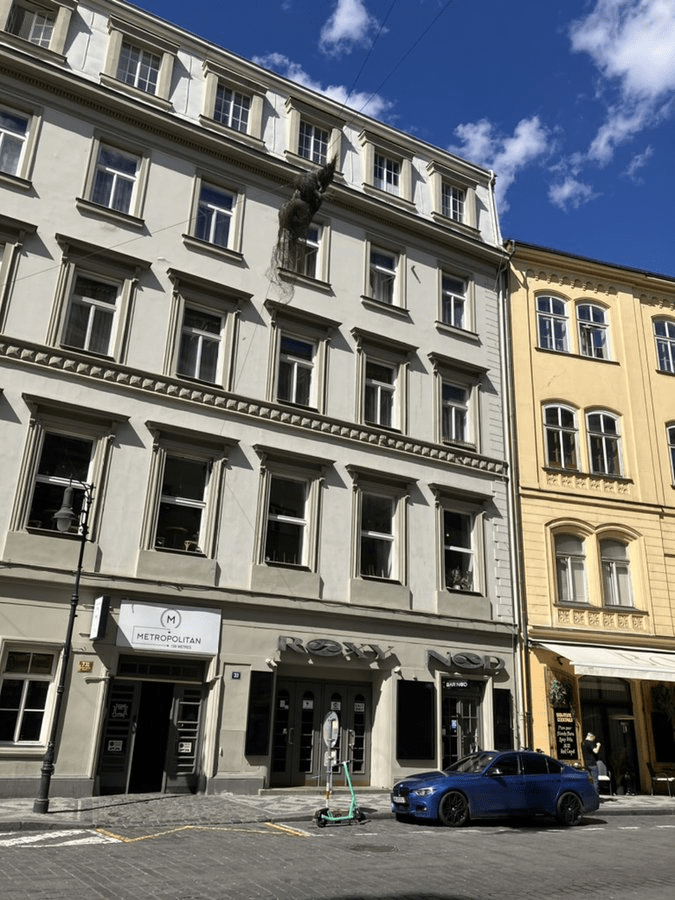
There’s also Roxy, a music club founded in 1992 in the premises of a former cinema. https://instagram.com/roxyprague/ gives an idea of who plays there.
Also worth a mention is U Zlatého stromu (The Golden Tree), created when two Gothic houses were joined around 1600. The tree remains (not quite sure how golden it is now).
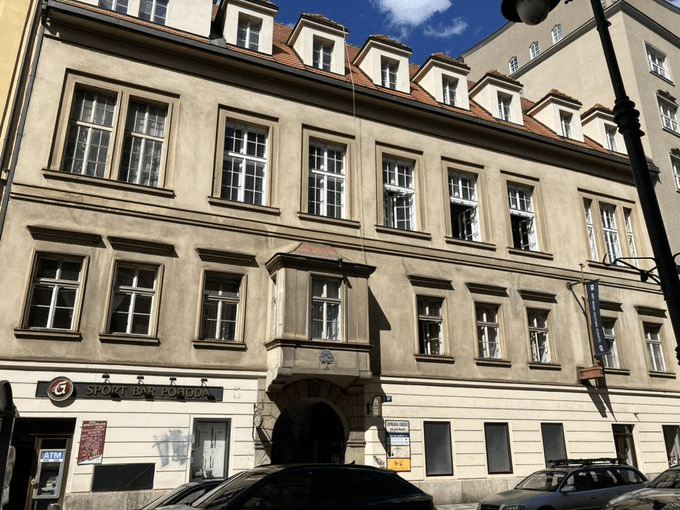
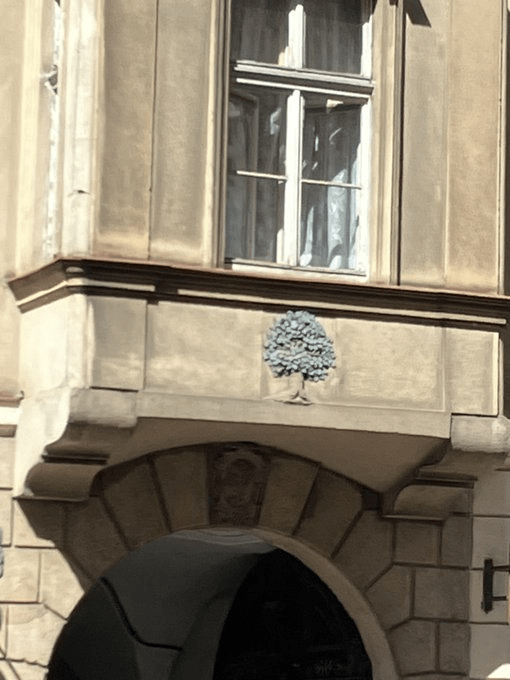
Is it wrong to suggest that all these places could do with, you know, a bit of colour?
Anyway, let’s finish this off with one of the greatest things ever to involve the word ‘Dlouhá’:

 What's in a Prague street name
Leave a comment