Originally published on X on 1 June 2024.

Přemysl Otakar I was Duke of Bohemia from 1192 to 1193, and again from 1197 to 1198. In the latter year, he became the third King of Bohemia, and would stay as such until 1230.
He was the first ruler of Bohemia who inherited the title of King for his children.

And there were quite a few of these children – thirteen in total, including a future king (Václav I), and youngest child, Anežka (Agnes), who was born around 1211.
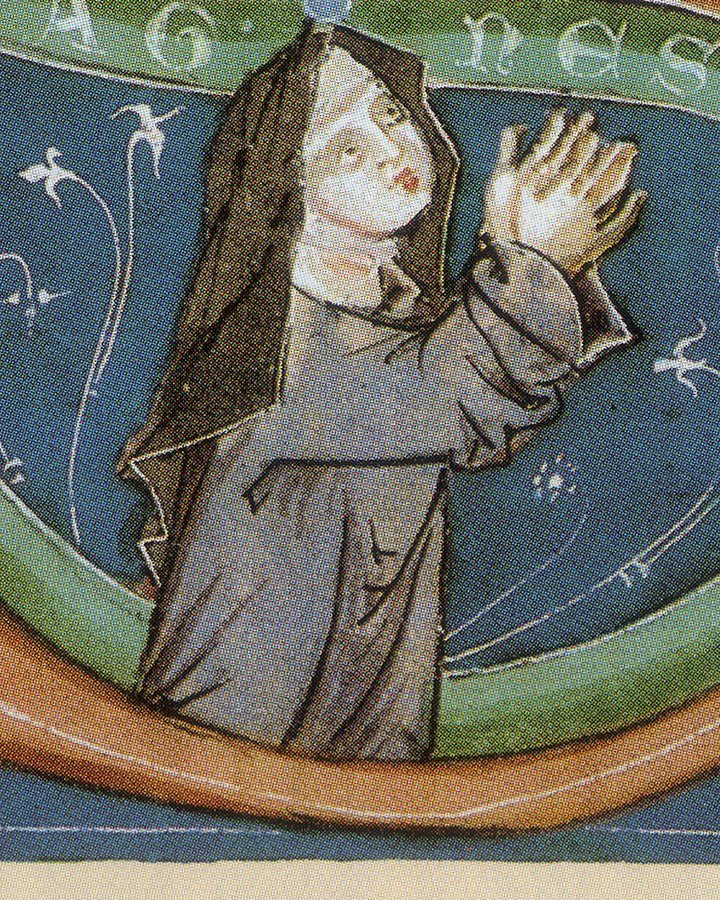
From the age of three, Anežka was raised in convents, first in Bohemia and later in Austria, when her father arranged for her to marry Henry VII of Germany.
When this plan failed, Anežka was proposed to by Frederick II, Holy Roman Emperor. However, when Otakar I died in 1230, she decided that she wasn’t going to get married.
In 1209, Francis of Assisi (pictured on Charles Bridge: https://whatsinapraguestreetname.com/2024/09/09/prague-1-day-68-karluv-most-charles-bridge/) had founded the Order of Friars Minor (or the Franciscans), with an emphasis on missionary work and teaching.
A follower, Chiara Offreduccio, or Clare of Assisi, then founded the Order of Poor Ladies, or the Poor Clares, which followed a rule of strict poverty. The order devoted itself to caring for the sick.

The first follower of the Poor Clares in Bohemia was Alžběta Durynská, or Elizabeth of Hungary (1207-31), who was also Anežka’s cousin.

The order needed a convent in Prague, and this was built quite quickly – by 1234, it had already been consecrated, and Anežka entered the order on 25 March. She had her own chapel within the complex.
When Václav I – who had made a significant financial contribution to the construction – died in 1253, he was buried here, as his wife, Kunigunde of Hohenstaufen, had been in 1248: https://commons.wikimedia.org/wiki/Category:Tomb_of_Wenceslaus_I_of_Bohemia#/media/File:Ane%C5%BEsk%C3%BD_kl%C3%A1%C5%A1ter,_Star%C3%A9_M%C4%9Bsto_(Praha),_Hlavn%C3%AD_m%C4%9Bsto_Praha_12.jpg
After his death, Anežka and her nephew, Přemysl Otakar II, began construction of a mausoleum. The chapel, meanwhile, became the most important repository of relics in Bohemia.
Anežka died in 1282, and her role was taken over by Kunhuta, the teenage daughter of Přemysl Otakar II, but the convent became less of a priority for the royal family, not getting a proper reconstruction until the reign of Charles IV.
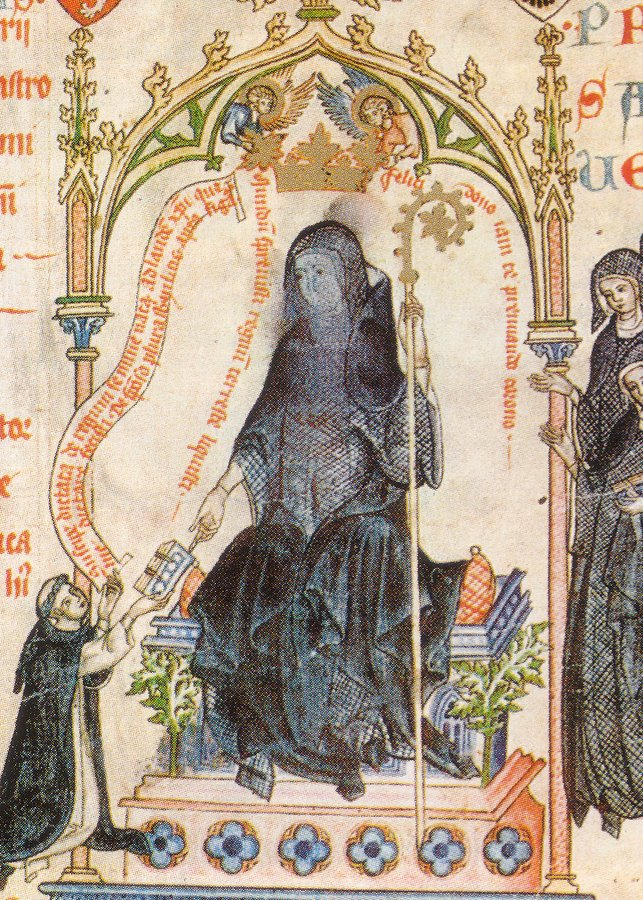
When the Habsburgs came into power, they moved Dominicans into the convent, although the Poor Clares moved back in later in the 1600s.
The convent was closed in 1782.
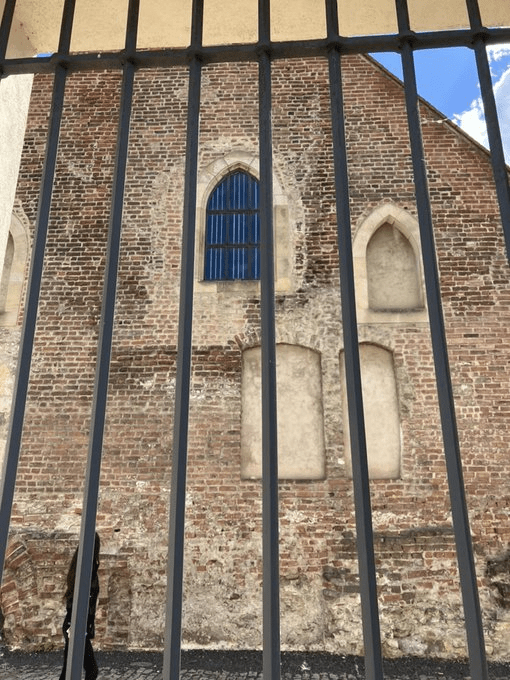
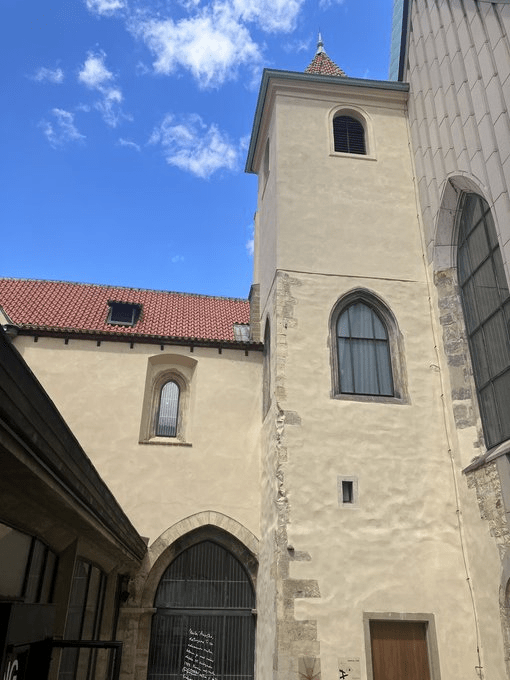
The building has been owned by the National Gallery since 1963; it hosts a permanent exhibition of Medieval Art in Bohemia and Central Europe.

Anežská is also home to what claims to be the smallest house in Prague, built in 1853, and – this will automatically make the house seem way less cute – used as a brothel for forty years until 1922.


 What's in a Prague street name
,_Hlavn%C3%AD_m%C4%9Bsto_Praha_12.jpg)
Leave a comment