Originally published on X on 9 June 2024.

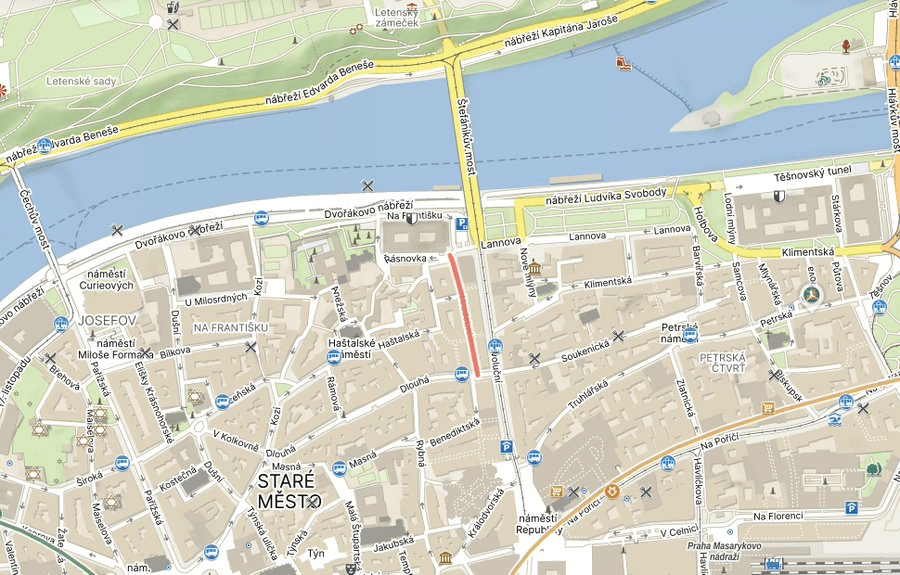
Soběslav I, Duke of Bohemia from 1125 to 1140 (https://whatsinapraguestreetname.com/2024/08/24/prague-2-day-96-sobeslavova/), started the process of fortifying Prague (‘hradby’ are fortifications).
However, the process of fortifying the Old Town (and Malá Strana) really got going during the rule of Václav I (1230-1235, and, unlike Soběslav, as King), and would continue under his successors, Přemysl Otakar II (1253-1278) and Václav II (1278-1305).
And Hradební would have been where the easternmost fortifications were.
That’s pretty much the entire story, so let’s take a look at where the Old Town fortifications had gates (slash shamelessly plug a few older threads).
Můstek is named after a bridge which led from Havelské město to whatever was there before the New Town appeared in 1348 (i.e. fields). At the end of the bridge was a gate into the Old Town, of which Havelské město was/is part: https://whatsinapraguestreetname.com/2024/10/08/prague-1-day-175-havelska/.
Another gate led to Kutná Hora, and was therefore called Horská. It decayed after the New Town was founded, but you’re quite likely to recognise the gate tower which sprung up nearby in the 15th century: https://whatsinapraguestreetname.com/2024/10/10/prague-1-day-181-u-prasne-brany/.
Koňská brána – The Horse Gate – stood at the top of the Horse Market, but was ultimate destroyed to make way for the National Museum. You’re even more likely to know the Horse Market than you are the Power Gate Tower: https://whatsinapraguestreetname.com/2024/09/17/prague-1-day-123-vaclavske-namesti/.
Apparently, there was *another* Svatohavelská gate which was destroyed in 1874 to make way for Senovážné náměstí: https://whatsinapraguestreetname.com/2024/09/19/prague-1-day-132-senovazne-namesti/.
Slepá brána (Blind Gate) was another victim of the 1874 destructions, and was located here: https://whatsinapraguestreetname.com/2024/08/31/prague-2-day-134-jecna/.
And Brána svatého Štěpána (St Stephen’s Gate) was located here: https://whatsinapraguestreetname.com/2024/09/28/prague-1-day-150-bartolomejska/.
Whereas Brána svatého Valentina (St Valentine’s Gate) was here: https://whatsinapraguestreetname.com/2024/10/20/prague-1-day-206-kaprova/.
And the Zderaz Gate (located on https://whatsinapraguestreetname.com/2024/09/28/prague-1-day-149-na-perstyne/.
There’s also the Poříčská brána, but I can’t link to anything as it’s in the thirtysomething streets that I haven’t written about yet.) was where John of Luxembourg entered Prague in 1310.
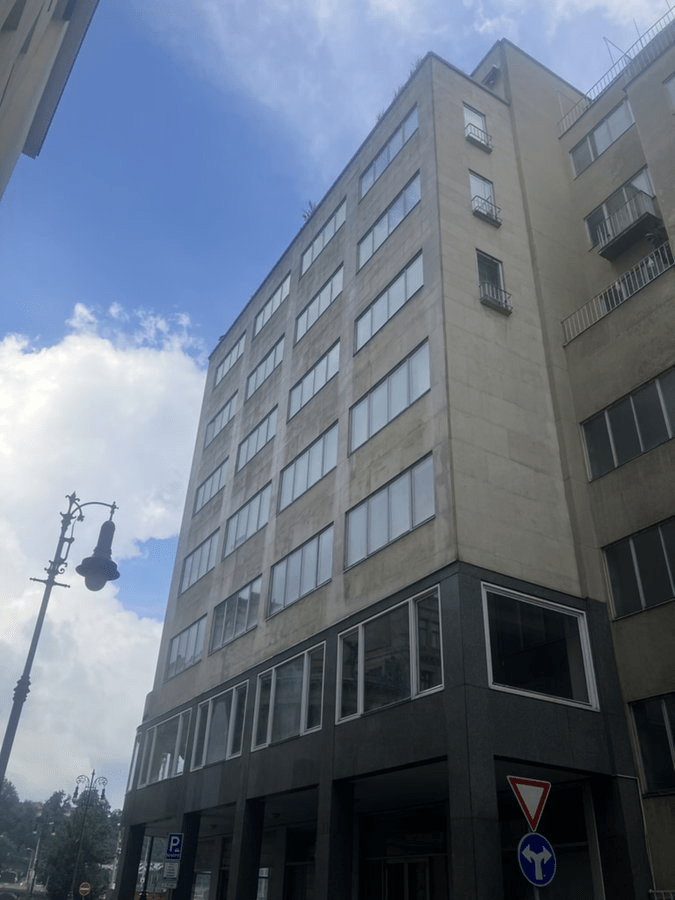
Like many streets that are near main roads, Hradební has the misfortune of featuring the backends of buildings rather than the more interesting front parts. As an example, Palác Merkur looks like this from here and will be covered more in a few days’ time.
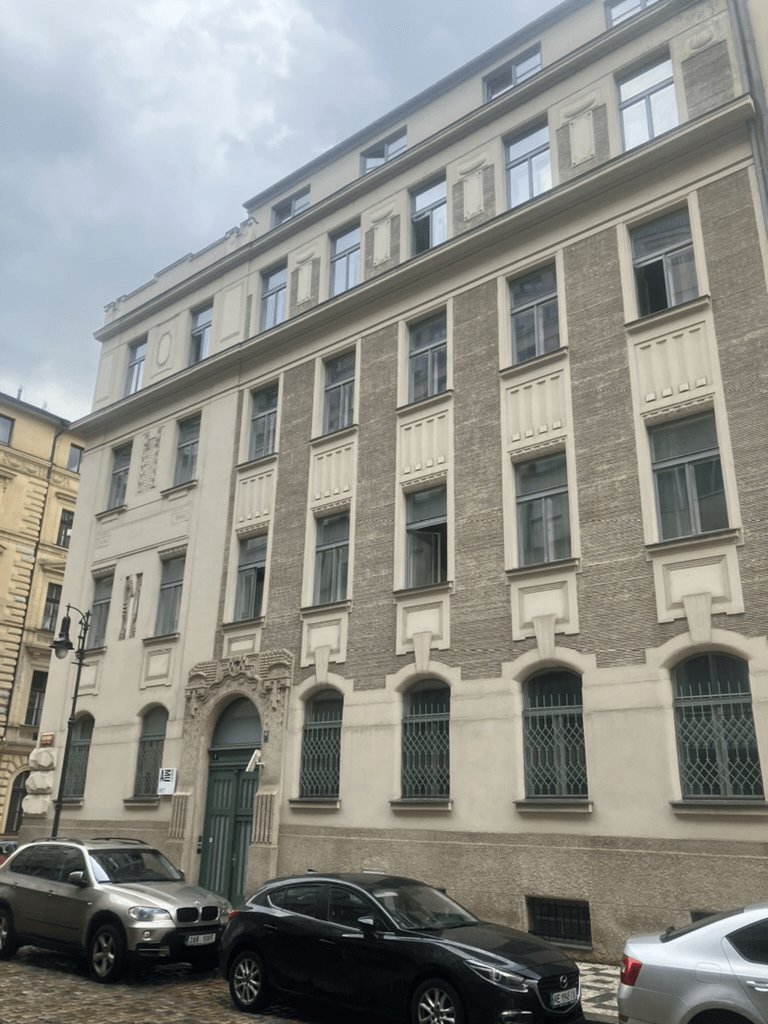
But Hradební does feature some quite well-situated halls of residence for the Academy of Performing Arts in Prague (Akademie múzických umění v Praze; AMU).
As plugging old threads is clearly my thing today, their headquarters have an even better location: https://whatsinapraguestreetname.com/2024/09/08/prague-1-day-38-malostranske-namesti/.

 What's in a Prague street name
Leave a comment