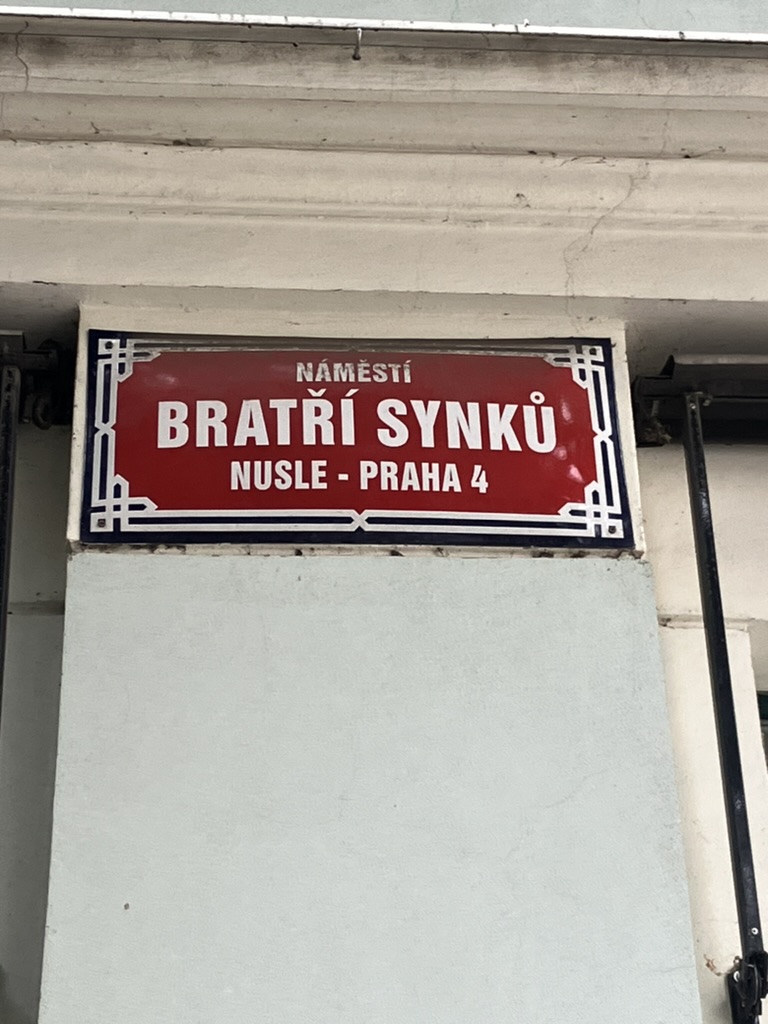
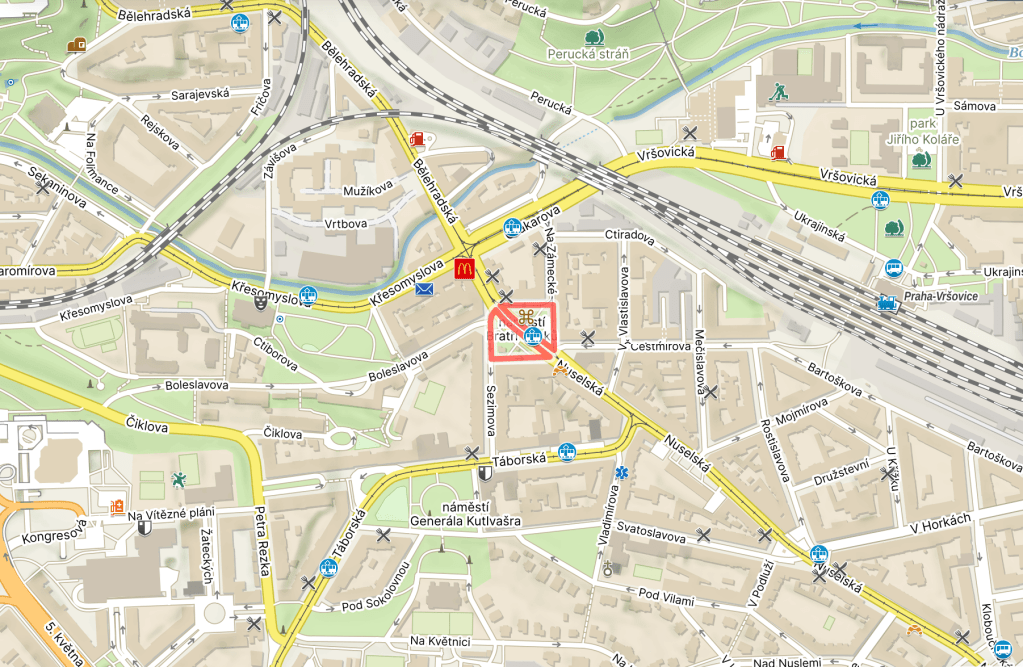
Náměstí Bratří Synků, colloquially known as Synkáč, was built in 1903; the street name translates as ‘Synek Brothers’ Square’.
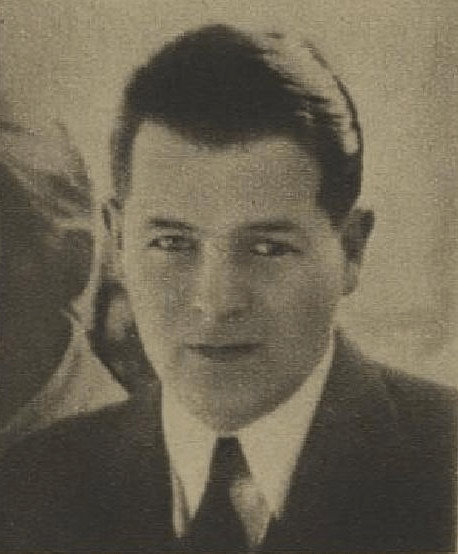
Otto Synek was born to a Jewish family in Prague in 1900; his brother Viktor would be born three years later.
Working as a bank clerk after university, Otto was fired in 1921 after participating in a strike, and became active in trade unionism, as did Viktor, who didn’t complete his studies.
Otto joined the Communist Party two years later, becoming Central Secretary of the Communist Youth Association in 1929 – a position which it seems Viktor had held in 1928, despite not actually joining the party and being an employee instead.
Around this time, Otto was a member of the sounds-a-lot-cooler-than-the-reality Karlínští kluci / Karlin Boys, basically Klement Gottwald’s gang – Gottwald became party leader in 1929, and gave it decidedly Stalinist leanings.
Viktor, meanwhile, moved to Ostrava, where he helped publish communist periodicals – a role in which he fell foul of press law, leading to a seven-month stint in prison.
After studying in Moscow, Otto returned to Czechoslovakia and first became secretary of the party’s Prague committee (1933-5), then occupying the same role in Plzeň from 1936 to 1938. He also sat in parliament from 1935 until 1938, when the party was banned and went underground.
Otto and Viktor both became members of the now-underground party’s Central Committee; Viktor managed to travel illegally to the USSR, where he received several months of training in how to run the resistance.
On 10 February 1941, Otto was arrested by the Nazi authorities; two days later, the same happened to Viktor.
Otto was executed on 29 September of the same year at Kobylisy.
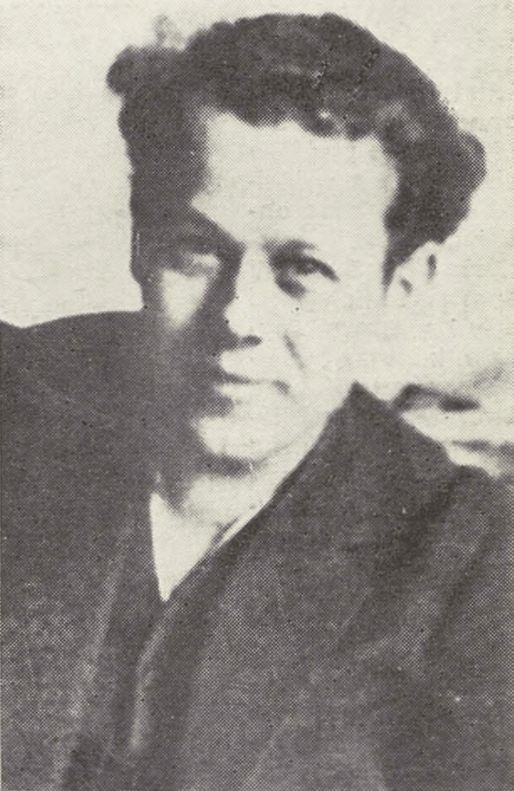
Viktor, meanwhile, was sent to Mauthausen concentration camp, where he was executed on 1 June 1942.
Obviously, the street wasn’t named after the brothers when it was first built in 1903 – back then, it was Riegrovo, after František Ladislav Rieger, the politician who had been an early leader of the Czech nationalist movement, and had died earlier that year.
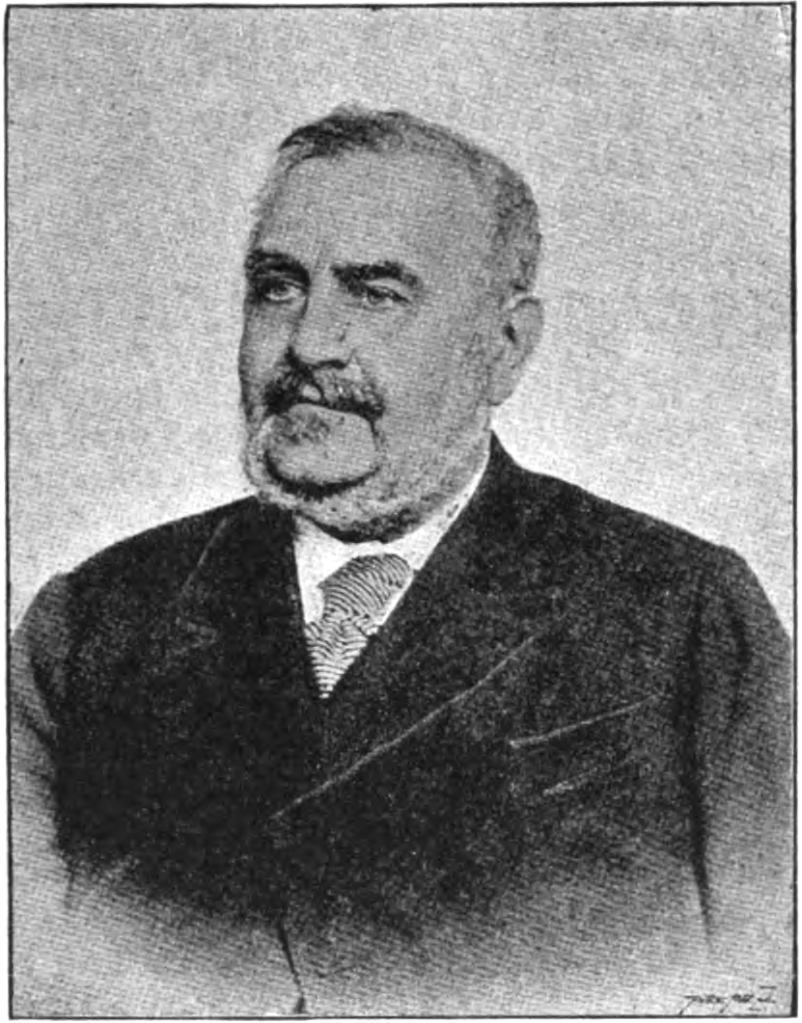
The Nazis renamed the square Metodějovo, after Methodius of ‘Cyril and Methodius’ fame, and it reverted to Riegrovo after the end of WW2, until 1948, when it got its current name.
According to Wikipedia (i.e. I haven’t verified this to anything else), there was a poll to decide on a new name for the square in 1989, but the winner was Václav Havel, and that didn’t fly because he will still alive at the time. I have a feeling this isn’t true, or isn’t the full story.
It’s not just the castle that’s disappeared here – in the 1960s, two commemorative stones denoting the time that Tomáš Garrigue Masaryk (https://whatsinapraguestreetname.com/2024/09/01/prague-2-day-156-masarykovo-nabrezi/) visited Nusle disappeared, as did a market in the middle of the square.
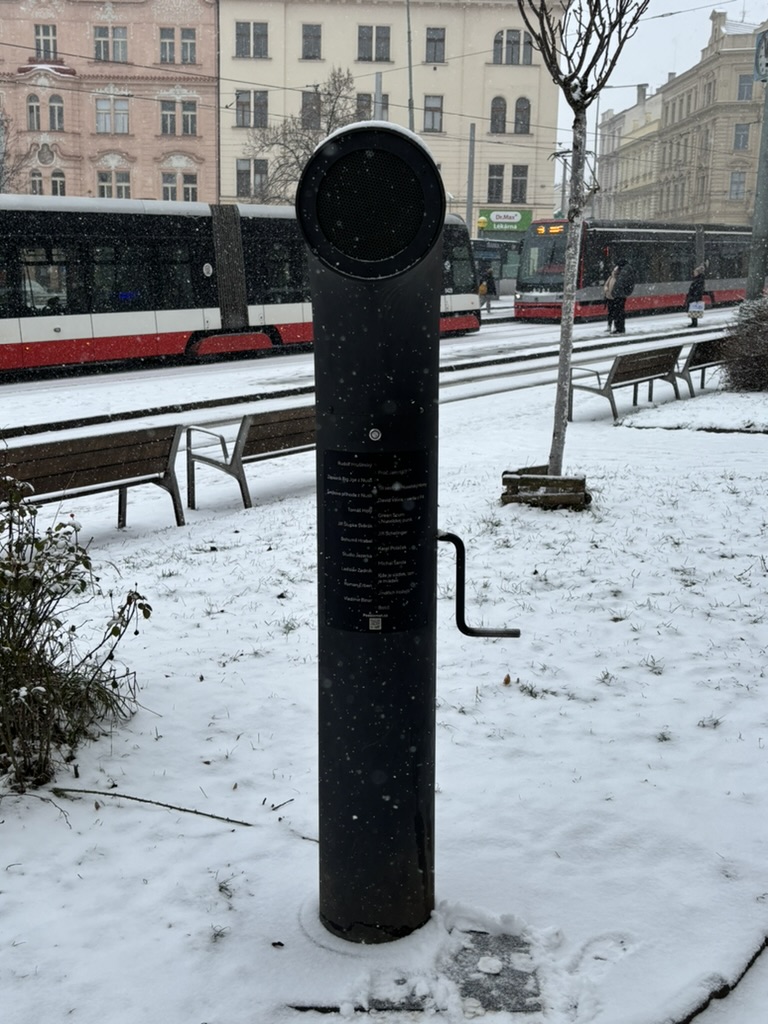
While the sights of Nusle tend to be near this square rather than on it, we do have the Poesiomat (Poetry Jukebox). There are about fifty of these in the country (including the original one on Náměstí Míru; https://whatsinapraguestreetname.com/2024/03/03/prague-2-day-42-namesti-miru/), and you can use it to listen to twenty different poems.
Finally, if you’re reading this a long, long way in the future, the D Line of the metro will have a station here. Construction on this part of the line is expected to start in summer 2025, with the station being up and running in 2029.

 What's in a Prague street name
Leave a comment