Originally published on Twitter on 18 December 2022.
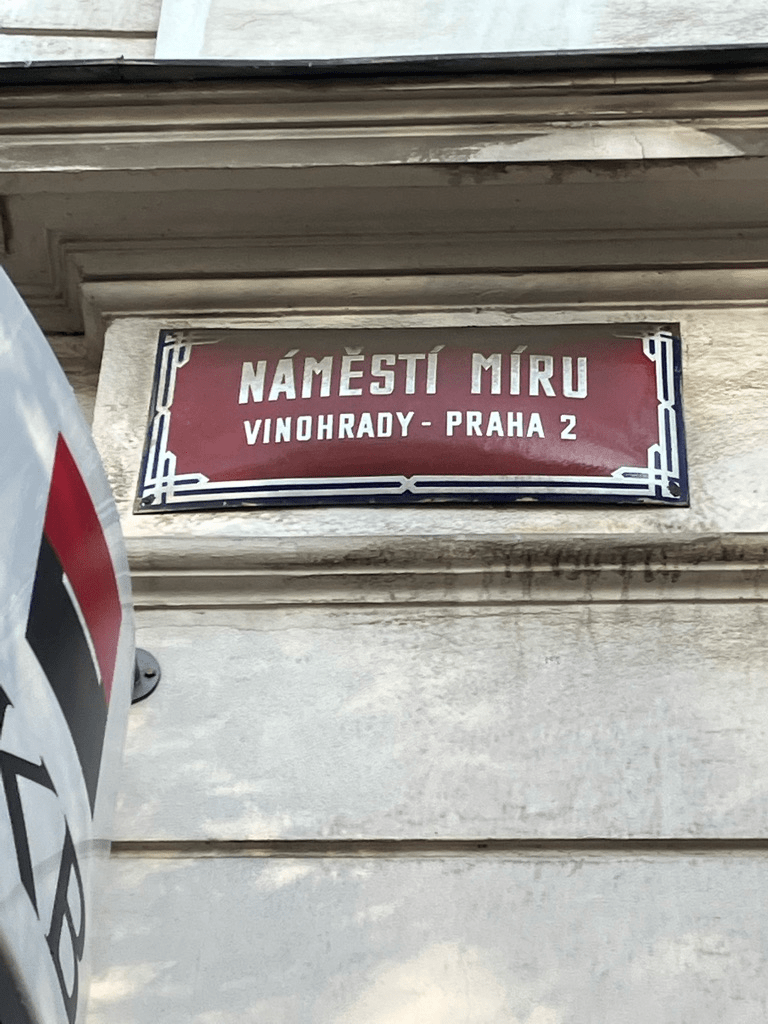
Náměstí Míru – Peace Square in English, Mirák to locals – was built in 1884.

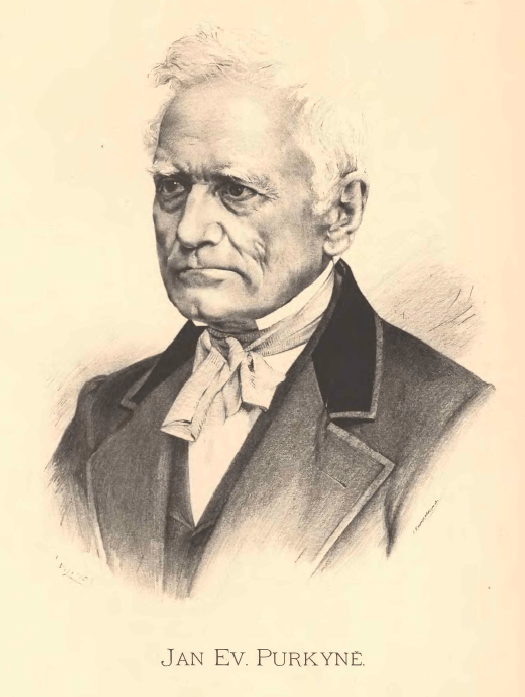
Until 1926, it was called Purkyňovo náměstí after Jan Evangelista Purkyně (1787-1869), anatomist, physiologist and coiner of the word ‘protoplasm’.
Then, in 1926, when Vinohrady underwent its Allied Renaming Extravaganza (https://whatsinapraguestreetname.com/2023/12/23/prague-2-day-1-italska/), it became Mírové náměstí, which translates to English the same way Náměstí Míru does.
I don’t have much to say about peace, except this: just f**king imagine.
In 1933, it became Vinohradské náměstí, which probably needs little explanation.
But, so far, there haven’t been many early 1930s renamings in this series, and 1933 feels like a very apt year to decide that peace isn’t really the way things are going.
Then the Nazis renamed it Říšské náměstí, or Reichsplatz, in 1940. No comment.
It then reverted to Vinohradské in 1945 before becoming Náměstí Míru in 1947.
I have no idea why Náměstí Míru was favoured over Mírové náměstí, though, in my head, the former sounds a lot more communist. Though that could just be me.
Famous buildings on NM include the Kostel svaté Ludmily / Church of St. Ludmila. It was designed by Josef Mocker and opened in 1893.
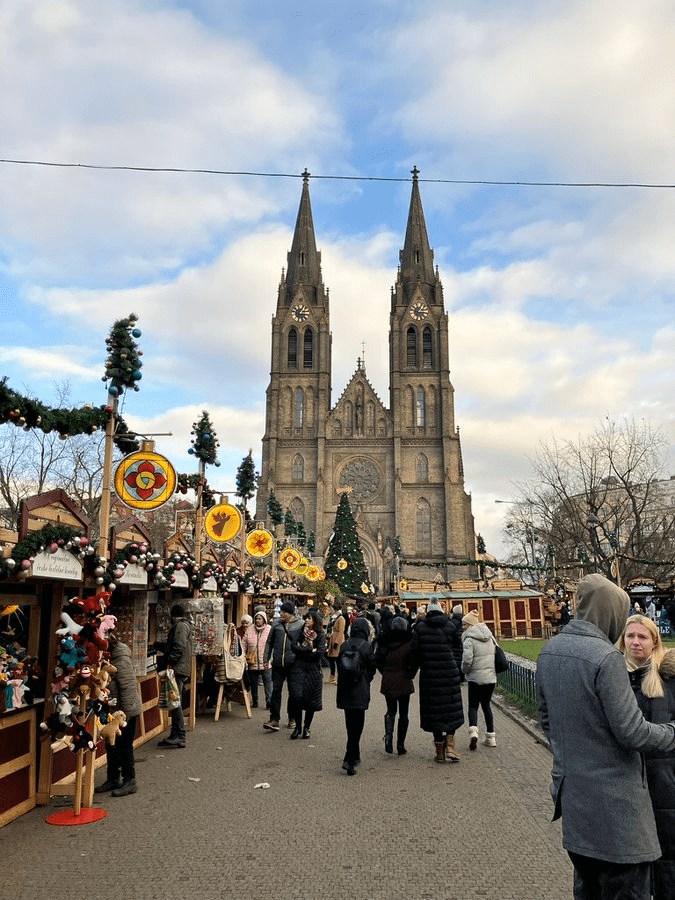
A combination of the building of the A-line of the metro and reconstruction meant that the church closed in 1974 and didn’t fully open again until 1992.
The Pope raised it to the status of a minor basilica (which I assume is not faint praise despite kind of sounding like it) in August of this year.
Then there’s the Vinohrady Theatre / Divadlo na Vinohradech, opened in 1907.
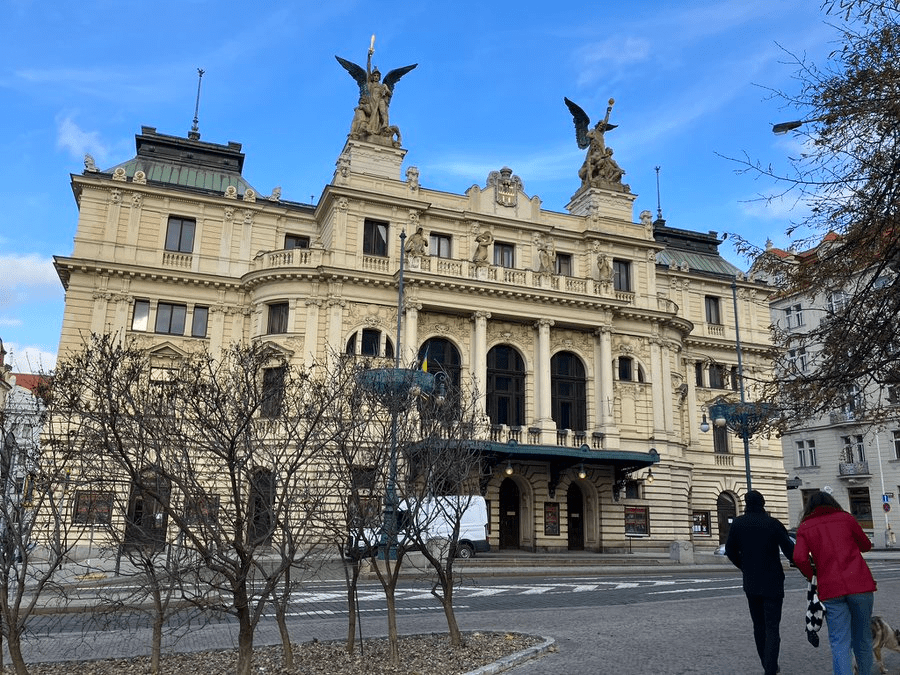
There’s some great footage of its actors on strike in November 1989 here:
There’s also the National House / Národní dům, designed by Antonín Turek (see https://whatsinapraguestreetname.com/2023/12/23/prague-3-day-186-u-vodarny/ and https://whatsinapraguestreetname.com/2024/02/15/prague-2-day-30-u-trznice/) and built in 1893-4.
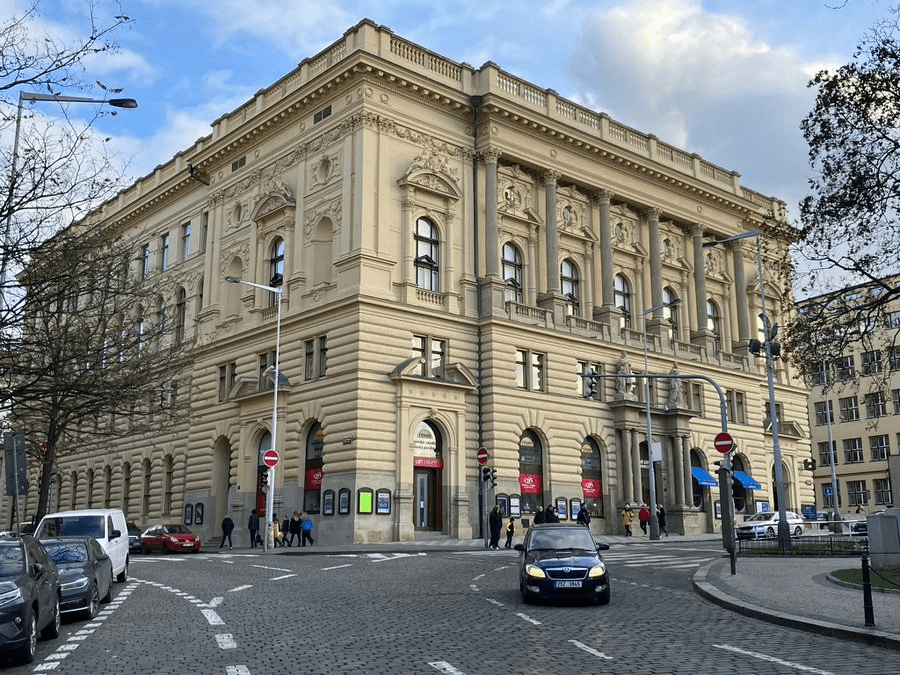
During communism, it was occupied by the Czechoslovak State Railways, and became known as Ústřední kulturní dům železničářů (Central Cultural House of Railway Workers), or ÚKDŽ.
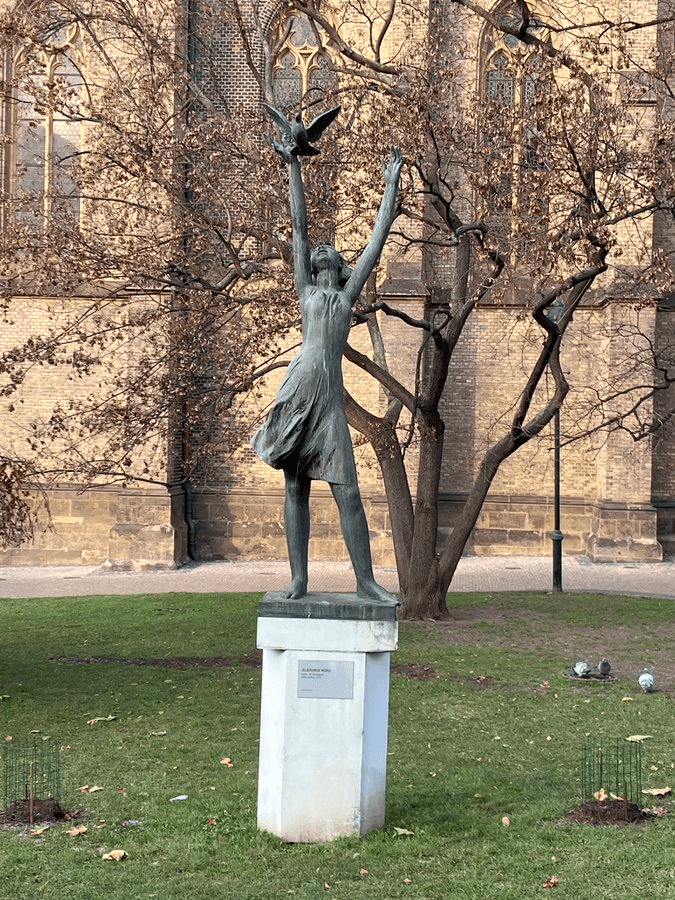
Finally for now, there’s the Alegorie Míru / Allegory of Peace statue, created in 1979 by Jiří Kryštůfek, Ondřej Špaček and Zdenka Nováková, and, also named, appopriately, ‘Dívka s holubicí’ (Girl with a Dove).
 What's in a Prague street name
Leave a comment