Herálecká was built in the 1960s.
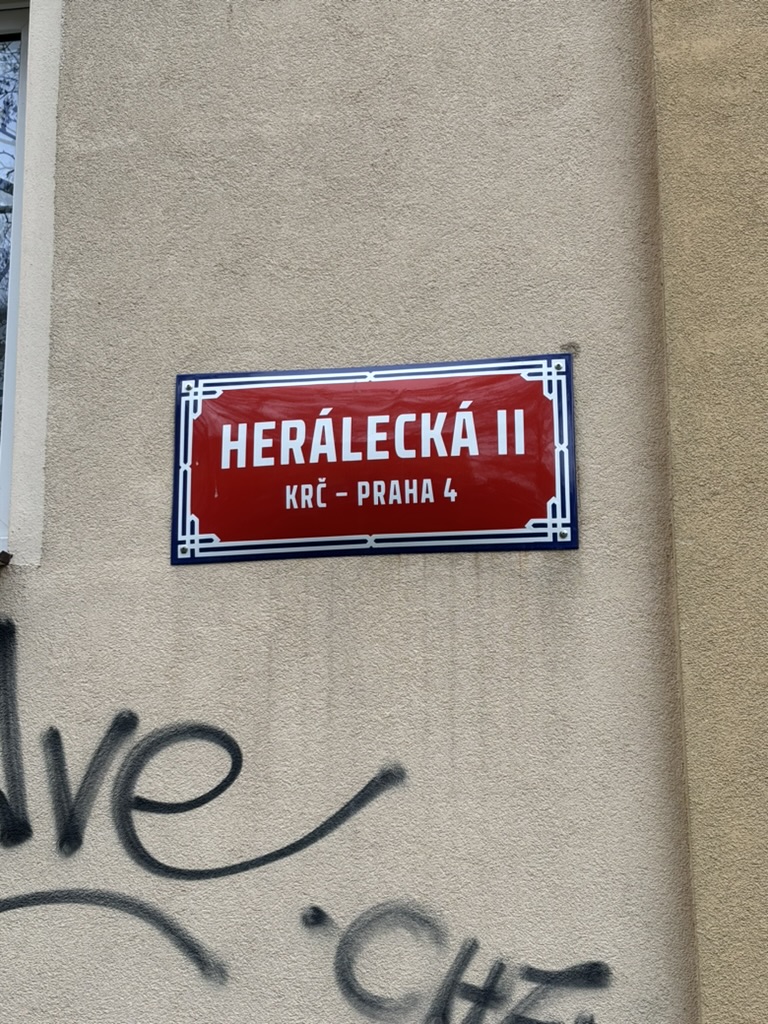
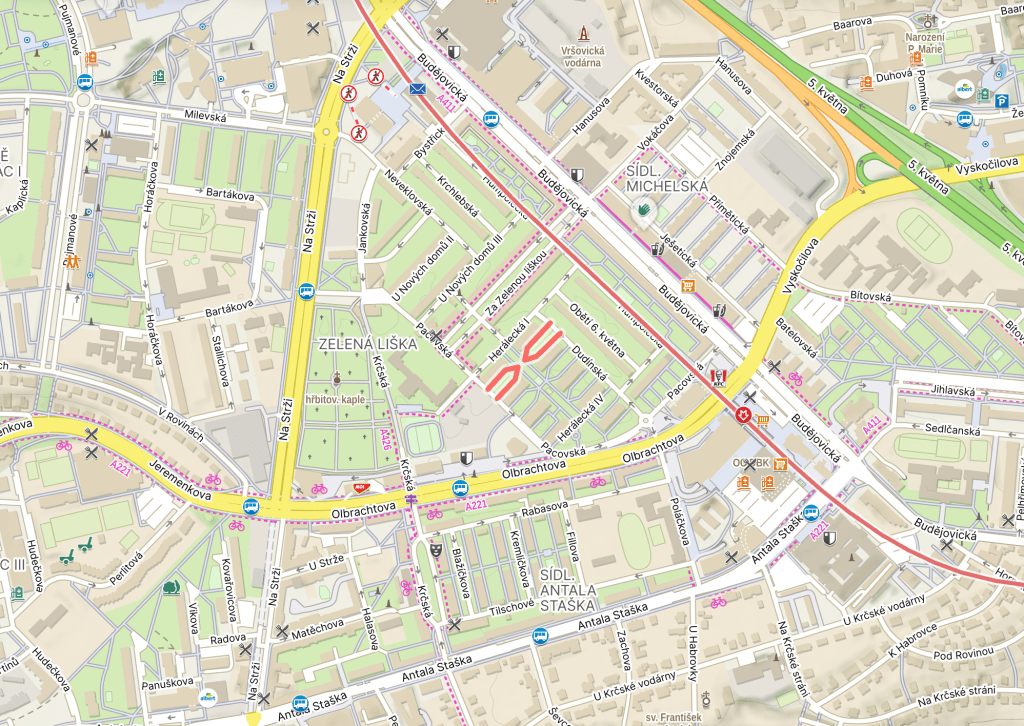
Herálecká II follows on from Herálecká I, which we discussed yesterday (https://whatsinapraguestreetname.com/2026/04/03/prague-4-day-349-heralecka-i/). Cue me thinking what to write about instead, but actually working that out almost at once.
Krč suffered a lot during the Prague Uprising. It is right next to a street named after both the Uprising’s first day (https://whatsinapraguestreetname.com/2025/02/05/prague-4-day-25-5-kvetna-5-may/), and, as we saw on https://whatsinapraguestreetname.com/2026/04/02/prague-4-day-348-obeti-6-kvetna/, has a street named after its second day.
So this seems like a good opportunity to talk about the days that followed. Today, we start with 7 May, the Uprising’s third day.
Before we start, we should briefly mention the Russian Liberation Army (ROA). Primarily formed of Soviet defectors, it fought under German command from 1943 onwards (although this wasn’t made official until November 1944).
It was led by Andrey Vlasov, a former Red Army general; for this reason, they are often known as the Vlasovci. On 5 May, Vlasov had agreed that his men could support the Czech insurgents, not the Nazis, in Prague (hoping they could surrender to the Allies on ‘favourable’ terms which wouldn’t involve being sent back to Stalin’s USSR).
Back to 7 May: at 02:41 in Reims, France, at President Eisenhower’s headquarters, German general Jodl (executed in Nuremberg in 1946) and admiral von Friedeburg (who would take his own life before May was out) signed unconditional surrender documents.
Field Marshal Schöner, who was in charge of the Nazi forces in Prague, declared that the truce wasn’t relevant, as it didn’t concern the fight against the Red Army, or Czech insurgents.
Therefore, on this day when Germany technically had a 48-hour grace period to stop its aggression, it upped the ante in Prague, using tanks to push through the barricades.
Prague’s Old Town Hall (https://whatsinapraguestreetname.com/2024/10/12/prague-1-day-190-staromestske-namesti-old-town-square/), which had been captured by insurgents, suffered greatly; the Nazis did huge damage to it, and its Neo-Gothic extension had to be destroyed.
The ROA – aiming for a good deal for itself, not for the Czechs, and noticing how many Communists there were in the new Czech council – left Prague in the afternoon in order to surrender to the US army.
The Western Allies didn’t want to annoy Stalin, and the vlasovci would end up being send back the Soviet Union, where many of them, including Vlasov, would be hanged in 1946.
Back to 7 May: the ROA’s departure meant that most of the Czechs were unarmed, undefended and unable to hold onto what they had gained in the last few days. By midnight, all that remained in their hands on the east bank of the Vltava was an area in Vinohrady-Strašnice.
A few of the sources I’ve been using to write about the uprising are slightly contradictory – not jumbled on their own, but put them together and you end up with something quite jumbled instead. I just hope I’ve left a reasonably faithful account.
8 May tomorrow.
 What's in a Prague street name
Leave a comment