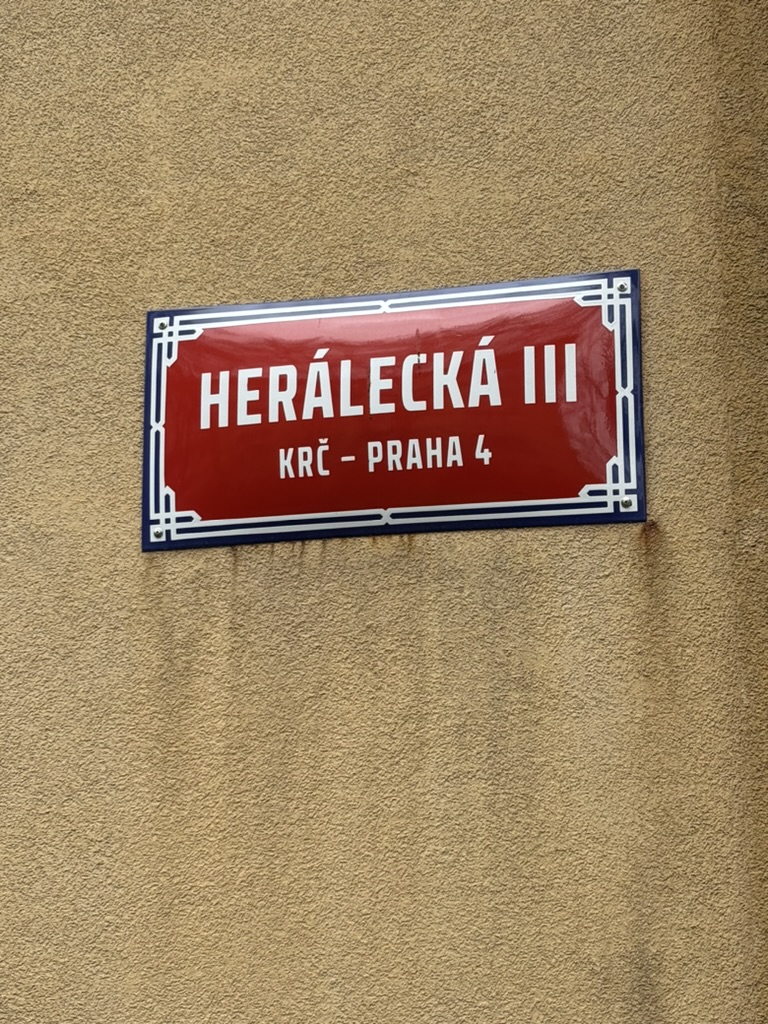
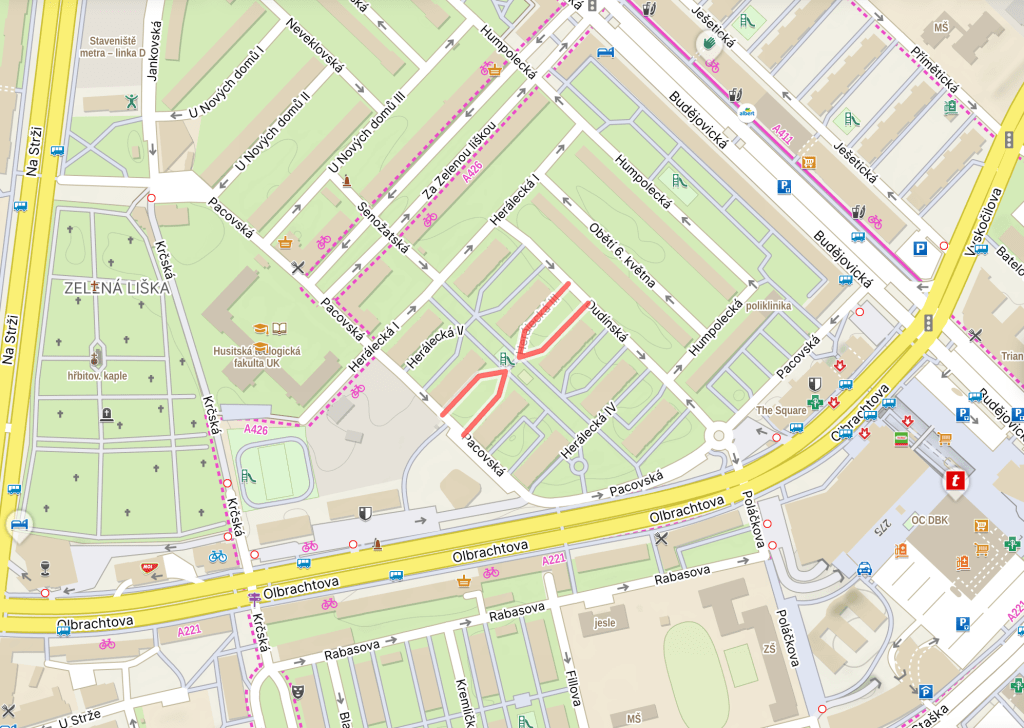
Herálecká III was built in the 1960s.
Is it a bit tacky to announce that this is my 1,000th street post? Yes? Oh well.
As promised on yesterday’s post (https://whatsinapraguestreetname.com/2026/04/04/prague-4-day-350-heralecka-ii/), I’m going to continue with the story of the Prague Uprising, this time covering 8 May 1945.
The day started with an announcement from Moscow Radio that the Red Army had broken through German lines, was near Dresden, and would soon be arriving in Bohemia, although no ETA was given for when it would reach Prague.
In the meantime, the Czech insurgents were low on supplies, and the Germans took advantage of this, occupying Libeň, Holešovice and Karlín and using tanks, aircraft and artillery to attack Prague.
At Masaryk Station (https://whatsinapraguestreetname.com/2024/11/10/prague-1-day-269-havlickova/), around 10:00, German units attacked, as the station was being held by about 100 Czech insurgents.
Up to 67 Czechs were murdered, including people who had been waiting at the station since 5 May, and two 16-year-old apprentices working in the station’s restaurant.
Around 12:30, Karl Dönitz – who had succeeded Hitler as President of Germany after the latter’s death – announced the surrender and the end of the Nazi Party’s role in the government.
Meanwhile, Hermann Göring gave himself up to the Americans near Radstadt, Austria.
Military commander Schöner ordered Rudolf Toussaint, commissioner of the German army in the office of the Reich Protector of Bohemia and Moravia, to destroy Prague; he refused, and went to the headquarters of the Czechoslovak National Socialist Republic to negotiate a ceasefire.
As a result of this meeting, a protocol was drawn up at 16:00, announcing a ceasefire which would come into effect two hours later. In exchange for ceasing their fight, the Germans would be allowed to leave Prague (and their equipment) to go and surrender to the Americans.
Around the same time the protocol was signed, Winston Churchill was announcing Germany’s unconditional surrender (hence 8 May being Victory in Europe Day in many countries).
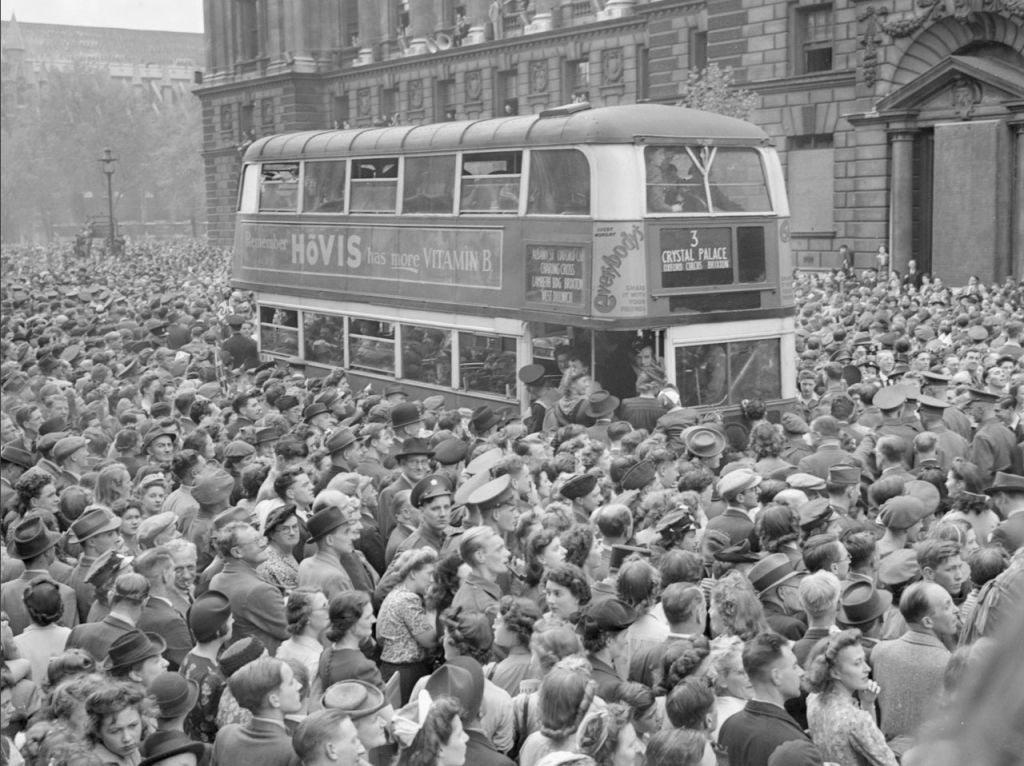
German troops started leaving, via Beroun and Plzeň, at 23:00 that night; some Nazis ignored the surrender and continued to fight. Almost at the same time that they started leaving, the German Instrument of Surrender – conceding the defeat of Germany – was signed in Berlin.
Two hours earlier, around 21:00, Red Army troops had entered Terezín concentration camp and liberated it; news of this reached Prague by midnight, where the local population was still wondering when somebody was going to come and liberate them (and who that would be).

 What's in a Prague street name
Leave a comment