Hanusova was built in 1906.
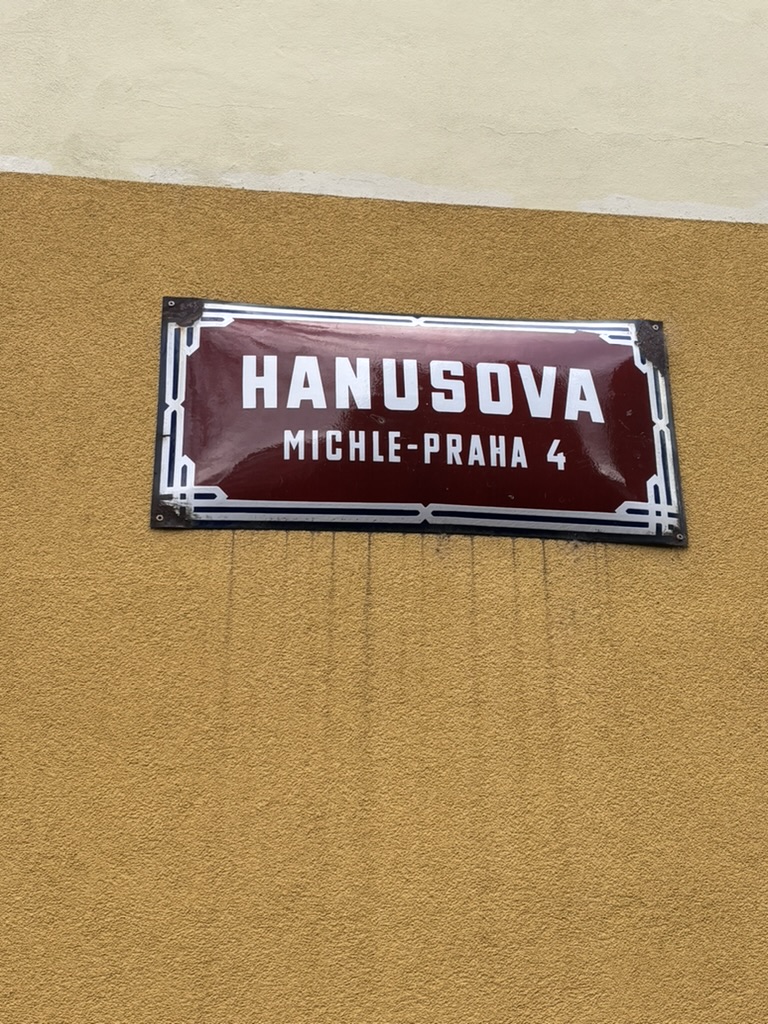
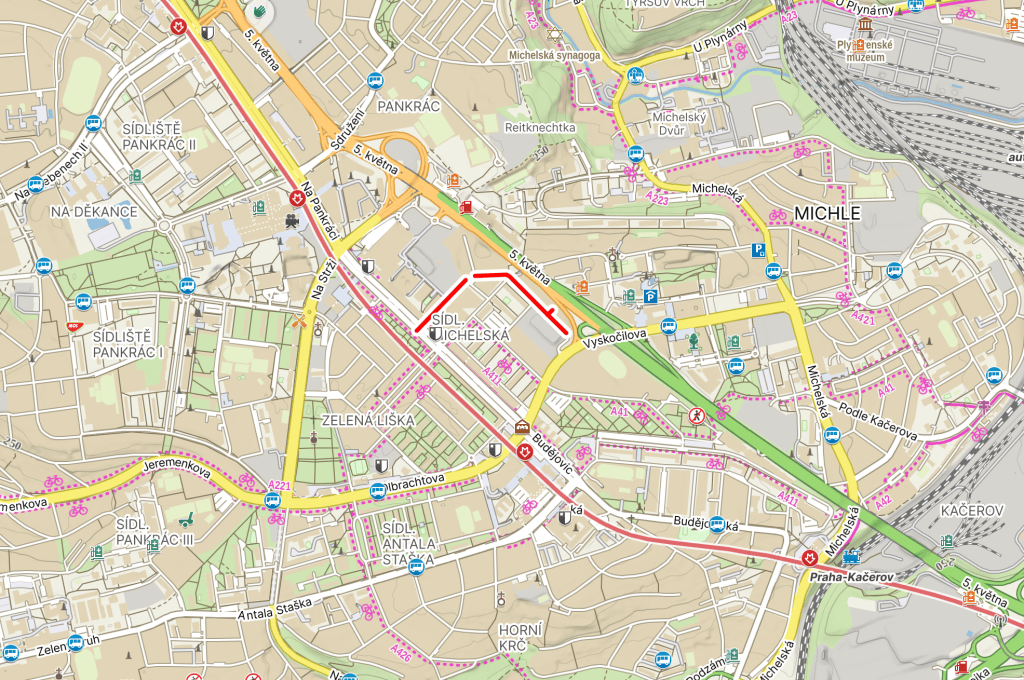
Until 1947, it was called Přemyslova; see https://whatsinapraguestreetname.com/2024/08/25/prague-2-day-100-premyslova/ for the story of the founding of one of Bohemia’s great dynasties (also the story of a bunch of men throwing a strop the moment women get to be in charge).
Then, from 1947 to 1952, it was called Fuchsova, after Alfred Fuchs, a Vinohrady-born Czech-Jewish writer, journalist, and translator, tortured to death in Dachau in 1941.
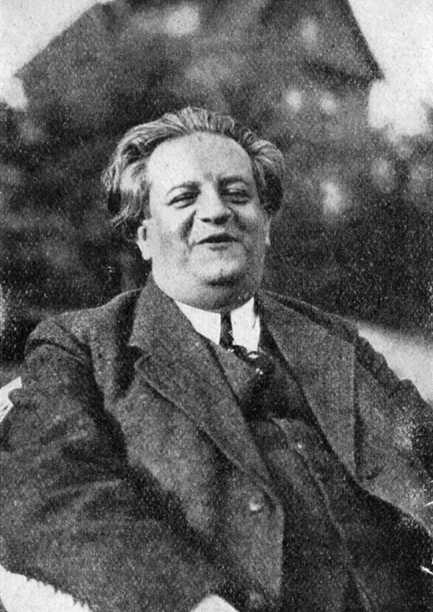
Ladislav Hanus, after whom the street has been named since 1952, was born in Polička in 1890. He graduated from a teacher training institute there, and then worked at elementary schools in Prušánky, Čejkovice, and Moravská Nová Ves.
Between 1914 and 1921, he worked in various schools in the Brno region, and served as secretary for the editorial board of the Bulletin of the Central Association of Teachers’ Unions in Moravia.
Hanus moved to Prague in 1921, working at various schools before getting a permanent position at an Upper-Elementary School on Křesomyslova (https://whatsinapraguestreetname.com/2025/01/29/prague-4-day-7-kresomyslova/) in 1929. His name still stands on its main building.
Hanus campaigned for educational reform, participating in the Socialist Teachers’ Association and establishing the School of Advanced Pedagogical Studies (ŠVSP), which provided higher education to teachers.
He also became known for his publication of various geography textbooks, focusing on human life and international relations, which geography books had not done so much of in the past.
Hanus joined the Communist Party of Czechoslovakia (KSČ) in the early 1920s; when the Nazis occupied Bohemia and Moravia, he was selected to go to the Soviet Union as a party official, but declined this offer, fearing repercussions on his family.
Instead, he became involved in the domestic resistance from 1939, helping to publish and distribute now-illegal publications like Rudé právo and creating hiding places for other resistance workers.
In 1943, Hanus was arrested and imprisoned first in Pankrác, then in Terezín. He was then transferred to Mauthausen, where he died after undergoing torture.
Two years later, his daughter Zora, a physical educaction teacher, was one of the victims of the Prague Uprising when she was shot dead while waiting at her window in Krč.
They are both commemorated by a plaque on K Habrovce (https://whatsinapraguestreetname.com/2026/05/27/prague-4-day-388-k-habrovce/), where they had lived: https://www.vets.cz/vpm/mista/obec/1006-praha-4/K%20Habrovce/.
Hanusova is very much not named after the Slovak priest Ladislav Hanus (1907-1994), as I realised after I had written a good few paragraphs about before realising he had also been a major figure in the fascist Slovak State, and had condemned the Slovak National Uprising as a conspiracy by the Czechs, Protestants and Jews.


Leave a Reply